Twelve Cities, Some Art
Manifesta 15 tried to spread itself across Barcelona's entire metropolitan area. The art struggled to keep up with the geography.
Manifesta has always had an identity problem. It is the European biennial that is not quite a biennial, that moves from city to city, that is supposed to activate places the art world usually ignores. This iteration, Manifesta 15 Barcelona Metropolitana, did not go to a place the art world ignored. It went to Barcelona, a city that has spent the last ten years becoming the kind of place whose residents write op-eds against over-tourism. The pitch, therefore, was that Manifesta would not do Barcelona itself but the other eleven municipalities in the metropolitan area. Twelve cities, ninety artists, twelve weeks, three thematic clusters titled Balancing Conflicts, Cure and Care, and Imagining Futures. Hedwig Fijen was the director, Filipa Oliveira was the curator, eleven local representatives were the co-organisers. The show opened on the 8th of September and closed on the 24th of November.
I spent five days there, took the commuter rail more than I have in any month of my life, and came away with a pronounced view on the project, which is that its infrastructure was ambitious and its art was thin.
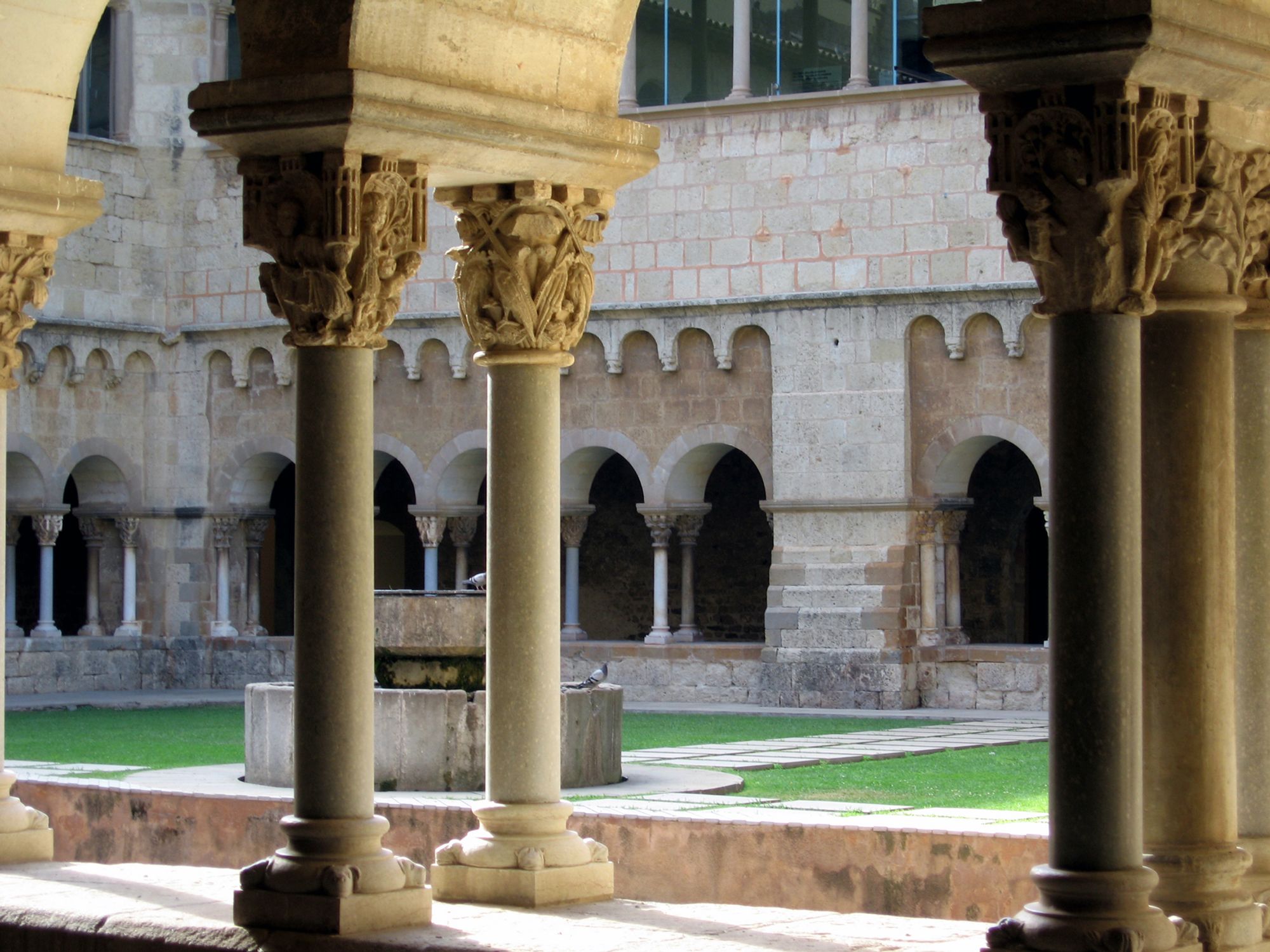
The three clusters had distinctive anchor venues. The principal venue of Cure and Care was the Monastery of Sant Cugat, which is genuinely beautiful and, for reasons nobody explained, was the place Manifesta had put most of its medicinal-herb-installation, quietly-healing-under-the-arches kind of art. These pieces took the monastery's ambient spirituality and added gentle, quite generic art on top. The effect was of a place that was already a work of art being asked to also be a work of art, with predictable results.
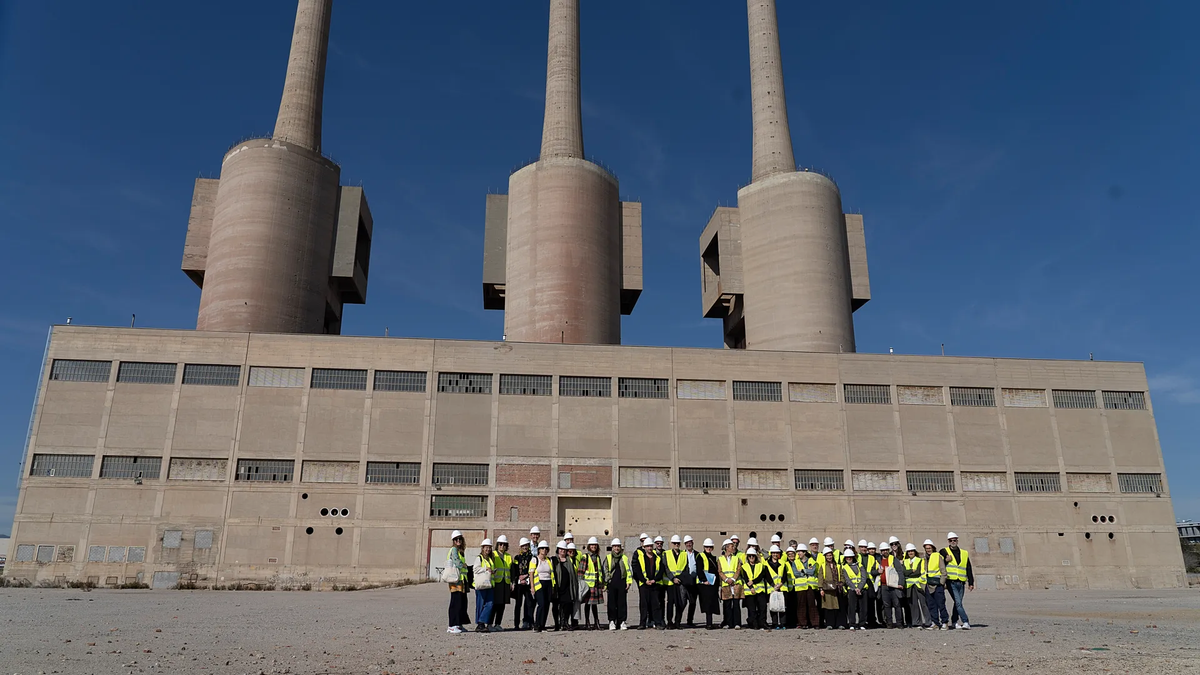
Imagining Futures was anchored at Tres Xemeneies, the three chimneys of a disused power station between Barcelona and Badalona. This was the most successful venue, partly because the building is absurd, massive, industrial, unforgettable, and partly because the curators had been clever about the scale of work they put inside it. Rirkrit Tiravanija had done something with the kitchens. A collective from Madrid had installed a piece using the chimneys themselves as instruments for wind. The venue was doing most of the heavy lifting, but the work was of a register that could live in a space that big.
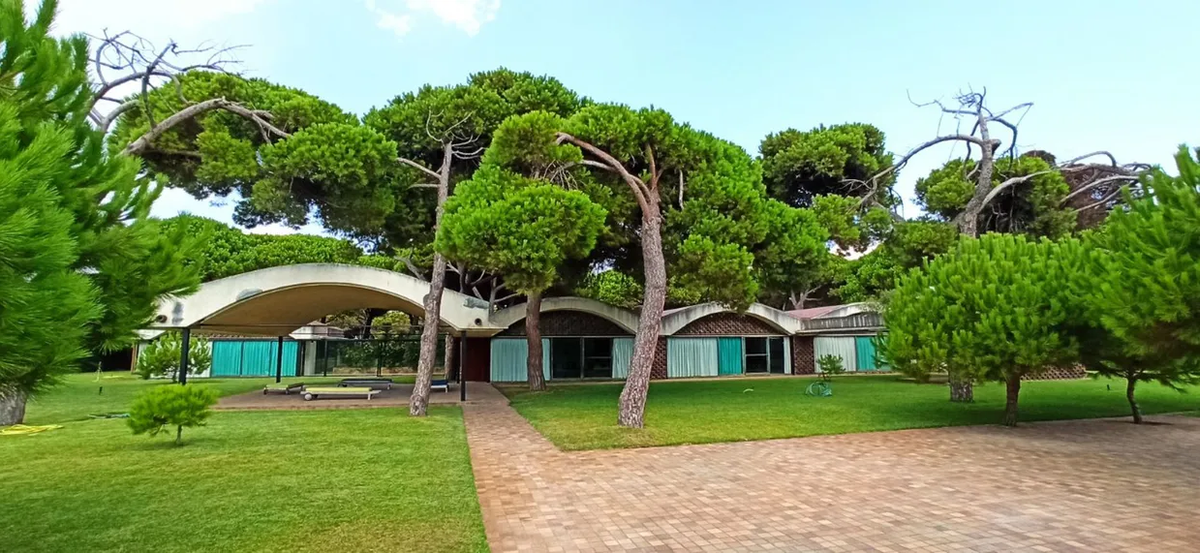
The third cluster, Balancing Conflicts, was centred on Casa Gomis, the private villa by Antonio Bonet. The villa is quite extraordinary. The work inside was quite ordinary. A pattern began to emerge.
The pattern is that Manifesta had, more or less, outsourced a significant part of its aesthetic to the venues. Most of the venues were remarkable. Most of the art was forgettable. You left Casa Gomis thinking about the villa. You left Sant Cugat thinking about the monastery. You left Tres Xemeneies thinking about the chimneys, but also about a few of the pieces, which is the ratio a biennial should aim at. The rest of the time the pattern was the pattern.
There was a larger problem, which is the one Manifesta 15 refused to say clearly. The metropolitan-area premise was a dodge. Barcelona has a tourism problem; Manifesta 15's answer to this was to spread the show into the suburbs and claim to be helping. But the dealers, press, curators, and collectors who matter professionally in this kind of biennial do not go to Cornellà de Llobregat. They go to Barcelona. They stay in Eixample. They eat at Bardeni. The show they saw was, at most, Tres Xemeneies and the Maritime Museum and maybe, at a push, Sant Cugat on a good day. The municipal spread was for the programming. It was not for the art, for the audience, or for the supposed beneficiaries. It was for the thesis statement.
Where the show found a real subject it was in a piece by the photographer Dora García on a wall inside the Monastery at Sant Cugat, a series on unknown Catalan women executed during the civil war; their stories were retold in text, without images of them. The absence was the point. I stood in that hallway for longer than I stood in any of the other venues combined. There was also a small, dense exhibition at CaixaForum Macaya on the Catalan anarchist experiment of 1936–37, a history Manifesta's thematic apparatus mostly declined to engage with but that this one room did. The good pieces of Manifesta 15 were the ones that forgot about the metropolitan thesis and just addressed Catalonia.
By the end of the week I had stopped checking the programme. I had started going to the smaller venues, the ones run by people who had not got a budget increase because Manifesta was in town. Barcelona's independent art scene has been good for years. It did not need this biennial. It may have been made a little worse by it, in the short term, because the biennial absorbed some of the attention without repaying the favour. Manifesta 16 will go somewhere else. I hope the next place has, if nothing else, less of a functioning art scene to begin with. It is a strange thing to hope for, but Manifesta is at its best when it is filling an absence. In Barcelona there was not one to fill.