The Room Within the Room
Formafantasma designed a collectible-design sector inside the 64th Salone and made it look like a church.
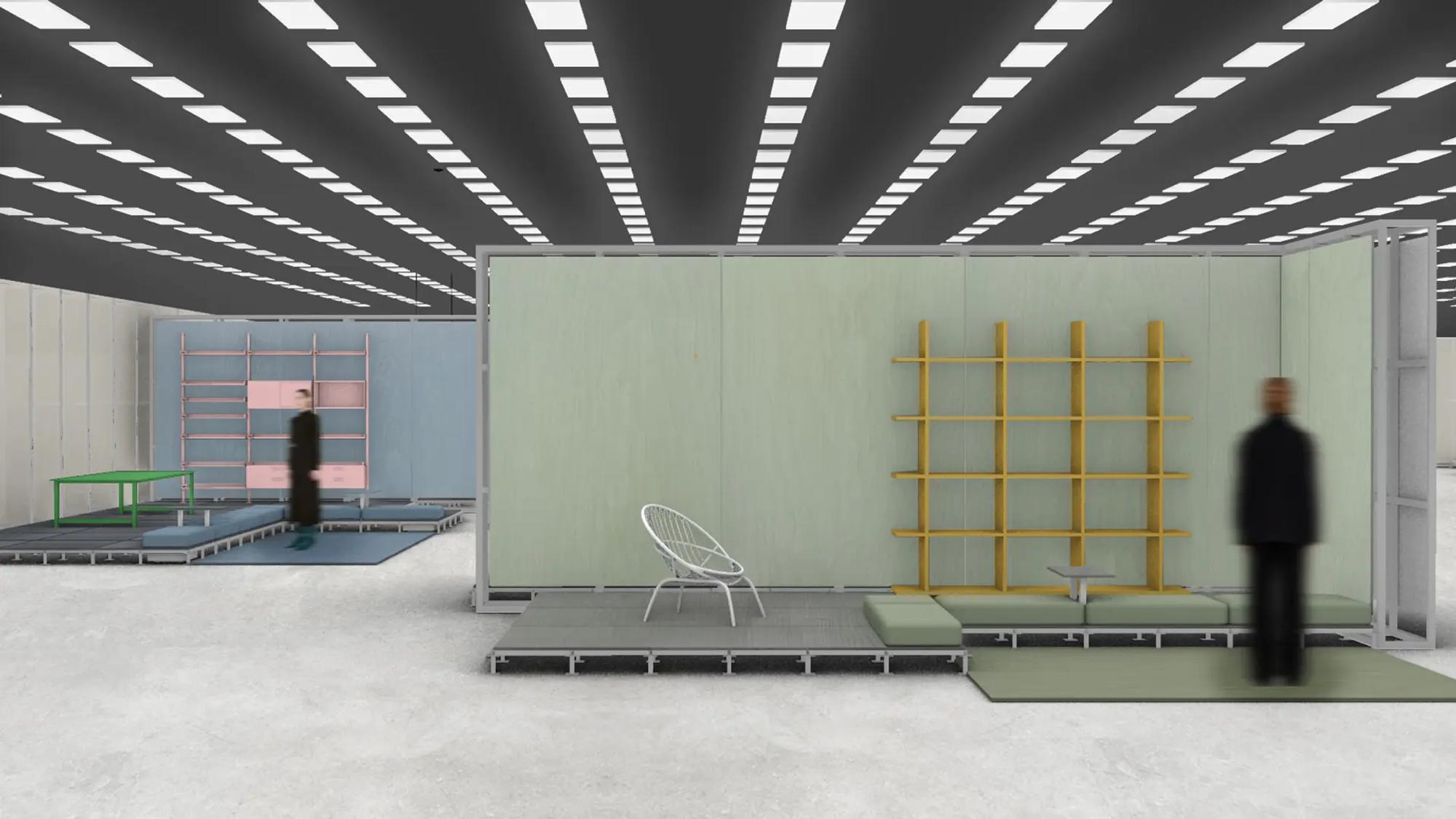
Pavilions 9, 10 and 11 at Fiera Milano Rho have been, for most of the Salone del Mobile's life, the part of the fair you walk through on your way somewhere else. This year they are the part you come to first. Salone Raritas, a new sector given over to collectible design, has been installed in them for its debut, with around twenty-five galleries and platforms showing what the market calls collectible, which is design priced high enough that it is usually bought by people who do not sit on it. Annalisa Rosso is the curator. Formafantasma, the Amsterdam-based studio of Andrea Trimarchi and Simone Farresin, has designed the architecture.
Formafantasma did the clever thing. They took a trade-fair hall and refused it, more or less. Instead of the standard open-plan booth grid, they built a dense sequence of small, chapel-like rooms, each one given to a gallery, linked by a narrow central aisle. You did not walk through Raritas. You sidled into a room, stood in it, and came back out. The lighting was indirect and warm. The walls were in tones that could read as parchment or linen depending on how you wanted to read them. The whole thing felt, on first entrance, closer to a museum than to a fair.
This was the point. Collectible design has been, for the last fifteen years, one of the fastest-growing categories in the market. It is also the category Salone has been most nervous about, because for years it has been eaten by the Fuorisalone and by a set of dedicated fairs in Miami, Paris and Basel. Raritas is Salone's bid to bring that conversation back inside its own walls. Doing it with Formafantasma was the right call. Andrea and Simone have spent a decade building the language the market uses to discuss this category, and their scenography here is a form of thesis statement as much as it is exhibition design.
The strongest rooms: Nilufar's, with a Lina Bo Bardi chair in front of a Franz Josef Altenburg vessel. Side Gallery from Barcelona, showing a late Bo Bardi bar cabinet against a wall of Japanese blue. A Brazilian platform with Joaquim Tenreiro and new work by Zanini de Zanine. Friedman Benda with a focused Wendell Castle presentation that felt different in this context than it had two weeks before at Design Miami Paris. Pulp with a mixed-era Gaetano Pesce selection two years after his death, with Pesce's Pratt chair now looking less like an oddity and more like a founding document.
The weaker rooms leaned on lighting. A collectible-design booth in a chapel-like volume is flattering; the flattery can be almost too much. Some galleries arrived with work that did not survive the intimacy, and their rooms felt more like a brand storefront than a chapter of an exhibition. Raritas is going to have to be ruthless with its selection next year or the format will be gamed.
The politics of this matter a little. A curated sector inside Salone, with tight editorial and a signature scenographer, is a step towards making the fair a programmed object rather than a marketplace with a catalogue. The Salone del Mobile has been, for sixty-three years, organised around the catalogue. It is not obvious that it should stop being that. But Raritas is an argument for what a second layer, closer to institutional exhibition practice, might look like. If the argument sticks, the 2028 fair will look different.
You could leave Raritas after twenty minutes and walk three halls over to the furniture giants, and the contrast was the point. There is a fair that sells beds by the thousand and a fair that sells a single Auböck dish to a foundation in Oslo. Milan can contain both. Whether it can contain both well is the question Raritas was asked to answer. For one week in April, at its debut, the answer was mostly yes.