The Slow Unbuilding
DAAR's Golden Lion was for a decade and a half of patient, specific work on the architecture of decolonisation.
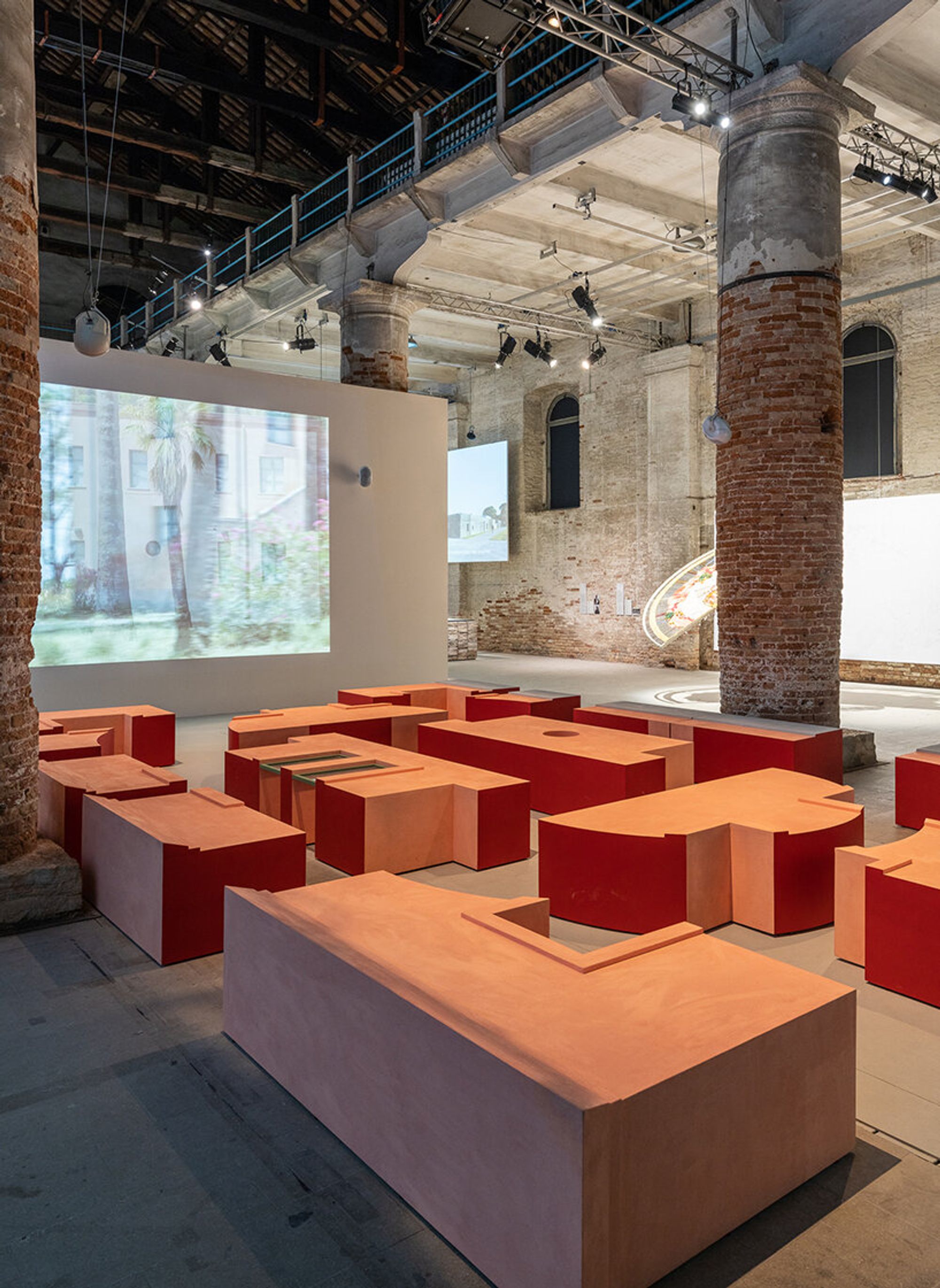
The Golden Lion for the main exhibition at the 2023 Venice Architecture Biennale went to two architects working in a practice called DAAR, for Decolonizing Architecture Art Research. They are Sandi Hilal and Alessandro Petti, a Palestinian and an Italian, now based between Bethlehem and Stockholm, with a shared teaching appointment at Konstfack. The jury cited their long-standing commitment to political engagement with architectural and learning practices of decolonisation in Palestine and Europe. The citation was unusually specific. It named what the Lion was for. Not a single project, but a practice that had continued for over a decade, slowly, through refusals and partial rebuildings, in many places.
You found DAAR's work in the Arsenale, in a long rectangular room that had been painted a dark, even grey. On the walls, at chest height, were documents, drawings, photographs and a few models. The central piece was the Borgo Rizza project, a long-term engagement with one of the Mussolini-era agricultural towns built across Sicily in the 1930s and 40s. These towns were part of fascism's internal-colonial infrastructure. Some of them were never fully inhabited. Most are still there. DAAR had, with residents of Borgo Rizza, been working out what it means to decommission a colonial architecture while the town continues to be someone's home.
Decommissioning is the right word. The practice they called decolonising was not demolition. It was more like careful undoing. Rooms get reassigned. A fascist archive gets restaged, line by line, as a pedagogical site. A statue does not disappear but its plinth becomes a place of instruction. Signs change. What does not change, importantly, is the physical fabric in any dramatic way, because the point is not to erase the history but to remove its continuing claim on current inhabitants. The fabric that colonialism leaves behind is slow to untangle. DAAR treated it as slow work.
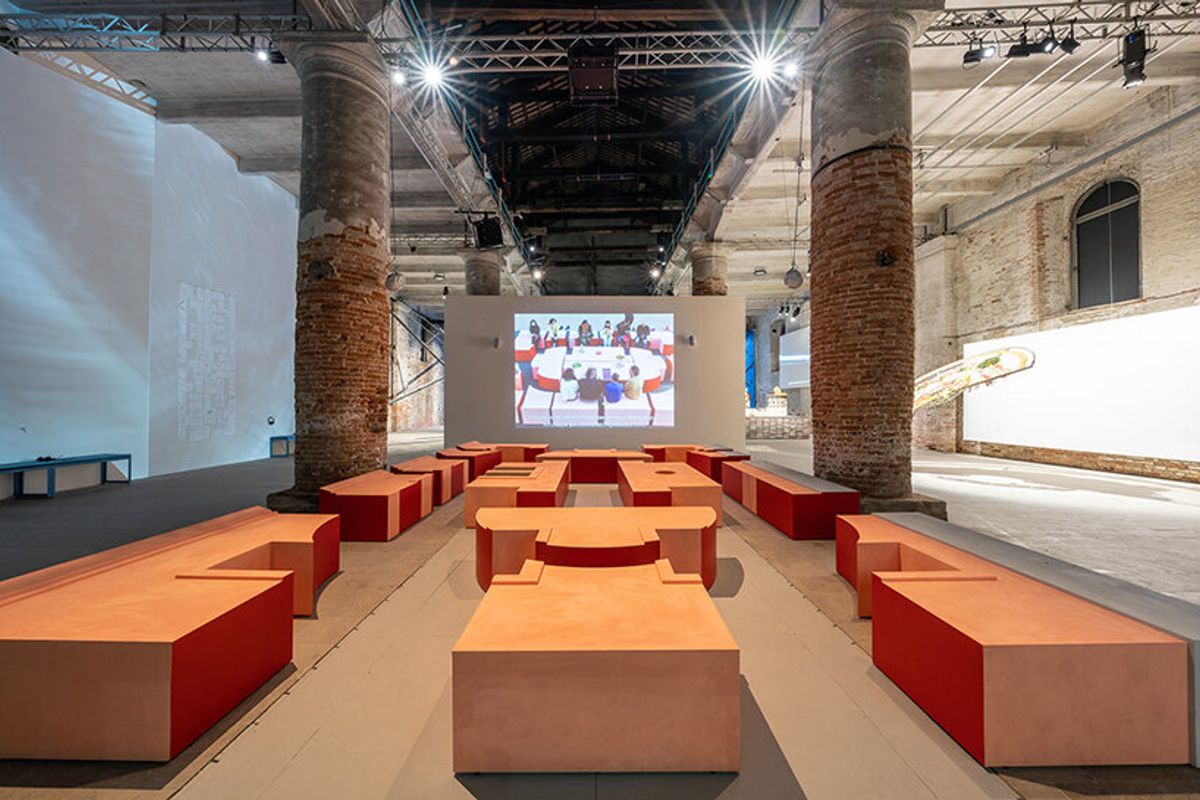
The room at the Arsenale also held material from Refugee Heritage, a project Hilal had been building since 2012, on the architectures of Palestinian refugee camps. This project argues that the camps, which in international law are considered temporary, have in fact been inhabited for four generations and constitute a heritage, an architecture, a culture. The argument, pursued patiently across drawings and testimony, is that the refusal to recognise the camps as heritage serves a political interest that needs to be made visible. The project does not propose a solution. It proposes a recognition.
There is an integrity to this mode of practice that the Biennale did not, on the whole, have enough of. A lot of architecture is ambitious in the building. DAAR is ambitious in the unbuilding, and in the staying-with. You do the decolonisation where you are, over years, with the people who live there. It is not an export product. It is not exportable. That is why it is useful. Lokko had structured her Biennale around this kind of work, and the jury's choice made the priority legible.
I stood in the room for a while and read the documents. A line, from an exchange between a Borgo Rizza resident and Petti, stuck with me. The resident said, in effect, that the fascist buildings are our buildings now, and the question is what we want them to mean. Decolonisation in this register is not an undoing of history. It is a rewriting of what history continues to do in the present.
DAAR are the kind of architects whose work you do not encounter on a star-architect magazine cover. Their practice refuses the logic that rewards speed, scale and signature. That is why the Golden Lion was important. It put their specific, slow, political work at the rhetorical centre of the architectural year. Plenty of people who had not heard of DAAR looked them up that week. Some of those people are now teaching courses that start from DAAR's method. This is how institutions sometimes, slowly, move. Lokko's Biennale moved this one a little.