The Last Night at Beaubourg
The Centre Pompidou closes on the 22nd of September 2025 for a five-year renovation. A note from the plaza.
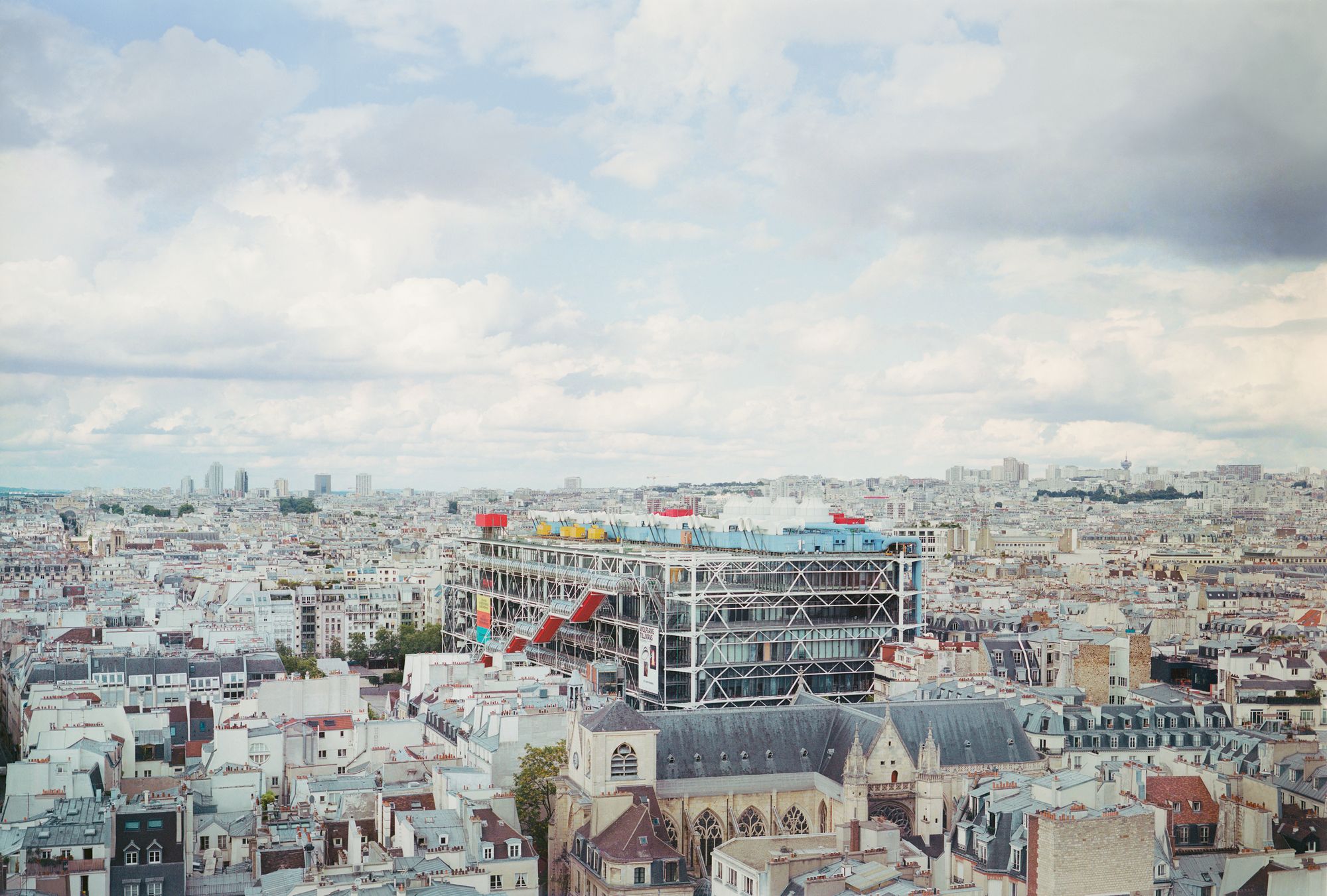
The Centre Pompidou closed its doors to the public on the 22nd of September 2025 at 9 p.m. It will be closed for five years. The building, designed by Renzo Piano and Richard Rogers and opened in 1977, needs full asbestos removal on its façades, a fire safety overhaul, accessibility work, and an energy systems rebuild. Moreau Kusunoki with Frida Escobedo have been commissioned for the renovation. The building will reopen in 2030 for its fifty-third year, if we are here to see it.
The last night is not a black-tie event. There is no closing ceremony. The Pompidou has chosen, correctly, to not make a spectacle of the close. The last exhibition, a Wolfgang Tillmans retrospective, had its final morning on the 22nd. By 7 p.m. the galleries were closed. By 9 p.m. the last visitors had left. The piazza in front of the building, which at Beaubourg is as important a space as anything inside, stayed occupied until well past midnight.
I walked over from the Marais at 8 p.m. and sat on the sloping plaza with a cup of wine from the nearest tabac. The building is lit. The escalator tubes on the front, Piano and Rogers's great gift, are running empty. Tourists are taking photos in the way tourists do at a building they have been told, this week, that they might never see again in its current state. Parisian teenagers are skateboarding in the way Parisian teenagers have been doing on this plaza since 1977. The place in which a generation learned to look at contemporary art is, for tonight, doing its last public duty, which is being a place in which to sit.
On the 24th and 25th of October, after five weeks of gradual closure across the building's various programmes, the Pompidou will host one final festive event inside its walls, titled Because Beaubourg, including a pyrotechnic performance by Cai Guo-Qiang. Tonight is not that night. Tonight is the quiet one.
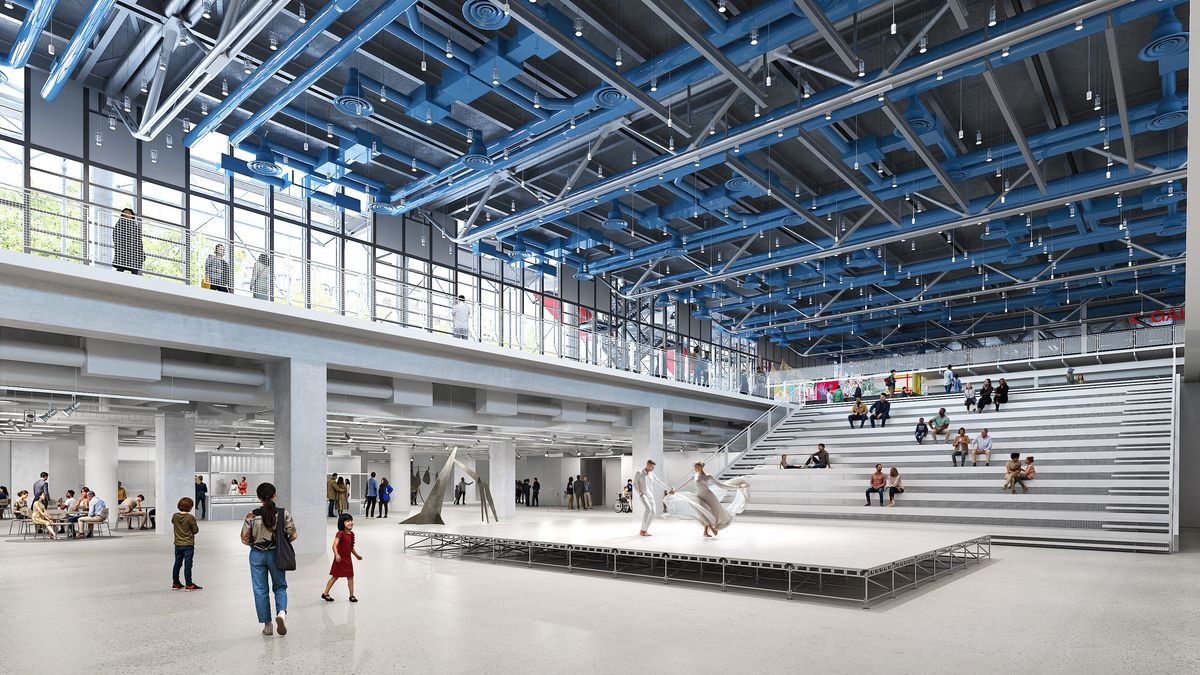
The Pompidou's 2025–2030 off-site programme is real: a touring collection, partnerships with regional museums, pop-ups in the Grand Palais and at the Philharmonie. The institution will not disappear. It will become nomadic. This is a Parisian tradition, arguably. The Louvre was once seized and redistributed. The Musée National d'Art Moderne lived on the Quai d'Orsay before it moved here. Institutions move. The question is whether their audiences follow.
A person I know, a curator who has worked at the Pompidou for two decades, said at dinner recently that she has started dreaming about the building. Not about working there. About the building itself, empty, at night, with the lights on. Five years is not a small amount of time. By the time it reopens, half the staff will have moved on. Some of the artists tonight's crowd came to see for the last time will have died. The Pompidou that reopens in 2030 will not be the Pompidou that closed tonight. That is also fine. Buildings that pretend otherwise are buildings that have stopped being useful.
At 11 p.m. I stand up and walk down rue du Renard. Behind me, the Piano-Rogers escalators are still lit and still empty. They look, for a moment, like a drawing of themselves. See you in 2030.