The Laboratory Is Always Somewhere Else
Lesley Lokko put Africa and its diaspora at the centre of the 18th Architecture Biennale. The centre turned out to be wherever someone had decided to look.
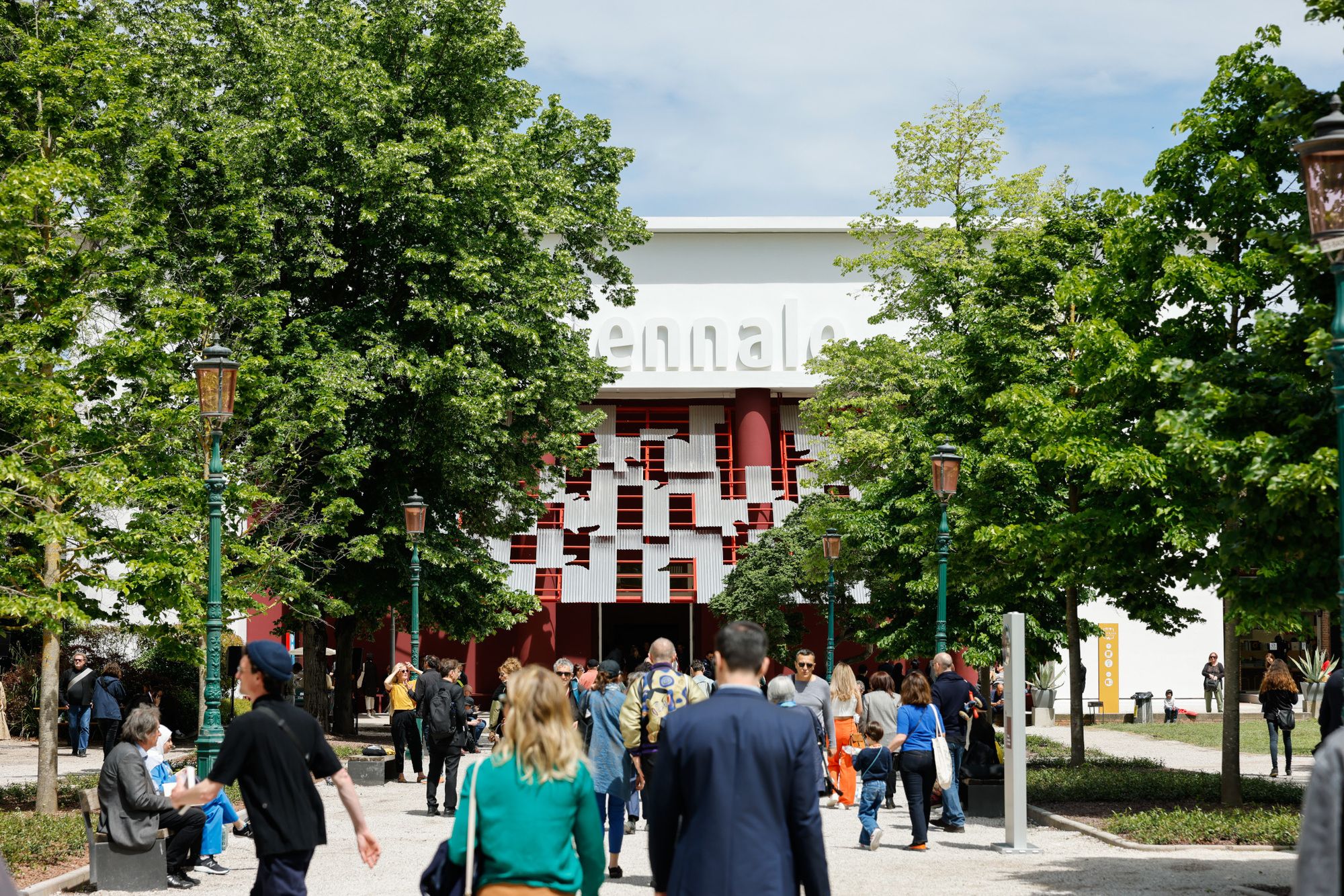
You arrived at the Giardini in May 2023 and the first room of the Central Pavilion was full of Africans. This sentence should not, in 2023, have the rhetorical weight it does. It did, because it had not happened before at any Architecture Biennale. Lesley Lokko, the Ghanaian-Scottish architect, educator and novelist, had been given curatorial authority over the 18th International Architecture Exhibition and had decided to spend it. The Laboratory of the Future opened on the 20th of May 2023 and ran until November. Eighty-nine participants, more than half from Africa or the African diaspora, an average age under forty. The Golden Lion for the main exhibition went to DAAR, a pair of architects working between Palestine and Europe, for their long practice on decolonisation. The Brazilian pavilion won the national Golden Lion with a show called Terra, curated by Gabriela de Matos and Paulo Tavares. Demas Nwoko, a Nigerian artist-designer in his nineties, took the Lifetime Achievement. Olalekan Jeyifous took the Silver Lion for promising young.
Lokko had a phrase she kept using. She kept saying Africa is the laboratory of the future. You heard it in the opening speeches, you read it in the catalogue, and by the second day of the preview it had started to irritate some of the press. The irritation was revealing. The word laboratory carried, for many of the European and American architects in the room, a particular set of connotations: the future as something tested on a sample population before being released elsewhere. Lokko meant something different. She meant that the problems the world will face are already problems in Lagos and Nairobi and Khartoum, and the solutions being worked out there are not rehearsals for anything. They are the thing. The Biennale was her argument for taking that seriously.
The argument mostly held. Some of the strongest rooms in the Central Pavilion were quiet ones. Killing Architects showed a forensic model of a Uighur detention facility in Xinjiang. DAAR's room was a measured presentation of the slow decommissioning of fascist-era Italian colonial buildings. Cave_bureau, the Nairobi firm, reconstructed a Mau Mau mountain hideout as an architectural proposition. Adjaye Associates showed the Edo Museum of West African Art in progress in Benin City. These rooms were not trying to be Biennale statements. They were showing work.
Some of the less strong rooms leaned on the thesis. A Biennale pitched around decolonisation and decarbonisation invites wall-text architecture, the kind of project that exists more fully in its curatorial justification than in its built evidence. There was more of this than there needed to be. A biennial curator has to make choices, and Lokko had included, as she was right to, emerging practices that do not yet have a built body of work. Some of those practices simply were not ready yet. The room knew it. You kept moving.
The Brazilian pavilion was the one most visitors left talking about. Terra had covered the pavilion floor in compressed red earth. You walked on it. The exhibition inside traced the continuous architectures of indigenous and Afro-Brazilian communities, arguing that these were not pre-architectural conditions to be overcome by Portuguese modernism but architectures in their own right, uninterrupted. The curators were an architect, Gabriela de Matos, and a theorist, Paulo Tavares. The jury gave them the Golden Lion. The jury was right.
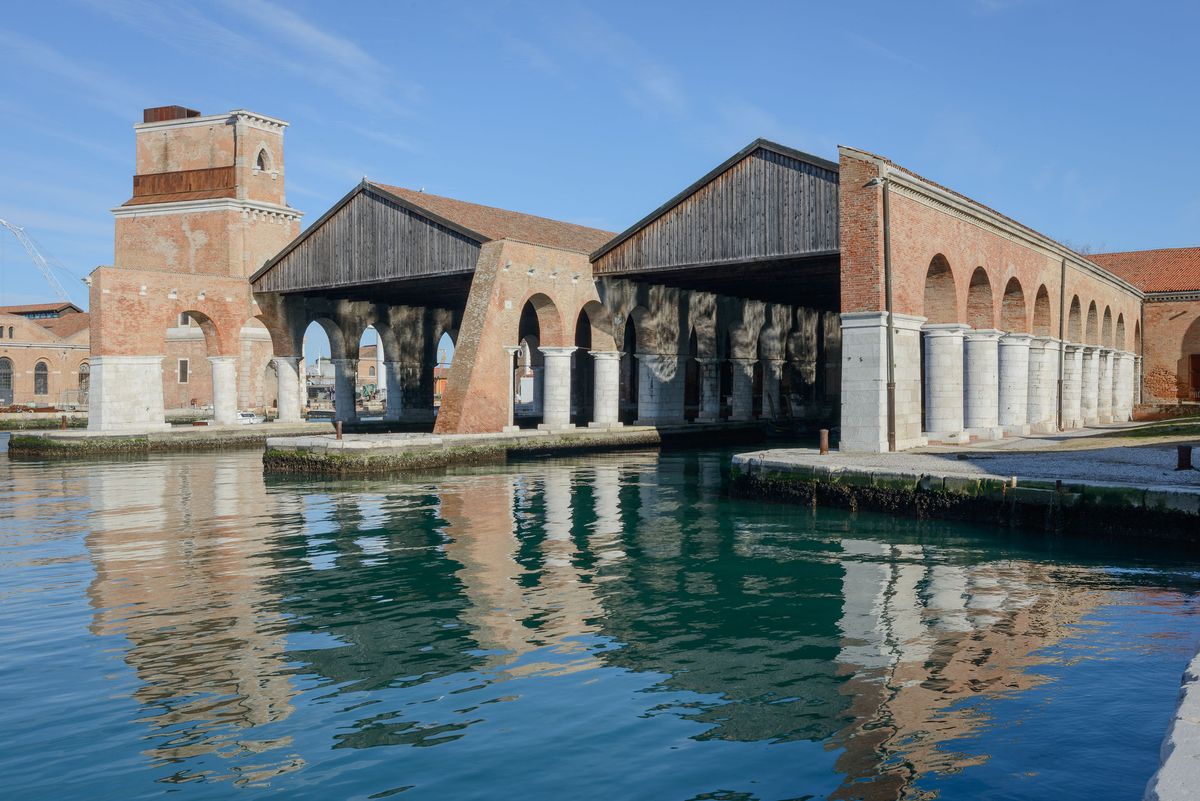
DAAR, the other Golden Lion, is Sandi Hilal and Alessandro Petti, working out of Bethlehem and Stockholm. Their room at the Arsenale presented a body of work developed over more than a decade, including the Borgo Rizza project, an unbuilding of a Mussolini-era colonial town in Sicily into a site of critical pedagogy. The work was also in Tirana, in Sarajevo, in Gaza. It was architecture as a slow, careful, rigorously documented practice of refusing some inherited things and rebuilding others. The Lion acknowledged a lifetime's practice rather than a single pavilion.
Outside the official exhibition, the Biennale was at a strange and complicated moment in history. The war in Ukraine was grinding into its second year. The Russian pavilion was still shut. The German pavilion had been handed to a collective of architects who covered parts of it in debris. The Scottish pavilion had an argument about the oil industry that would have been nearly impossible to stage five years earlier. Most national pavilions had pivoted, with varying success, to the climate-and-equity vocabulary Lokko had made central. Some had rewritten their entire brief.
There was a fair critique to be made of the Biennale, which was that a show about decolonisation and decarbonisation remained a show, staged in one of the oldest colonial cities in Europe, flown into by an audience whose carbon footprint for the week would have clothed a small Lagos neighbourhood. The critique was not false. It was also not sufficient. Lokko's rejoinder, which I think is correct, is that the institutions where these conversations have to happen are the ones we inherit, and that refusing to enter them guarantees no audience larger than the already-persuaded. Decolonisation inside a Biennale is imperfect. It is also, for now, still a Biennale.
What shifted because of the 2023 edition is hard to measure and probably overstated in both directions. The Biennale after it has a different curator and a different thesis, and a visitor asked whether 2023's agenda has been retained would have trouble saying yes. The names change, the centres move, the laboratory is always somewhere else. But the room full of African practitioners in the opening pavilion will change how the next generation of students applies to curate. That is not a small thing. That is how institutions actually move.
Lokko did not come back for the next edition, in part because in 2024 she launched the African Futures Institute in Accra, a postgraduate school of architecture that is her real long-term project. The Biennale, for her, was a platform for something that had to happen somewhere else. That is one way to read the title. The laboratory of the future is not an exhibition. The exhibition pointed you towards the laboratory. If you followed the arrow, you arrived in Accra, where Lokko was already at work.