The Clinic That Became a Fair
Nomad moved into the former Klinik Gut for its 15th edition. An art-and-design fair that treated its venue as the subject.
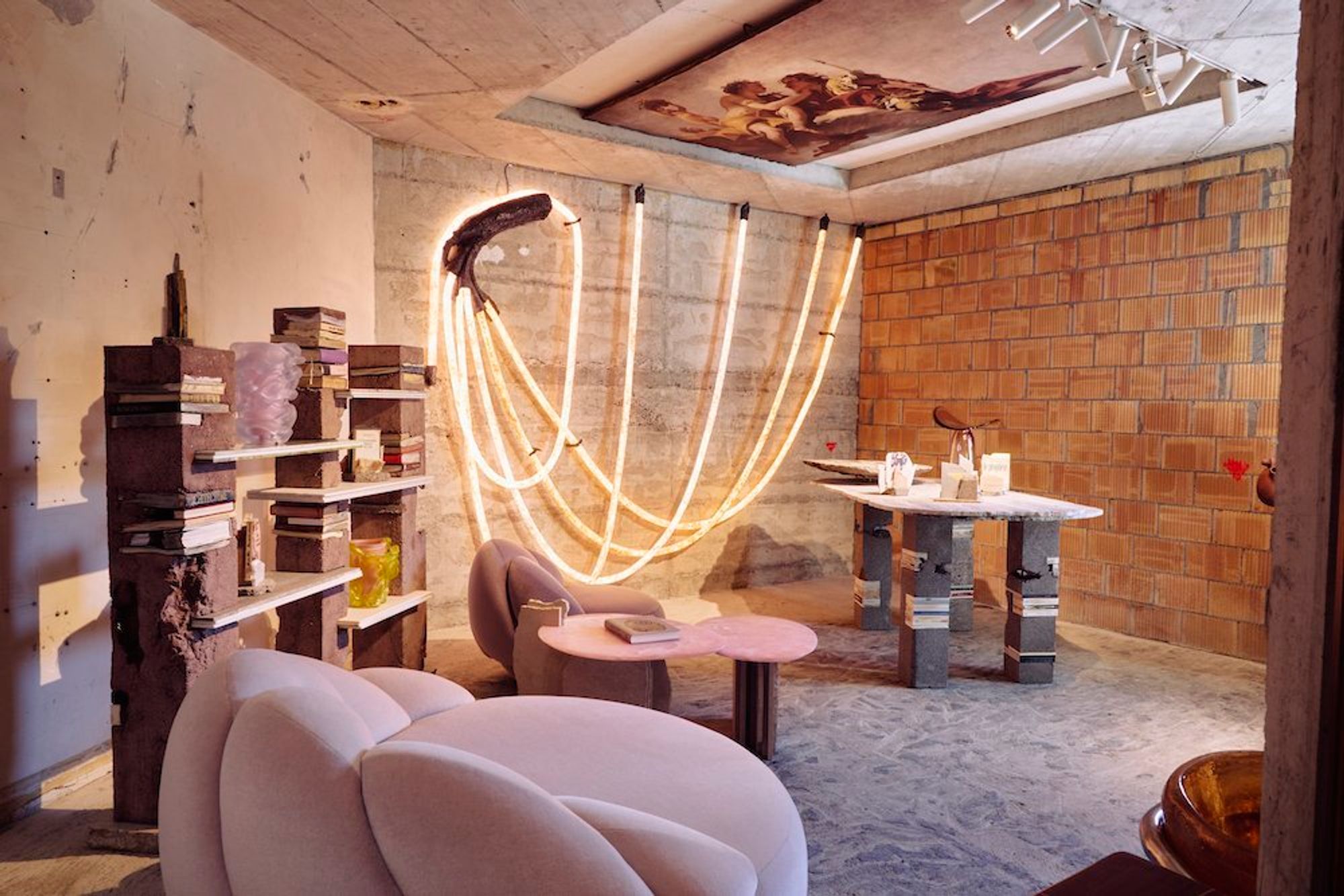
Nomad, the travelling art-and-design fair founded in 2017, returned to St. Moritz for its 15th edition from the 20th to the 23rd of February 2025. For the first time, the St. Moritz edition took place at the former Klinik Gut, an orthopaedic hospital at the heart of the town centre that had been closed the previous year and was between uses. The fair's co-founders, Nicolas Bellavance-Lecompte and Giorgio Pace, have built Nomad's reputation on this exact manoeuvre: finding a building in a moment of transition, staging a tightly edited fair inside it, and letting the space do half the curatorial work.
The Klinik Gut is, or was, a functioning orthopaedic hospital, with all of the bodily specificity that implies. Consulting rooms. Operating theatres. Long corridors with handrails. Post-operative recovery beds. Some of the fair's more interesting booths had not bothered to hide the context. A Milanese gallery had installed a collection of Maria Pergay sculptural tables in what had clearly recently been a patient dining room. A Parisian designer had shown a new set of felt-and-steel chairs in what still had the pictograms of the physiotherapy suite on the wall. Visitors moved through the fair wearing coats because the building was only partially heated, which gave the week a particular atmosphere of temporary civility.
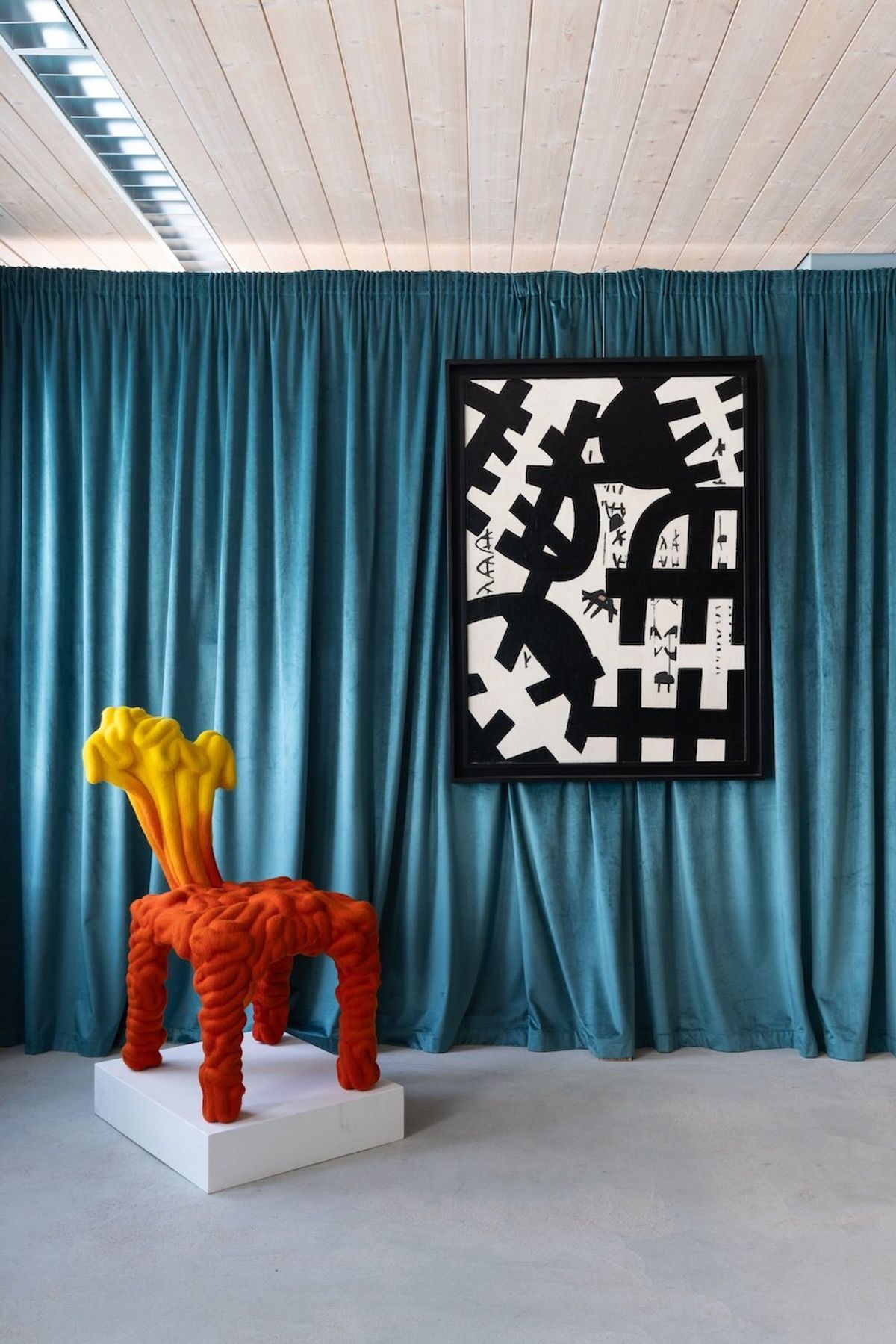
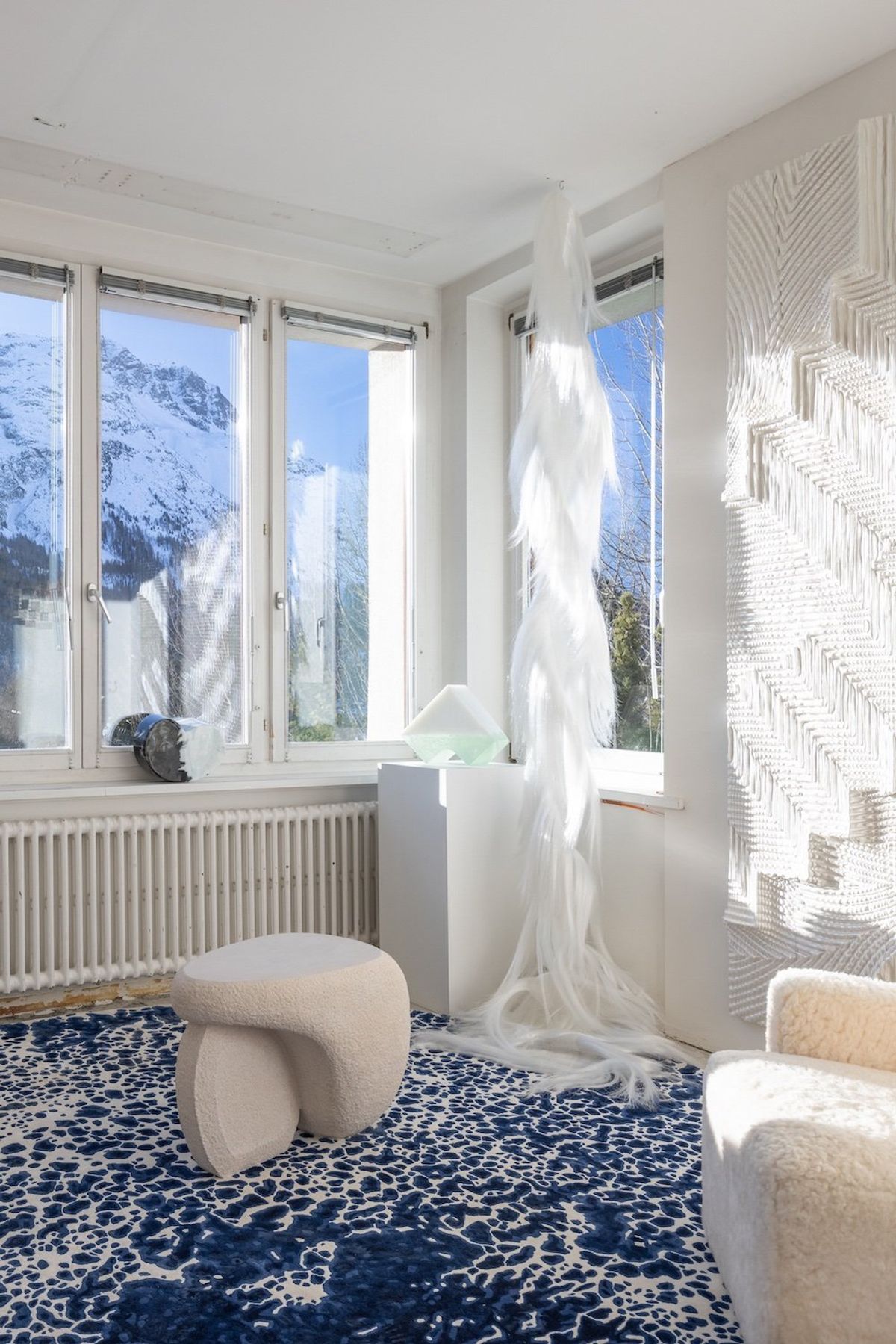
St. Moritz in February is a specific audience. Collectors who ski in the Engadin, a significant contingent of Italian and Middle Eastern clients who winter in the mountains, a smaller and more serious cohort of European curators and journalists, and the quiet Swiss dealers who have been watching Nomad for years and coming, increasingly, to buy. The fair is small, by design. You could get around it in a long afternoon. The particular pleasure of Nomad is that you then have nowhere else to go, because you are in St. Moritz, which means you either ski or drink. Most of us drink.
The strongest booths did what Nomad always asks galleries to do, which is edit down. A Jakarta-based gallery had two objects. A Zurich gallery had three pieces by the Hungarian sculptor Endre Nemes, paired with a Béni Ferenczy bronze. The Swiss dealer Tornabuoni had turned a small office into a room with one Lucio Fontana painting and two Carlo Scarpa vases. Fewer things, more context, more time per piece. The economics of this kind of presentation only work if the price per object is very high. Nomad's logic accepts that openly.
There was also, as part of the fair, a pop-up restaurant organised with the Jumeirah Capri Palace, called Ma-Re Capri, designed by the architect Giuliano Andrea dell'Uva and run by the executive chef Salvatore Elefante. The pop-up was in a room that had, a year earlier, been the hospital canteen. Dinner was served at small tables with white tablecloths. The chef walked out at the end of each service and made, briefly, a Neapolitan speech in Italian that was translated for the German and English guests by a patient room supervisor who had, it emerged, still been on the hospital's payroll.
Nomad will move, for its next St. Moritz edition, to a venue within the same building but under a new name and renovated cosmetic. Villa Beaulieu, as the building is now being called, will lose the post-hospital feeling. I do not think it will lose Nomad's charm, which lives more in the fair's editorial discipline than in any particular building. But the Klinik Gut edition had a specific quality that I suspect will not come back: the sense of a fair occupying a space that had, three months earlier, been used for something more important than selling chairs. That dissonance was the 2025 edition's weather.