The Central Pavilion Is Closed
Carlo Ratti's Venice Architecture Biennale opened with a hole in its middle and a thesis about intelligence. The hole was more interesting than the thesis.
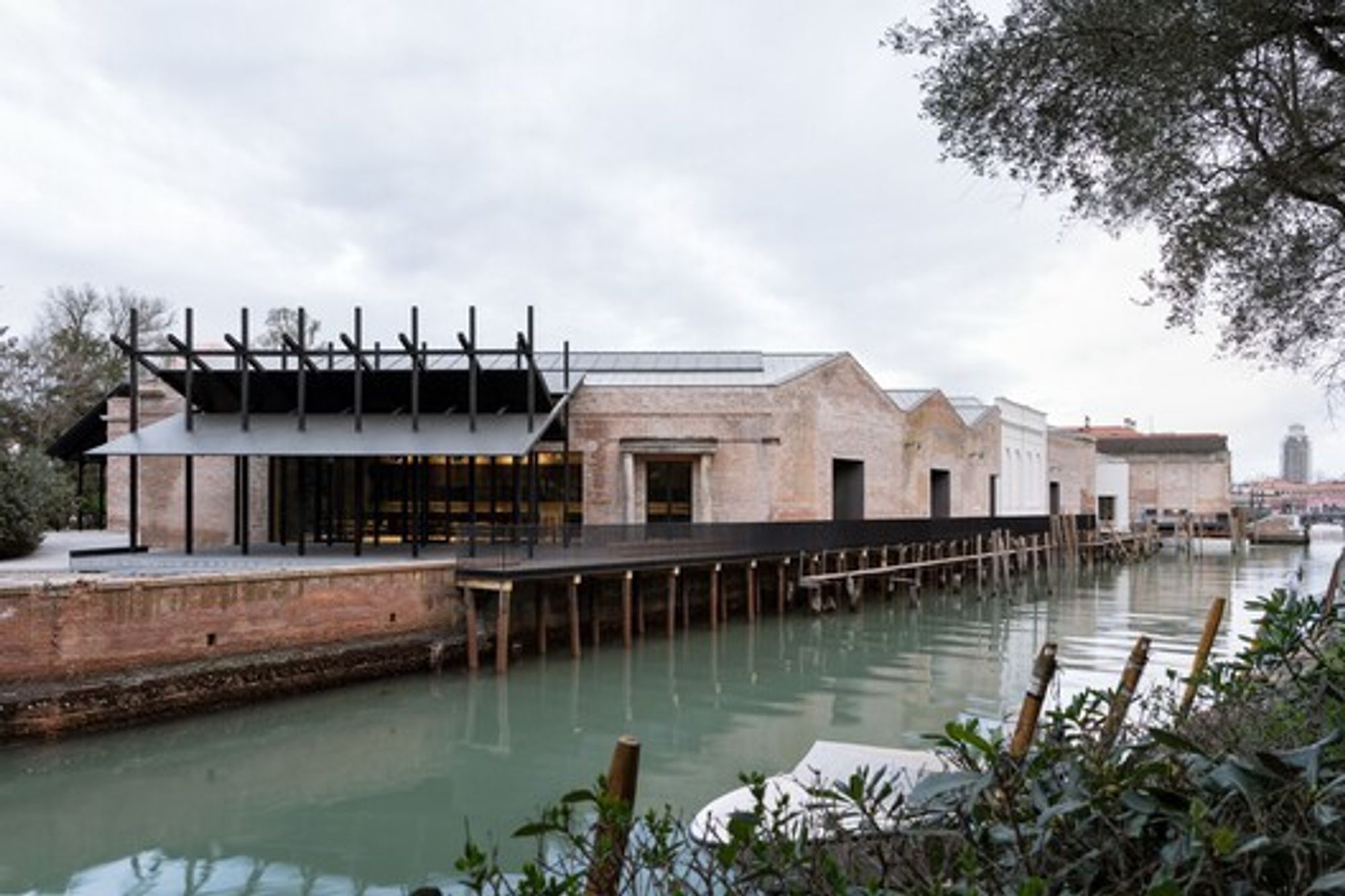
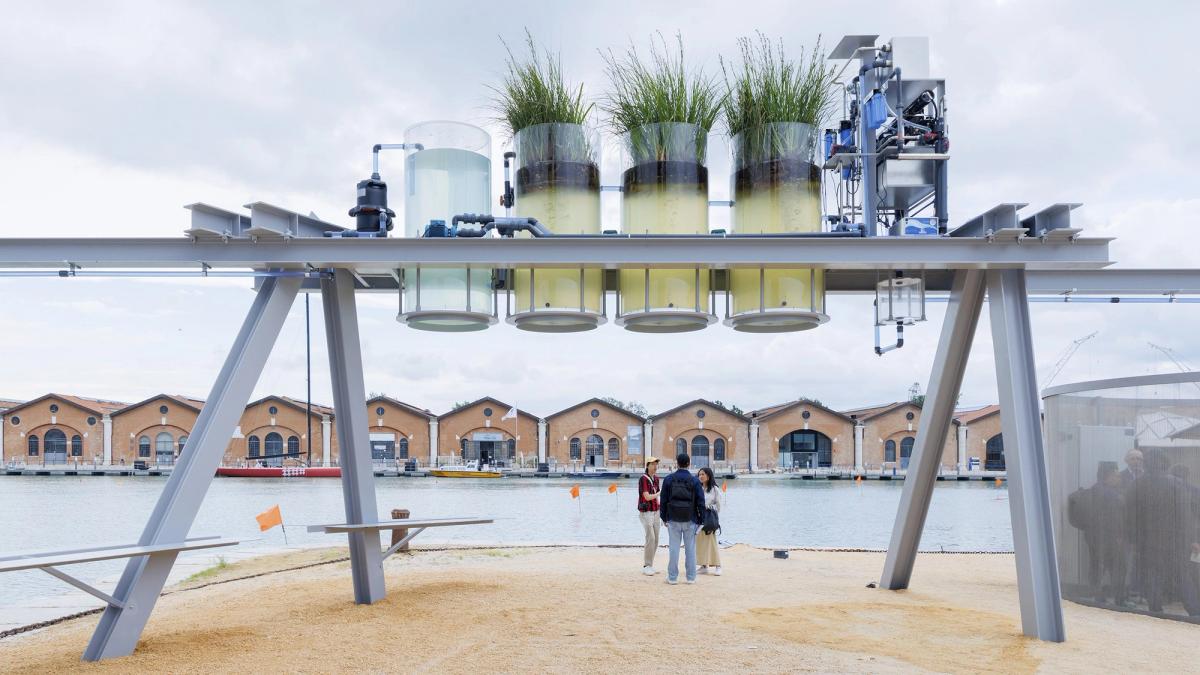
For the first time since 1895, the Central Pavilion at the Giardini is closed. Renovations. There is no equivalent in the Biennale's 130-year history, and the absence shapes everything about this year's show. Carlo Ratti, an Italian architect and engineer who runs a practice and a lab at MIT, had to spread his argument across the Arsenale, across a city he could not gather at its usual centre, and across more than 750 participants drawn from architecture, engineering, climate science, philosophy, art, cooking and coding. He called the show Intelligens. Natural. Artificial. Collective. It opened on the 10th of May, 2025, and the Golden Lions went to Bahrain for the best national pavilion and to Diller Scofidio + Renfro for the best contribution to the main exhibition. The DS+R piece is an espresso bar run on water purified from the Arsenale lagoon. You get a coffee if you queue long enough. The coffee was fine.
The show's thesis is that architecture has spent several decades mitigating the climate crisis and that it needs now to start adapting to it. Ratti is good on this point. The old architectural posture, the one that built a Passivhaus and declared the problem mostly solved, has been overtaken by the fact that the climate has already changed. The buildings that will matter are the ones that know how to be hot when it is very hot and wet when it is very wet and somehow, still, places you would want to live. Adaptation rather than mitigation. Fair enough.
The thesis lands less well when it starts to pair itself with the word intelligence. Ratti wants three kinds: natural, artificial, collective. In practice this means that the Arsenale rooms are full of AI-assisted design proposals, generative façade studies, machine-learning climate models, and the sort of screen-heavy installations that reward the viewer who already knows what they are looking at. An Arsenale visitor unversed in the jargon will find it hard going. The good pieces are good; the mediocre pieces are mediocre in a particularly dense way. What all of them share is the assumption that the problem is solvable if the computation is big enough, which is not, on the face of it, the thesis the introductory essay promised.
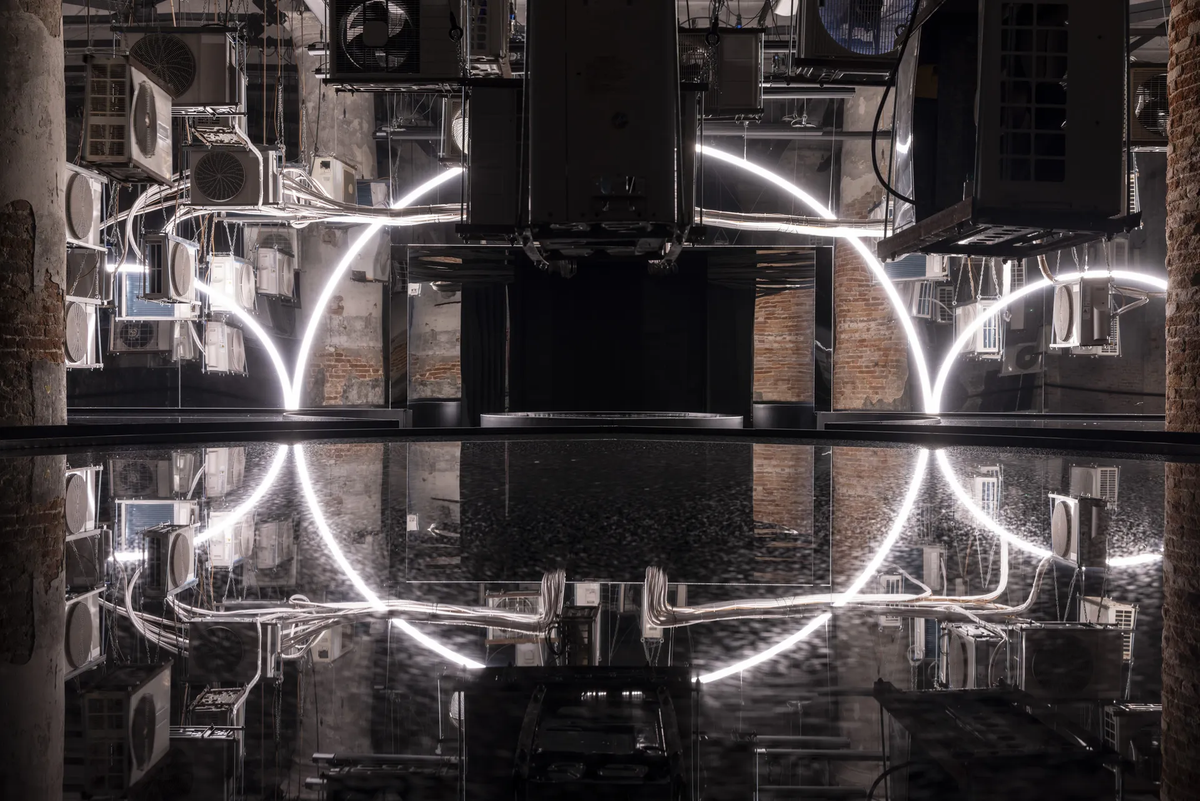
The national pavilions are where the show recovered. The Bahrain pavilion, designed by Andrea Faraguna, is called Heatwave. It is a small and precise argument against the idea that a cooling solution requires a refrigerator. The pavilion reaches back to regional traditions, the wind tower and the shaded courtyard, and reconstructs them with contemporary materials. It is cooler inside than outside by roughly ten degrees, depending on the day. You walk in sweating and you are, within a minute or two, not. The jury gave it the Golden Lion, and the jury was right. It was one of the only pavilions in Venice where the thing the wall text described was the thing the room actually did.
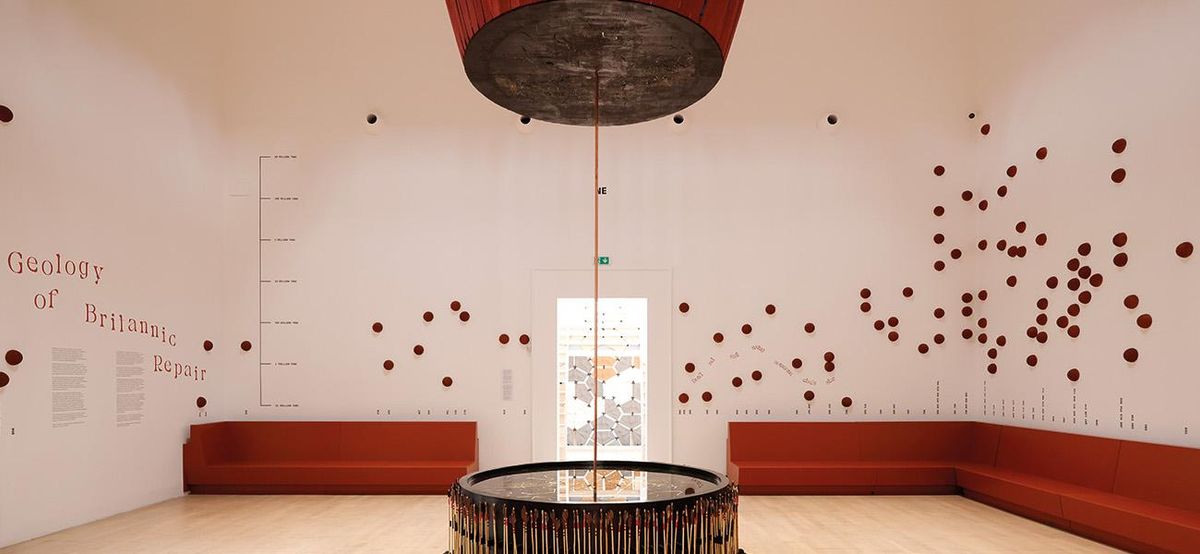
The British pavilion, by GBR: Geology of Britannic Repair, got a special mention. It argued that the built environment in Britain, especially its extractive legacy in the Global South, cannot be decoupled from the geology that shaped it. The curators used soil samples, ceramic vessels and the pavilion building itself as an exhibit. The Holy See pavilion, also a special mention, took over a former church near the Arsenale, restored parts of it during the exhibition run, and treated the building itself as the artwork. Opera aperta, they called it. Open work. It was. You could watch the plaster get repaired.
Outside the Giardini the show got good. The Ratti premise, which wanted to drop the architect as sole author and replace him with collectives of climate scientists and coders and cooks, worked best in the rooms that let architecture be one discipline among others rather than the discipline that presides. A project on urban composting in São Paulo. A prototype for floating seaweed-based sunshades in the Venice lagoon itself. A room in which engineers from the KU Leuven were growing mycelium wall tiles. None of these are new ideas, and you could argue that a Biennale should be showing you new ideas and not prototypes for ideas you already read about in 2022. But the atmosphere in these rooms was different to the main Arsenale. People took their time. They did not look past the objects at their phones.
The question Ratti's show raises and partly dodges is whether the problem with architecture is cognitive. Ratti thinks the problem is, at least partly, intelligence: we do not yet think the right way about climate, about systems, about the collective life of buildings. The Bahrain pavilion thinks the problem is conviction. They already know how to cool a room without electricity. They just need someone to remember and to build it. The two positions are not mutually exclusive, and the better pavilions sat somewhere between them. But the show as a whole would have been stronger with more Bahrains and fewer dashboards.
I will say one thing in favour of the closed Central Pavilion. The Biennale is always a slightly closed system, a ring of national flags and rivalries staged inside a former naval yard. This year, without the Giardini's anchor, the exhibition spilled into Ca' Giustinian, into a former church, across two canals, into a vaporetto stop, into an espresso bar floated on filtered lagoon water. The fact that you had to walk further to see the show meant that the show felt more like a city. Whether this was intentional is one question. Whether it is an improvement is another. For most of the week it was.