Terra
Gabriela de Matos and Paulo Tavares took the Brazilian Pavilion's floor up and put red earth in its place. The Biennale jury gave them the Golden Lion for it.
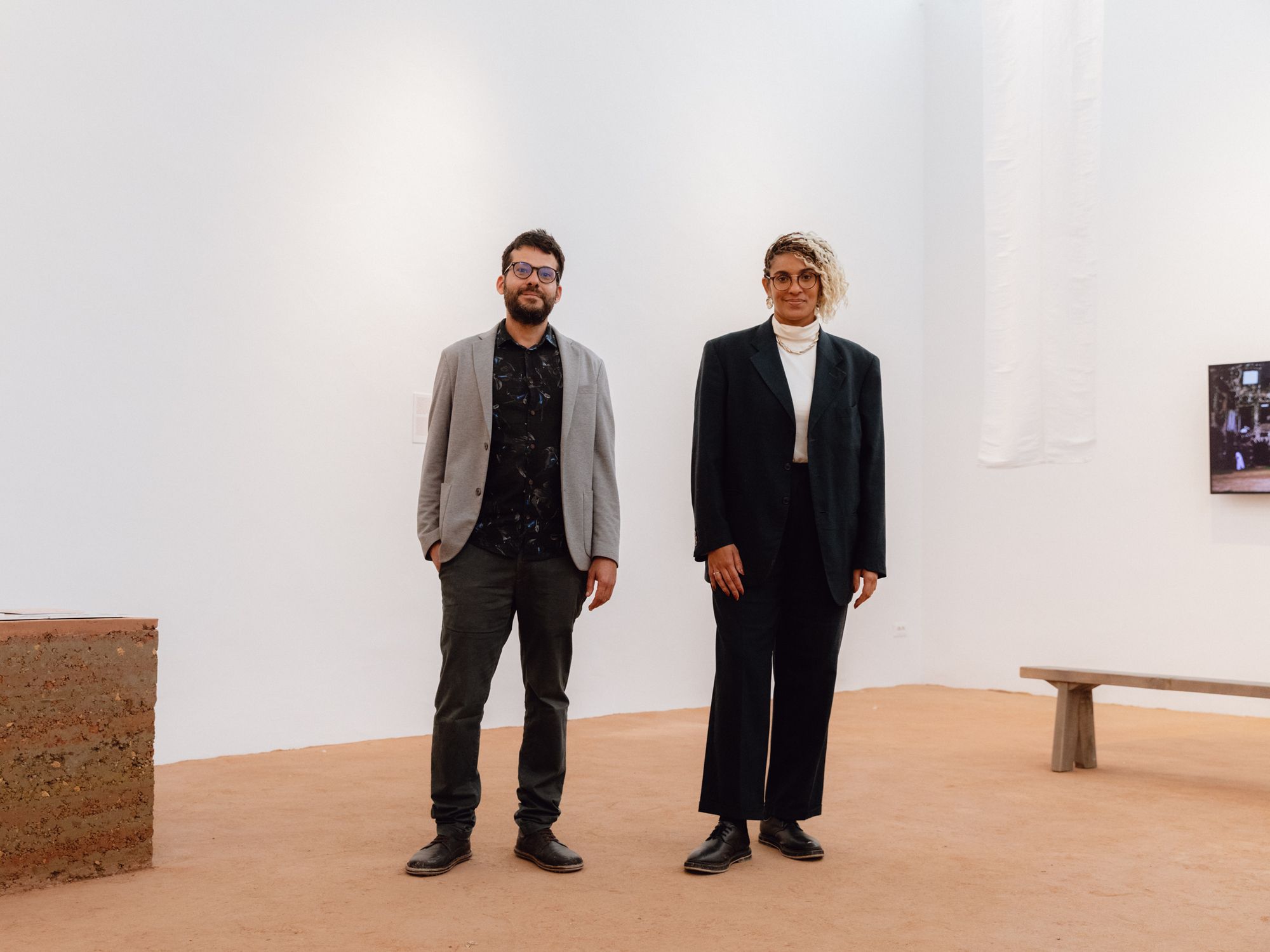
The Brazilian pavilion at the Venice Architecture Biennale is in the Giardini, in a tidy modernist box near the Italian pavilion, with a shallow pool at its entrance. In 2023, Gabriela de Matos and Paulo Tavares did the simplest thing you can do to a pavilion. They took its floor up. In its place they laid compressed terra, red earth from Brazil, several centimetres thick. You came in from the Giardini path, you took off your stuff, and you walked on the ground. The show was called Terra. The jury gave it the Golden Lion for Best National Participation. It was not a difficult decision.
De Matos is an architect who trained in Belo Horizonte and has spent much of her career working on housing policy and urban projects in Brazilian favelas. Tavares is a theorist and architect whose work is closer to forensics. He has spent years reconstructing, through archival and spatial analysis, the violence done to indigenous peoples by the Brazilian state in the twentieth century. Together they had proposed that a Brazilian pavilion at the Biennale should not perform national architecture as an exportable style, but should instead excavate the question of what Brazilian architecture actually had been, if you did not count only the modernism invented in São Paulo in the 1950s.
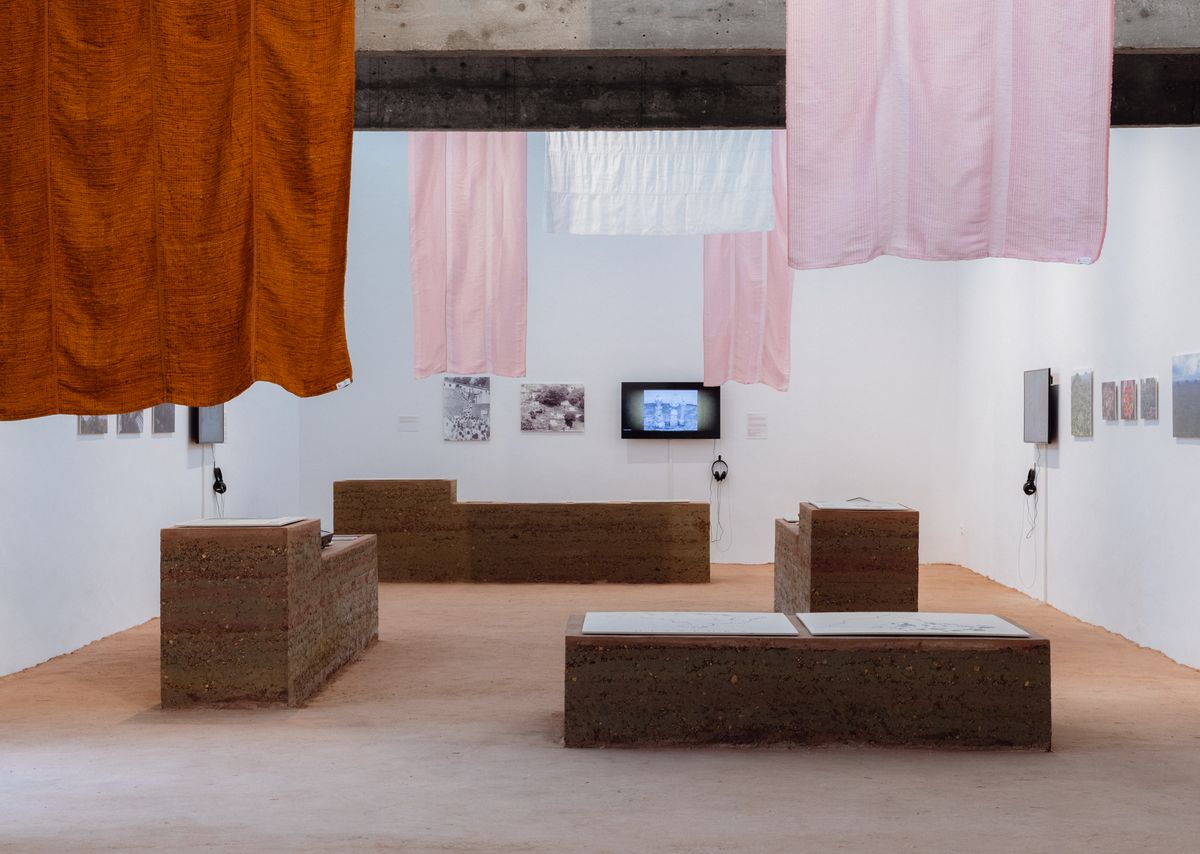
The answer filled the pavilion. On the walls, in a low, quiet hang, a sequence of documents, drawings, photographs and films traced architectures of indigenous and Afro-Brazilian communities over five centuries. Quilombo settlements. Kaingang longhouses. Terreiros de candomblé. These were not presented as folklore or as pre-modern precedent. They were presented as architectures, which is to say, as deliberate, continuous, ongoing practices of making and maintaining space. The curators had reframed the basic vocabulary. Building became one category among others. Planting was architecture. Memorial was architecture. Repair was architecture.
The earth under your feet was not a prop. It was the argument in material form. The Brazilian pavilion's floor had been, for most of its history, a clean European modernist slab. Covering it with earth was an act of returning the building to the ground that it had, for several decades, been designed to pretend it did not need. You stood on Brazil when you were inside the pavilion. Most visitors eventually looked down.
The pavilion also contained the question of its own limits. The exhibition was explicit that the communities whose architectures were on show had not, for the most part, been asked whether their work should be at a Venetian art Biennale. The curators acknowledged this. They did not resolve it. What they did was give credit by name wherever naming was possible, and they donated a portion of the pavilion's budget to Brazilian indigenous rights organisations. The acknowledgement did not solve the extraction problem any exhibition of this kind sits inside. It at least did not pretend the problem wasn't there.
I walked through the pavilion three times over a week. The first time I read most of the wall text. The second time I spent looking at photographs of villages in Rondônia, which showed circular arrangements of buildings with common courtyards that architects in São Paulo and Rome have been expensively rediscovering for the last fifteen years under the name of community-led design. The third time I just stood on the earth. The smell of the pavilion had changed from the smell of Giardini air conditioning to the smell of damp soil. I was not the only visitor who had noticed.
The Golden Lion, when it came on the first weekend, surprised no one. The jury had picked a pavilion that did what the Biennale theme asked for and did it with architectural means rather than curatorial prose. Terra was an argument in a material form about what architectural history looks like if you subtract Europe from the conversation for ten minutes. You could leave the pavilion holding that subtraction in your head. Not all Golden Lion pavilions give you something to leave with. This one did.