Ten Degrees Cooler
Bahrain's pavilion at the 19th Architecture Biennale won the Golden Lion for a reason most visitors could feel on their skin.
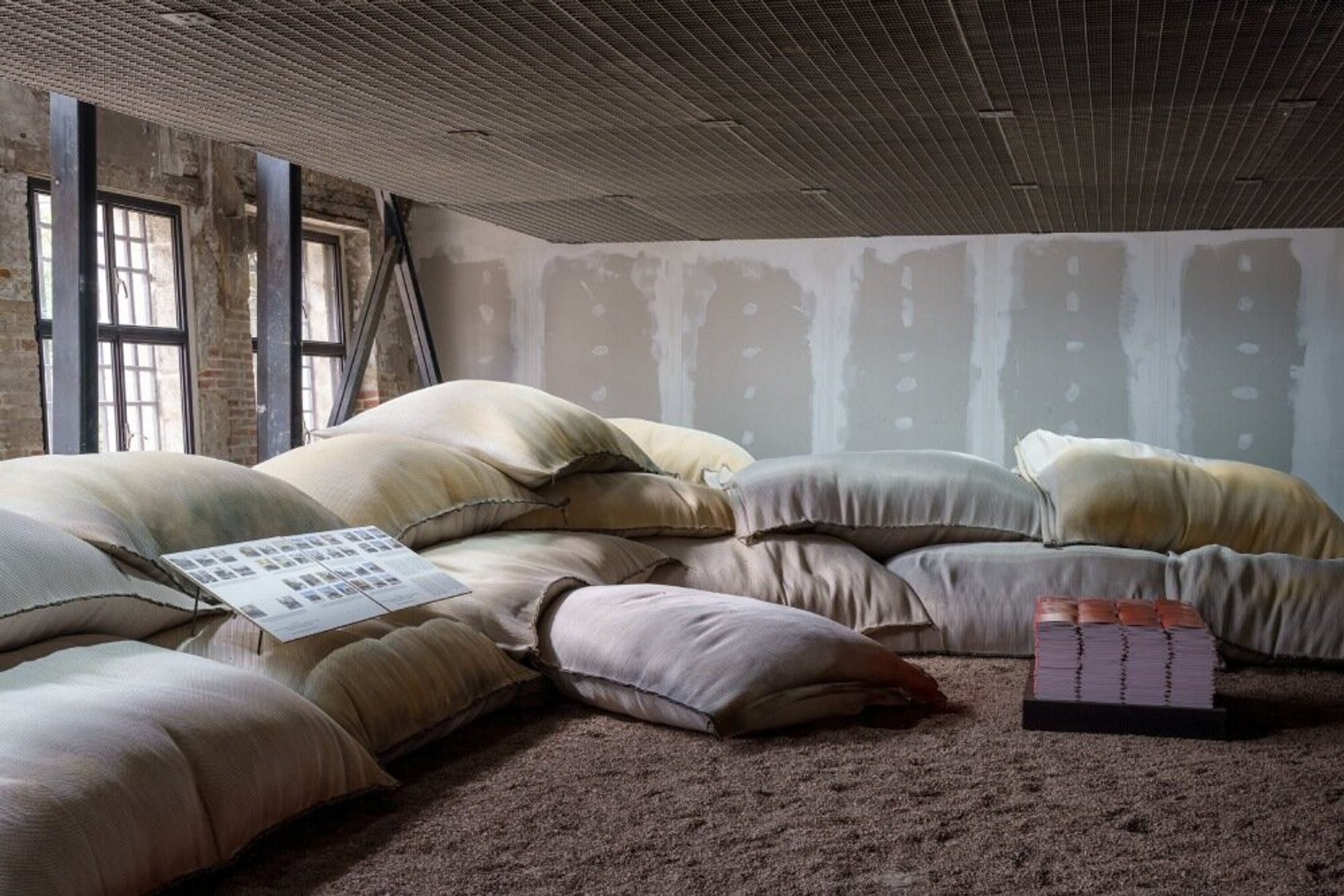
The line at the Bahrain pavilion this year was short at the start of the Biennale and longer by the end, once people began to tell each other about it. The pavilion is titled Heatwave, designed by the Berlin-based architect Andrea Faraguna with the Bahrain Urban Research Team. It won the Golden Lion for Best National Participation at the 19th Venice Architecture Biennale. The reason it won is this: you walked in sweating and you stopped sweating. The reason it won is also this: the cooling was not provided by a refrigerator.
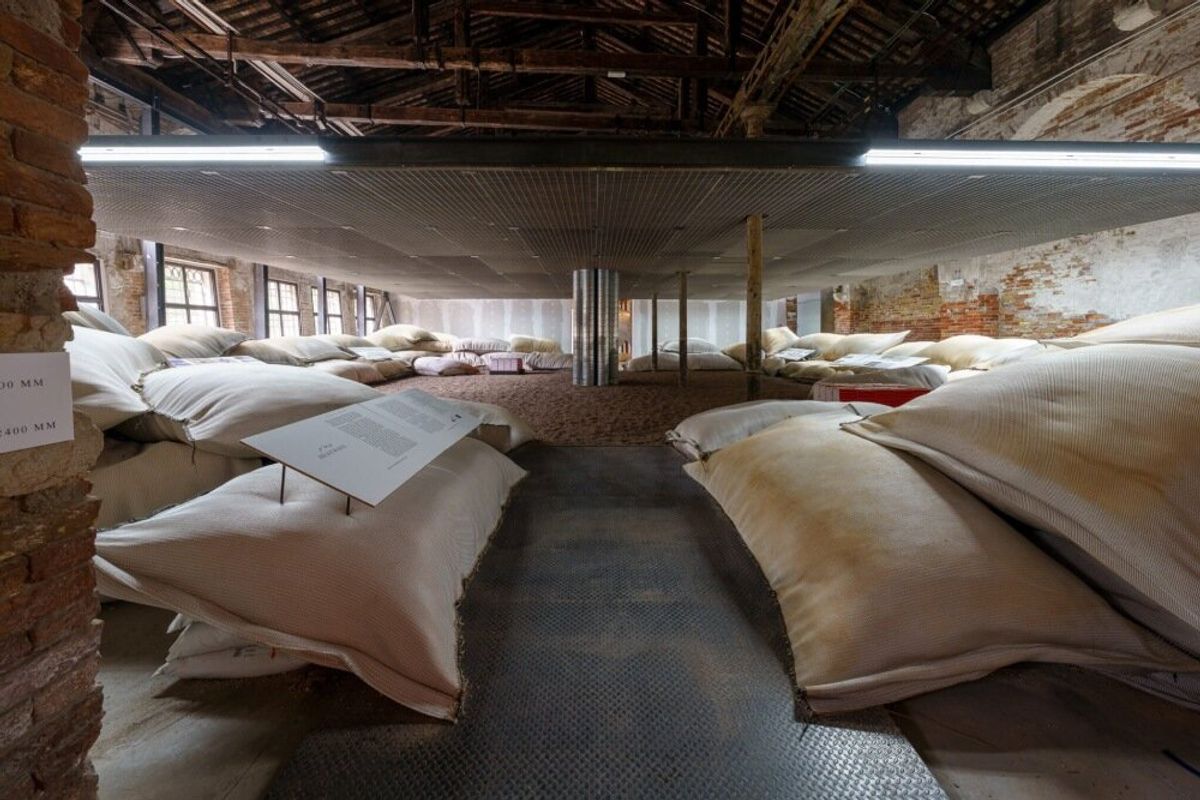
Heatwave is a small pavilion, under the Artiglierie of the Arsenale, shaped roughly like a room. There is a wind tower at the top. There is a shaded courtyard-style space in the middle. Air moves through the pavilion because of the geometry; it is drawn up and out by the tower, which creates a pressure differential, which pulls new air in along the floor. The temperature inside is consistently lower than the temperature outside, on some days by as much as ten degrees Celsius. There are no fans. No cooling compressors. No power source beyond the building itself. This is the system that kept Bahraini courtyards habitable for centuries, reconstructed for a room in Venice in 2025.
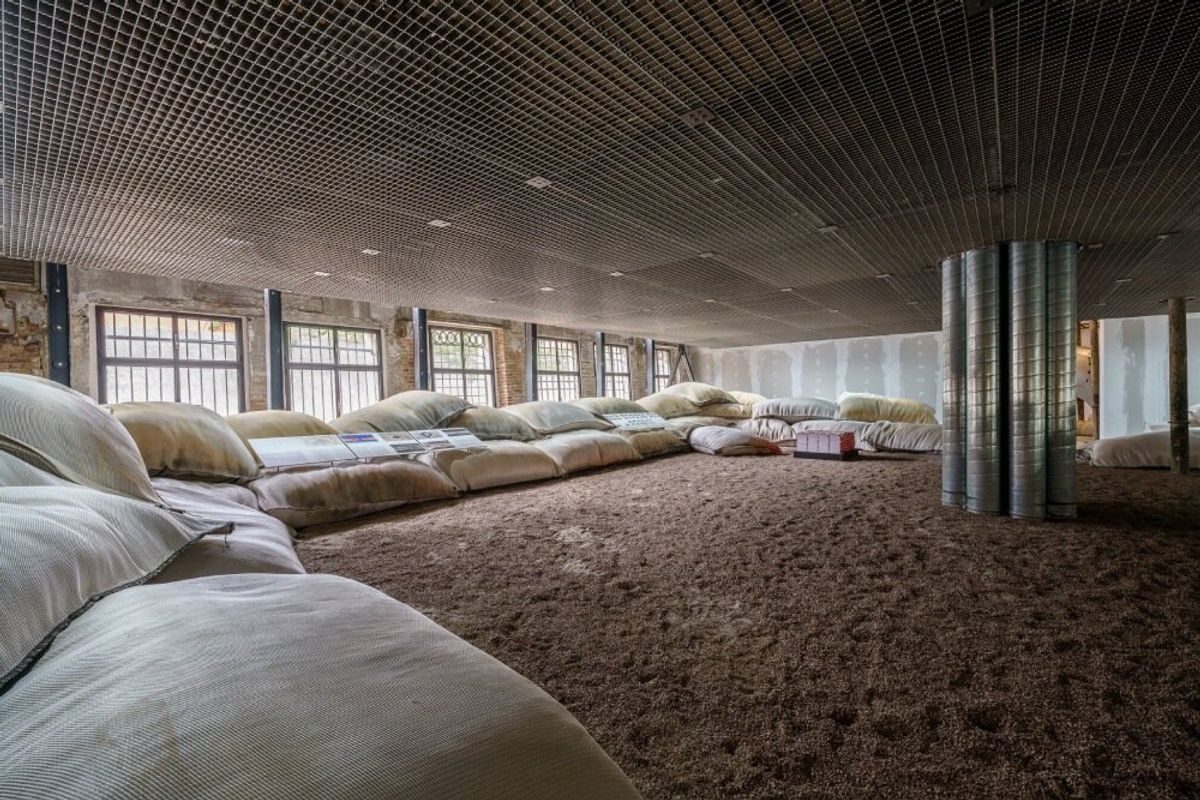
The pavilion's argument is that the Gulf has been solving the heat problem with passive architecture for a long time and that somewhere in the twentieth century a great deal of that knowledge was set aside in favour of air conditioning and mechanical ventilation, neither of which are good ideas in a warming climate and both of which are making the exterior hotter while cooling the interior. The wind tower returns. The courtyard returns. Both have been updated: the materials are contemporary concrete and stone, the geometry has been CFD-modelled, the results have been tested. The pavilion is not nostalgic. It is precisely engineered nostalgia, which is an older tradition than most people remember.
You notice the cooling before you read the wall text. The pavilion is crowded enough that your first observation is usually about the humidity of the person standing next to you, which is also lower than it is two metres outside. Then you read the text and you look up at the wind tower and you understand what has just happened to your body. This is a rare experience in a contemporary architecture exhibition. Most of what you see is a representation of a project, a model or a film or a diagram. Heatwave is the project. You are inside the argument.
That is why the jury gave it the Lion. Hans Ulrich Obrist, Paola Antonelli and Mpho Matsipa picked a pavilion that does not just talk about adaptation; it adapts. In a Biennale whose curator, Carlo Ratti, has spent most of his wall text arguing that architecture needs to stop thinking about climate in terms of mitigation and start thinking about it in terms of adaptation, Bahrain turned up with an already-adapted building. The curator's argument and the jury's choice were, this year, perfectly aligned.
There is a politics underneath this, which the pavilion gestures at without belabouring. The knowledge Bahrain is returning to is older than the air-conditioned Gulf skyscraper, and the Gulf skyscraper is in many ways a colonial form, imported from New York and modified for sand. The passive cooling tradition is local. Recovering it is a small act of self-reference in a region that has spent fifty years importing architectural logic from elsewhere. The pavilion does not make this argument explicitly. It is too confident to have to.
I walked around the Arsenale afterwards, through rooms full of screens simulating climate models, and I kept coming back to the temperature difference. Ten degrees is a lot. Ten degrees is the difference between a place you want to be and a place you do not. Ten degrees is also the kind of thing every climate report has been telling us is at stake in the next half-century. Bahrain's pavilion shows you that ten degrees, inside of one small room, is already something architecture knows how to produce without electricity. If more of the Biennale had been this specific and this practical it would have been a different show. Most of it could not be. Some of it was. That was enough.