Still Basel
The 55th edition of Art Basel came and went and the market pretended nothing had changed. A few rooms admitted otherwise.
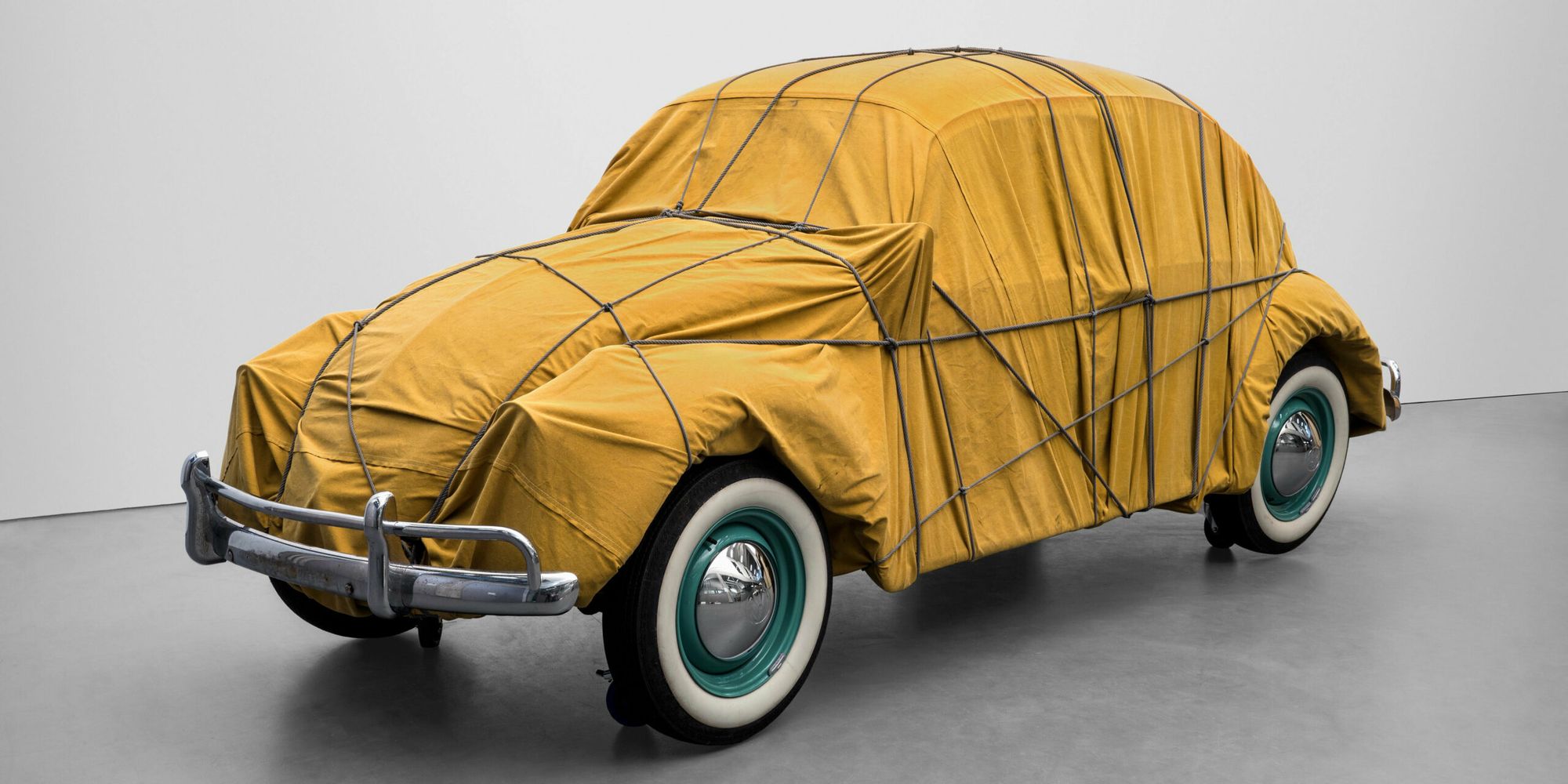
Art Basel's 55th edition, running from the 13th to the 16th of June this year, was the one where the market pretended everything was normal. The mood on VIP day was careful. Sales happened but did not, in general, break. A Louise Bourgeois spider at Hauser & Wirth. A Simone Leigh at Matthew Marks. A mid-career Ed Ruscha at Gagosian that moved within the first hour, which was about the only thing that did. The auction houses had been flagging for months that the top end was thinning and the fair reflected them; the dealers had come with less speculative work and more consensus. I do not remember another Basel where the word reasonable was used so often by people who are in the business of being unreasonable.
This does not mean the fair was dull. It means the fair was specific. Unlimited, curated by Giovanni Carmine of Kunst Halle Sankt Gallen, ran 70 large-scale installations, and two or three of them were as good as large-scale work gets in a fair context. Pace showed the complete The Americans by Robert Frank, all 84 photographs, hung in a single room with the discipline of a museum wall. It was the strongest room in the building. Frank was Swiss. The choice to show the whole series in Basel was a small grace note on the part of the gallery, or a very clever sales move, depending on who you asked.
Ryan Gander had installed a life-sized animatronic gorilla under an office desk, counting on her fingers and grumbling, while a small fan blew the faint smell of urine around the booth. It was called School of Languages and it was funny. Most visitors did not know what they were looking at until they bent down. A few shrieked. Chiharu Shiota had suspended a network of red thread across a large volume in a way that was, let us say, recognisably Shiota; Mario Ceroli's Progetto per la Pace from 1968 turned up next to a Julio Le Parc steel zeppelin from 2021, a fifty-three-year gap bridged by a single room of Italian and Argentine formal cleanliness.
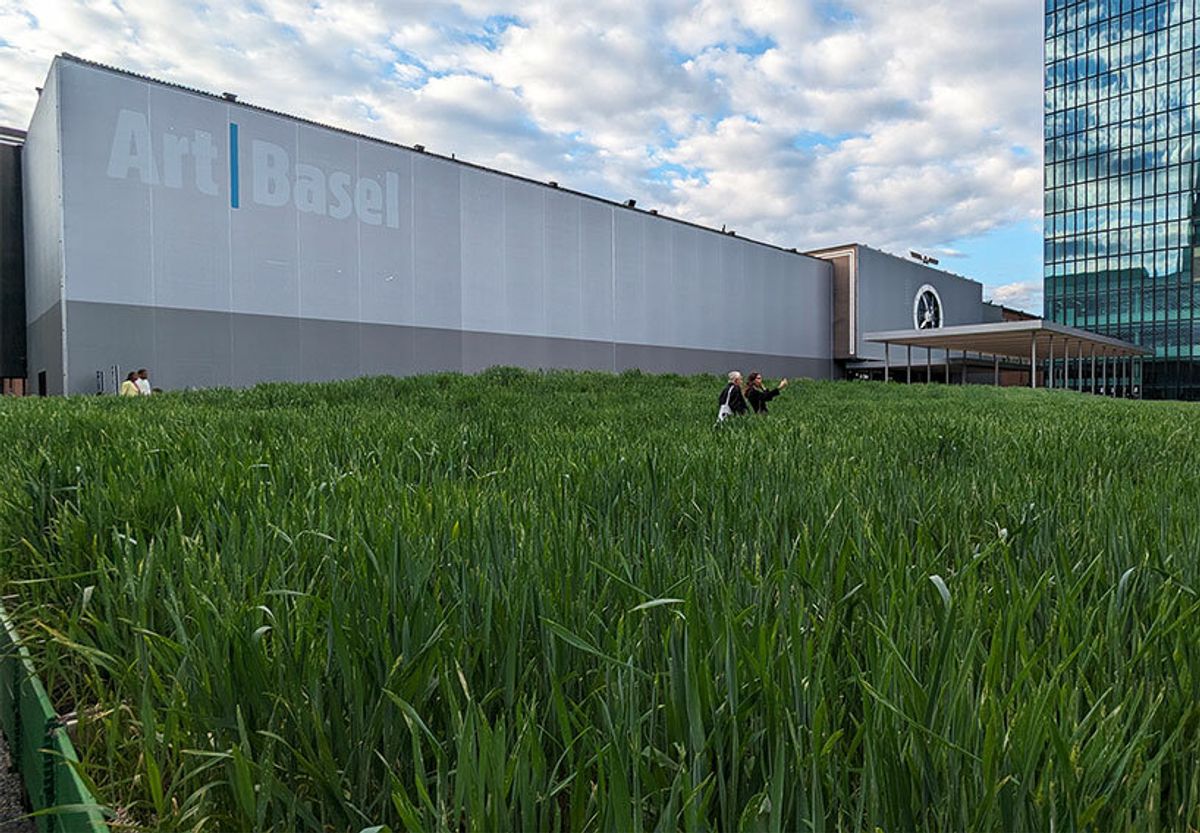
Parcours, which this year was curated for the first time by Stefanie Hessler, unfolded along Clarastrasse and into public spaces near the fair. Hessler had moved it off the Rhine and into the street. Lap-See Lam's combination of Chinese shadow play and digital animation turned up in a pedestrian passage near Messe. A hot-dog stand that was also a Honglei Wong artwork. A performance in a bus shelter. This was the most successful Parcours in some years. It worked because the public works felt like they were responding to Basel rather than parachuted into it.
Elsewhere in the main hall, the booths did their usual opera. David Zwirner's booth with Alice Neel paintings. Sadie Coles with a strong Helen Marten wall. Thaddaeus Ropac showing four Georg Baselitz heads in a configuration that made even the Baselitz-sceptic consider. The most interesting thing about the aisle flow this year was what the galleries chose to de-emphasise. There were fewer NFT-ish wall sculptures. Fewer artist-celebrity crossovers. The speculative middle, the stuff that had inflated in 2021 and 2022, had quietly been taken down to the basement. What replaced it was a lot of work by established artists that you could place into a museum collection without embarrassing yourself.
The quiet result of a softer market, in other words, is a better fair. Not for everyone; not for the younger galleries whose margin lives on the speculative middle; not for the collectors who had gotten used to flipping the next Carmen Herrera. For visitors, though, a Basel full of work you could actually live with is a less exhausting object than the Basel of two years ago.
At the Rhine, on Saturday, the fair did the thing Basel fairs always do: it emptied into the river. People in the linen shirts of people who have sold something were floating downstream with watertight bags. The temperature was 29 degrees. There was a slight panic at Unlimited about a leak near the Ceroli. Nobody at the Rhine knew about it. Both of these facts are the fair.