Soul Garden
Design Miami/ Paris's third edition reviewed. Goyal's scent garden, Wulf's musical ping-pong table, and a fair finding its register.
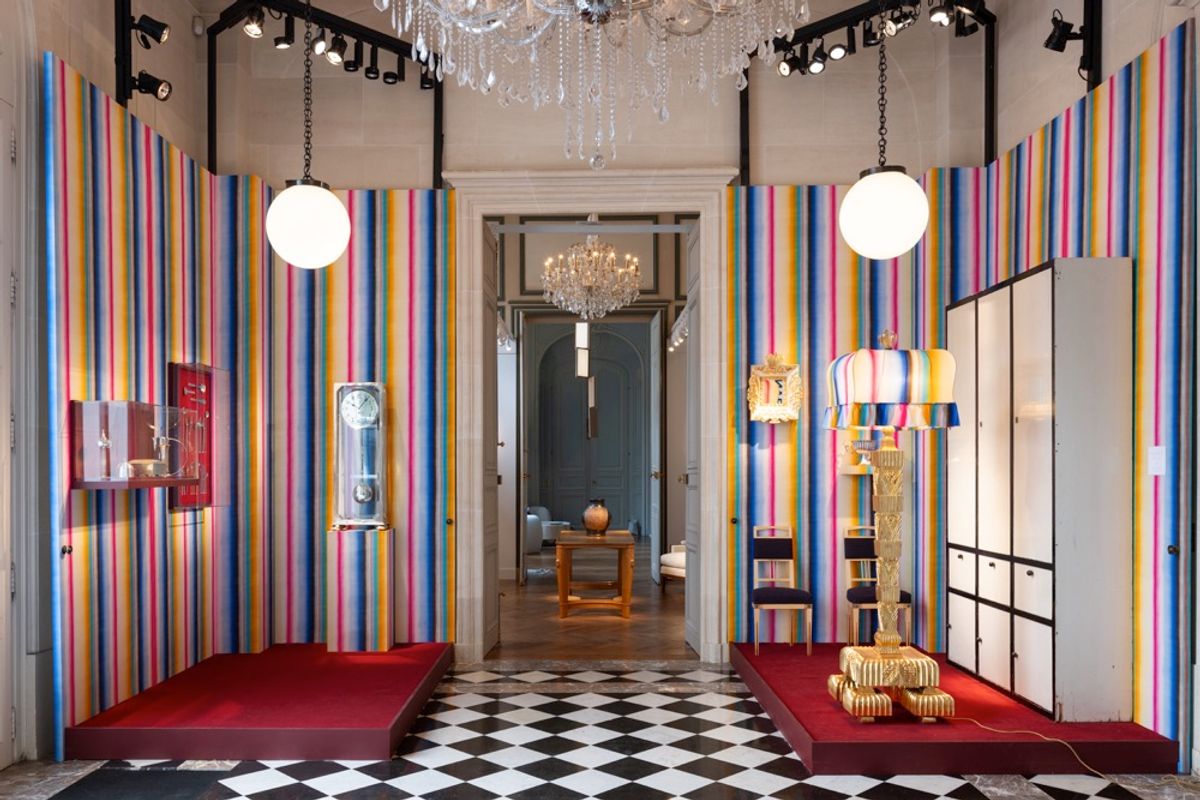
The third edition of Design Miami/ Paris opened on the 22nd of October 2025 and ran through the 26th at L'hôtel de Maisons, the same 18th-century mansion in Saint-Germain-des-Prés that has housed the Paris edition since its launch. Two years into its residence there, the fair has settled into the house. Routes through the rooms are more obvious. The catering has improved. The courtyard has been subdivided, sensibly, into zones. What was, in 2024, a fair that was arriving has become, in 2025, a fair that is there.
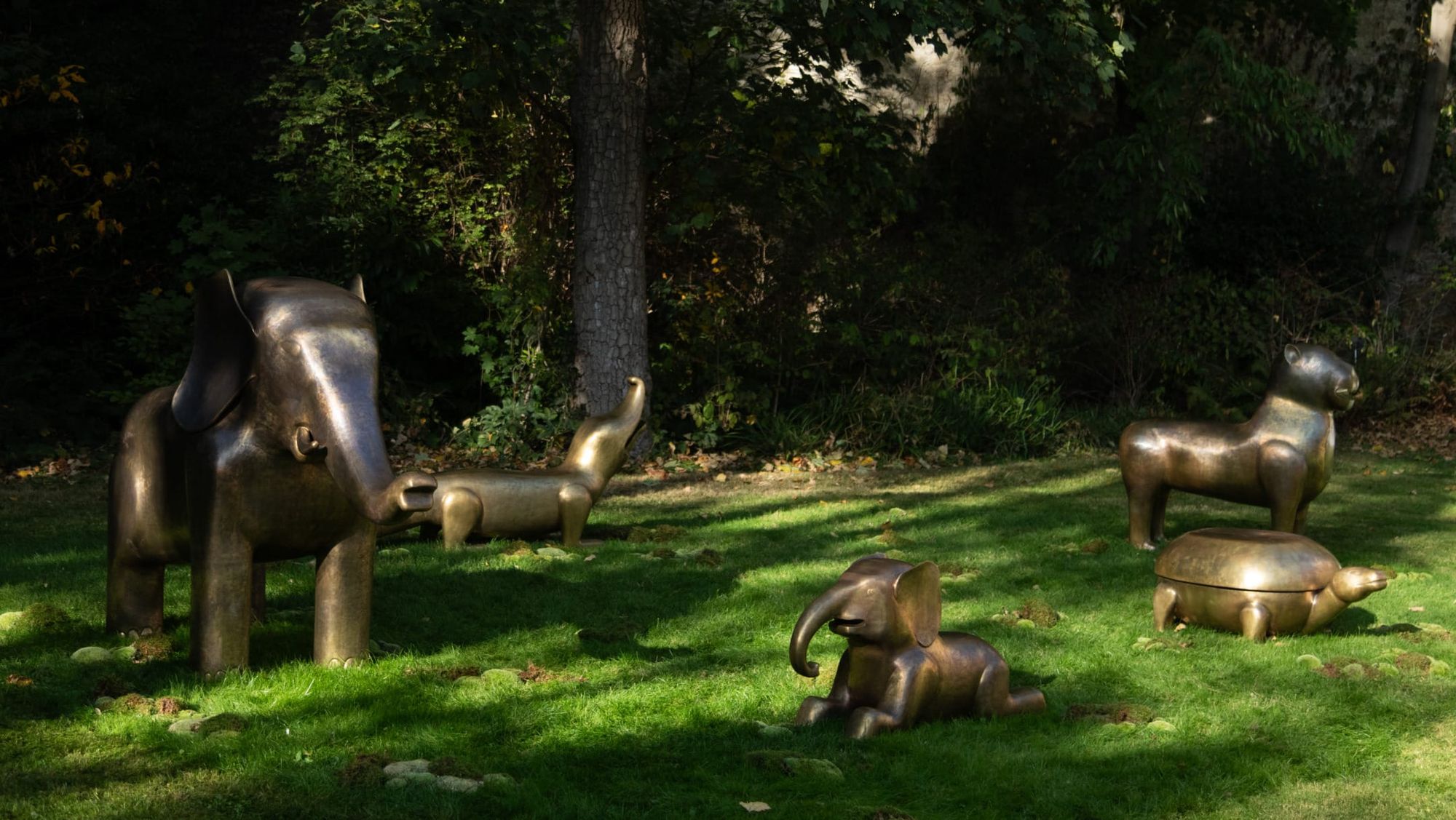
The marquee installation was The Soul Garden, a collaborative work by Vikram Goyal, the Indian designer and metalworker, and Sissel Tolaas, the Oslo-based olfactory artist. It was installed in one of the principal gardens of the hôtel. Goyal had sculpted a set of zoomorphic pieces in brass and repoussé metalwork drawn from the Panchatantra, the ancient Sanskrit fable cycle. Tolaas had given each of the animals a scent, made from sources as specific as the sap of a Rajasthan sandalwood tree, released into the garden through small hidden diffusers. You walked through the piece and your attention shifted, unusually, from what you saw to what you smelled. A tortoise smelled of wet earth and metal. A peacock smelled of something like citrus and salt and the side of a pond in evening. Goyal and Tolaas had done the rarest thing in a design-fair installation, which is make you stop.
Elsewhere in the hôtel, the fair was zoomorphic this year in a way that seemed to be, at least partly, a Louis Vuitton influence. The 2024 edition had introduced Louis Vuitton as an exhibitor with the Campana Brothers; the 2025 edition had, in several booths, a menagerie quality. Galerie Mitterand had installed Claude Lalanne's Tortue topiaire III in the garden, along with other animal-form sculptures by Claude and François-Xavier Lalanne. A Patrick Parrish room had turned the work of the Viennese father-and-son duo Carl Auböck II and Carl Auböck III into sculpture. The Auböcks' small metal objects, bells, dishes, bookends, are usually thought of as everyday things. Parrish had elevated them, a little defensively, into the category of objets d'art. The elevation was persuasive, and the small-animal motif that runs through much of the Auböck archive suited the year's vibe.
The Best Gallery Presentation award went to Yves Macaux, the Brussels gallery, for a solo presentation of Viennese Secession and Wiener Werkstätte design. The booth was the one most visitors returned to. Macaux had arranged Josef Hoffmann, Koloman Moser, Otto Prutscher and early Viennese modernists into a room that felt like a quiet museum, with each piece placed with unusual care around the exhaust heat of an old Paris radiator. A small Hoffmann silver piece I had seen a dozen times in photographs looked, in that room, like something I had never properly seen before. That is what good booth design does.
Some of the more experimental work was at the younger galleries. James de Wulf, the Los Angeles designer known for his cast-concrete furniture, had presented what he called the Resonating Ping Pong Table, Song no. 1, whose playing surface was made of aluminium plates tuned to the A minor pentatonic scale. You could play ping-pong on it. You could also, with a few mallets, play it as an instrument. The piece was funny, structurally interesting, and slightly too clever for its own good. But it sold before the fair opened to the public. I include it here because it suggests where some of this category is going, which is further into art-design hybrids that would have, five years ago, sat badly at a design fair.
The critique of Design Miami/ Paris is the one that follows any fair that lives inside a beautiful building. The building does the hosting work so well that the objects occasionally do not have to. A Georgian console in a Georgian room is a Georgian console in a Georgian room, which is correct but also not quite enough. The fair is going to need, in its fourth edition, to think about which of its booths are presenting and which are merely being present.
I ended my week at the Yves Macaux room, sat on a bench in the courtyard afterwards, and watched people come out of the hôtel with the particular quiet expression of a well-spent afternoon. Design Miami/ Paris has learned, in three editions, how to send people out like that. Not every fair manages it. This one has, in its register, got it.