Scarcity, Made Visible
The second Sharjah Architecture Triennial, curated by Tosin Oshinowo, made a case for the architecture of the Global South without flattering anyone.
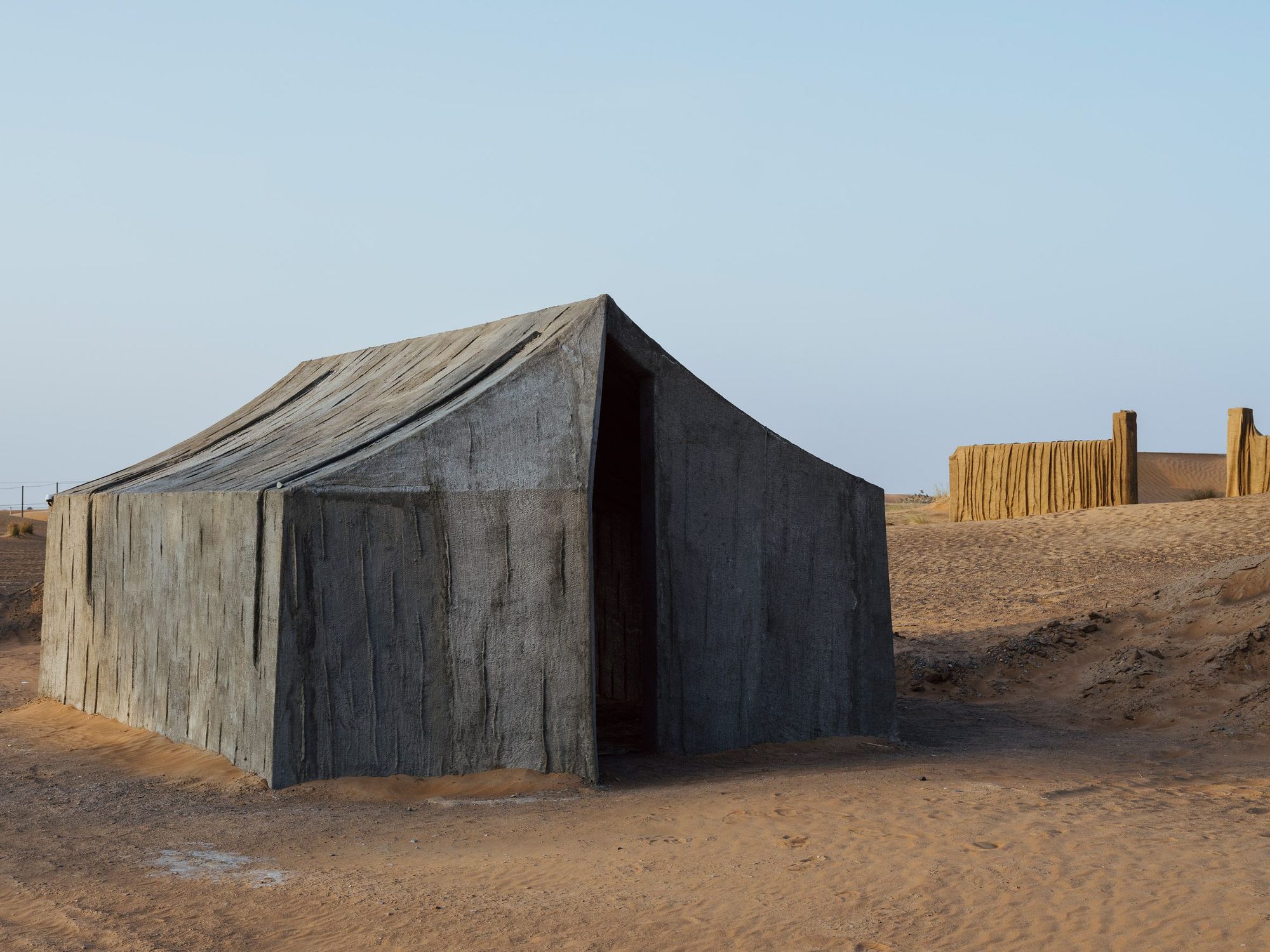
The second Sharjah Architecture Triennial opened in November of this year with a theme that could have been a grant application and instead was a coherent, argumentative, and quite difficult exhibition. The Beauty of Impermanence: An Architecture of Adaptability, curated by the Lagos-based architect Tosin Oshinowo, brought together twenty-nine architects and studios from twenty-five countries, most of them working in places where the climate is unreliable, the material is scarce, and the architect's role is not quite the author-figure the Western canon insists upon. The triennial runs from the 11th of November 2023 to the 10th of March 2024. It is held across Sharjah, in the old Al Jubail Vegetable Market, in the Al Qasimiyah School, in the Old Slaughterhouse, and in a number of sites in the desert around the city.
Oshinowo's pitch is that an architecture of scarcity is not a smaller or sadder version of an architecture of abundance; it is its own tradition, with its own tools, formal language, and social arrangements. The Global South has been building this way for centuries. Its buildings have been regarded, in the Western architectural press, as either craft or poverty. The triennial asked you to stop doing that.
The strongest pieces were the ones that let the form argue for itself. Miriam Hillawi Abraham's Museum of Artifice reimagined the rock-hewn churches of Lalibela, in northern Ethiopia, as a structure built entirely from blocks of salt. The salt came from Sharjah's historic trade with Ethiopia, a fact that is not widely known and is itself worth the trip. The structure was hollow and precise. At the end of the triennial it will be dismantled and the salt blocks returned to the merchant for re-use in agriculture or construction. You will end up with only the memory of the building and a short-term spike in the local salt market. This is exactly the architecture of impermanence that Oshinowo has been arguing for, the structure as a temporary configuration of materials that go back into circulation.
The Ecuadorian studio Al Borde had taken over a shaded courtyard at the Al Qasimiyah School and built something that resembled a cloister made of bamboo and local palm. It sounds like a tourist attraction. It felt like a room you would want to live in. The construction had been done by local teams in consultation with Al Borde, which is how the studio works in Quito, which is the point.
Cave_bureau, the Nairobi-based firm of Kabage Karanja and Stella Mutegi, had done a piece at the Old Slaughterhouse on the geological substrate of East African pastoralism. A film, an installation, and a lot of red soil on the floor. The argument was that the Maasai and other pastoralist peoples have been building temporary, landscape-responsive architectures for centuries that are now being treated as objects of anthropological curiosity rather than as a continuous architectural intelligence. The Slaughterhouse was not the right building for this, which made it the right building. The contrast was the work.
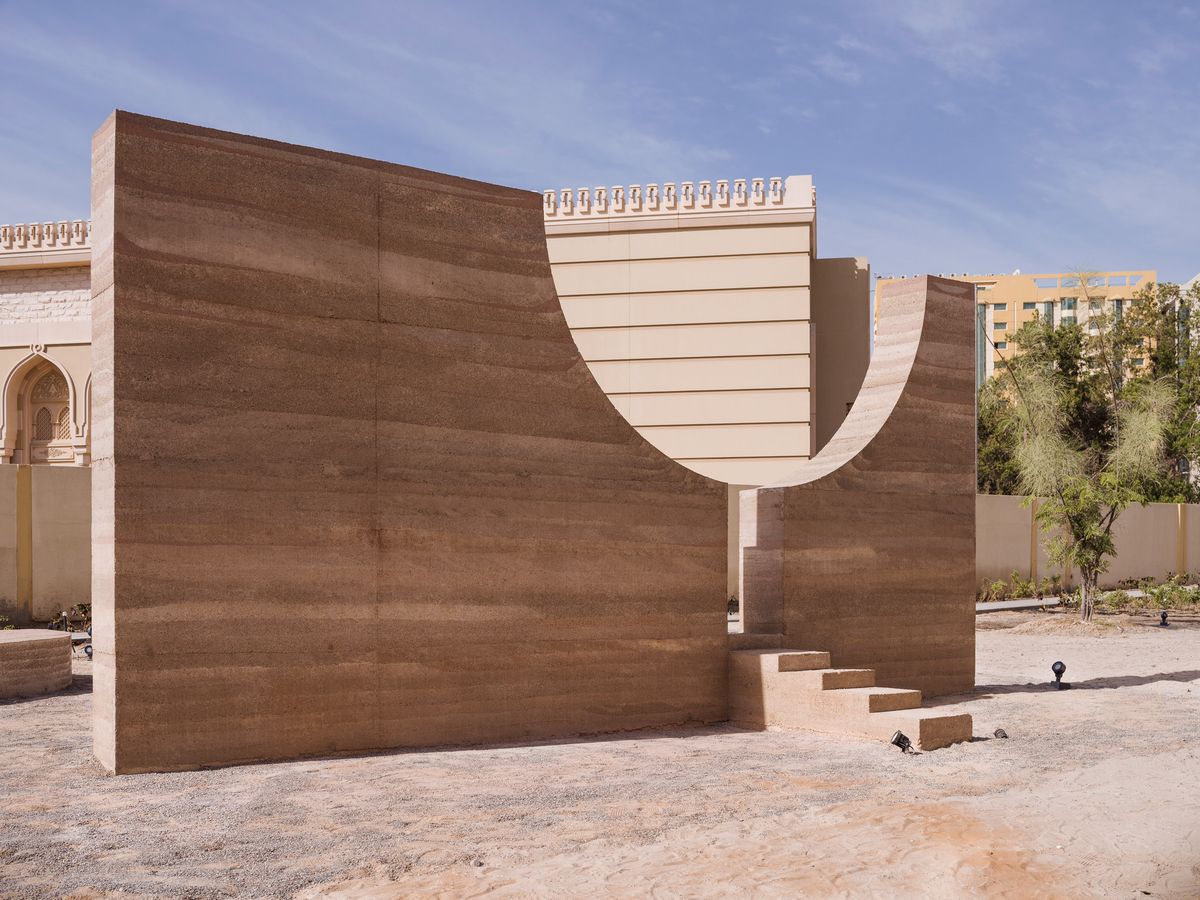
The triennial had its weaknesses. A few of the commissions felt underbaked; the deadline appears to have arrived before the research for some of them did. A few others were too schematic, more poster than building. The exhibition design across venues was uneven, and the desert sites in particular were not always accessible or well signposted. You had to commit, as a visitor, which is fine; a triennial in a small emirate is not obliged to be tourist-friendly. But the on-site experience was harder than it needed to be, and some pieces got less attention than they deserved because of it.
The larger argument held. Sharjah is the right place for this triennial because Sharjah is a city that has spent the last several decades making up its relationship to its own past in real time. The emirate's leadership has built a whole intellectual infrastructure around art and architecture that is not tied to the commercial imperatives of Dubai next door. Sharjah Art Foundation, Sharjah Biennial, the university, and now this triennial under Hoor Al Qasimi's direction. It is a quiet, steady commitment to being a place where things happen, not only a place where things are bought. The architecture triennial is good because the institution underneath it is serious.
Oshinowo has, in her curating, done the field a service. She has shifted the register of what it is acceptable to call architecture. A salt block church that melts. A pastoralist's moving house. A Quiteño cloister built by local teams. These are buildings. They have been buildings for a long time. The Biennial at Venice every two years has not quite noticed. Sharjah, in three months, did.