Paris at the Grand Palais
Art Basel's Paris edition moved into the refurbished Grand Palais and finally looked like the fair it was always going to be.
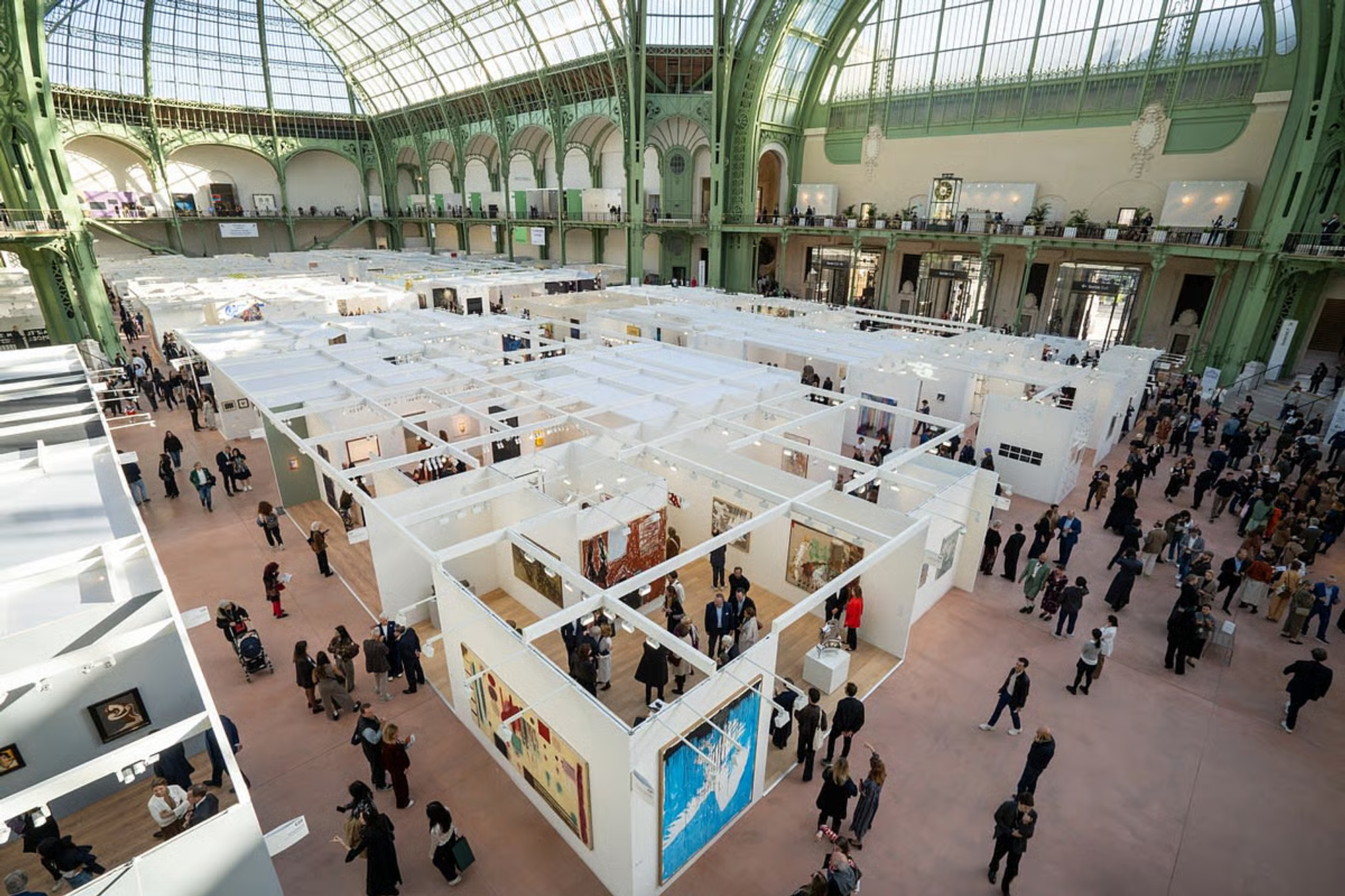
The Grand Palais reopened this year after three years of closure for restoration, and Art Basel Paris moved in as if the building had been designed for it, which, more or less, it had. The light under that vaulted glass roof is not the light of a convention centre. It is the light of a nineteenth-century iron-and-glass building made for exactly this kind of commerce in objects, with some slippage on what the objects are. The fair's first edition at the Grand Palais ran from the 18th to the 20th of October, with VIP days on the 16th and 17th, 195 galleries from 42 countries, 65,000 visitors. The president came. The minister of culture came. So did the director of every major museum in the room and a number of people who would never ordinarily admit to enjoying an art fair. Paris took to Art Basel in a way that the previous two editions, crammed into the Grand Palais Éphémère, had not quite allowed.
I had been sceptical about the Paris fair from the beginning. FIAC, which it replaced in 2022, was a nineteen-year-old fair with a network of loyal French galleries and a particular feel. Swapping it for an Art Basel franchise felt, at the time, like another corporate simplification. The first two editions at the Éphémère felt tentative; the space was too small, the air was wrong, the hierarchy of booths was unclear. At the Grand Palais the fair has grown into itself. Whether that is because the building flatters the fair or because the fair flatters the building, I could not say. Probably both.
The strongest booth in the main aisle was Marian Goodman's, which had hung a wall of Julie Mehretu etchings next to a small Gerhard Richter and a Nairy Baghramian sculpture in brass, the whole thing staged as if the gallery were saying, quietly, that it had been doing this longer than most of the people in the room. White Cube had an Olga de Amaral on the back wall that stopped people for a full minute at a time. Thaddaeus Ropac showed an early Louise Bourgeois. David Zwirner pulled out a Willem de Kooning you do not often see outside a museum. Sales moved in the first hour. A dealer told me, on the record, that nothing had quite prepared them for how quickly the Americans were going to spend this year, which was a sentence I wrote down and remembered later.
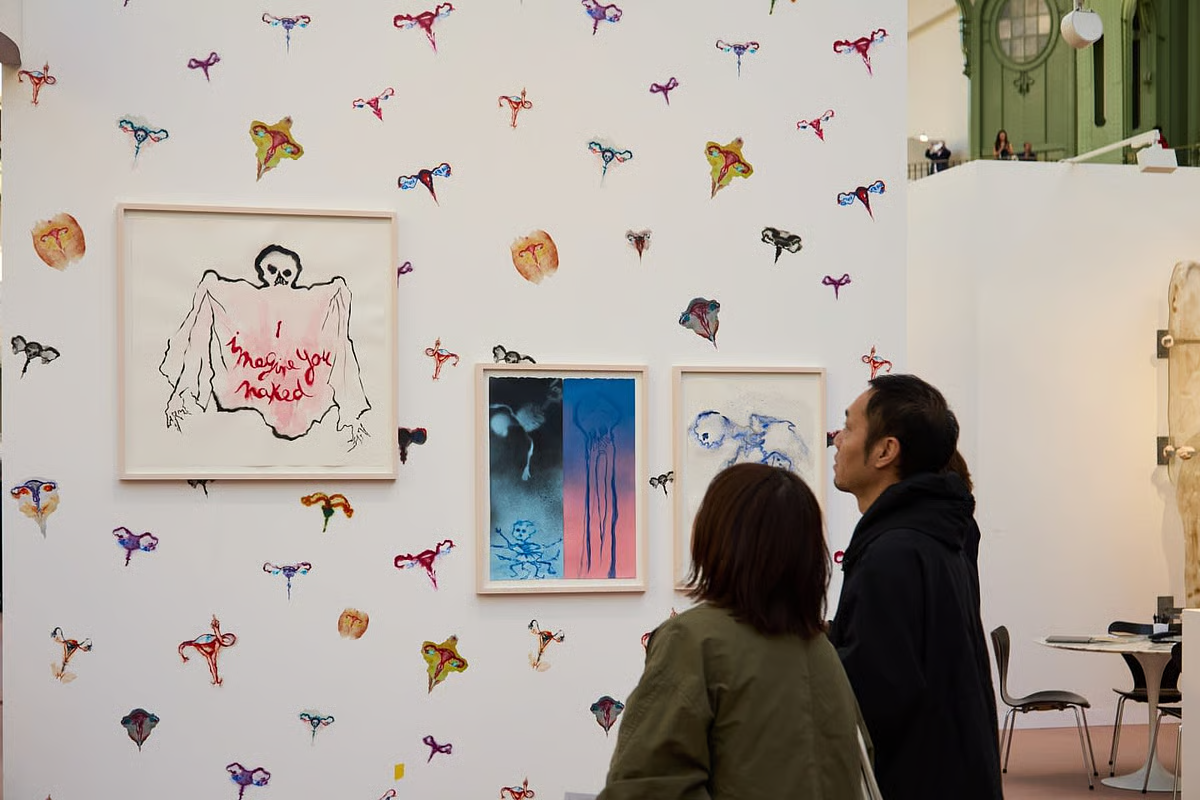
There were two new sectors this year. Premise, given over to bold curatorial ideas, was the most interesting of them. The Mayor Gallery of London had turned its Premise booth into a monographic display of the kinetic pioneer Abraham Palatnik, which was a set of objects you expected to find in São Paulo and not in the Grand Palais, which was the point. Other Premise booths experimented, with varying success. The sector was uneven but necessary. It is the first time an Art Basel fair has given space to unapologetically curated booths, and I expect it to grow.
Emergence, the young-gallery sector, leaned Parisian, which was correct. A fair in Paris should find its emerging voices from the rue de Turenne and the rue Saint-Claude and the 20th arrondissement, not import them. The selection was less exciting than Premise but it looked like it belonged.
Outside the fair the public programme had taken over ten sites around the city. Miu Miu had funded it. Some of the programming was strong; a performance in the Place Vendôme stands out; some was a little tick-the-box. The Musée des Arts Décoratifs had a show on that week. The Beaubourg was preparing to close. Everyone I knew had gone to the Charlotte Perriand retrospective and then walked around the Marais and then ended up, at night, at the Hôtel Costes or the Bar Hemingway or wherever the dealer had taken their collectors. Paris on Art Basel week is a city that is both working and on show, and 2024 was the first year that felt like Art Basel actually belonged in it rather than visiting.
One more thing. The Grand Palais is enormous. You walked down the central nave, past a Louise Bourgeois spider the size of a small car, past a wall of Anselm Kiefers that Gagosian had hung to look like a curtain, and you came out by the other end with the feeling that you had, for once, seen everything. A fair that lets you see everything is rare. Most fairs bury some portion of themselves on purpose. The Grand Palais's geometry will not allow that. You see what is there, and what is there, this year, was good. Paris has a fair now.