No Lions This Year
The jury quit, the Golden Lions were scrapped, and the Giardini spent its opening week showing what it really is.
Nobody won anything at the Giardini this year, and it made the place easier to see. The five jurors resigned together on the 30th of April, after stating they would not judge countries whose leaders face charges at the International Criminal Court. The Biennale scrapped the juried Golden Lions the next day and replaced them with two Visitors' Lions, voted by ticket-holders, to be announced on the 22nd of November. Around nineteen pavilions and dozens of artists withdrew from that vote as well. So the opening Saturday came and went with no ceremony and no winner photographed on a stage, and without the scoreboard the Giardini stood there plainly as what it has always been underneath: a garden of embassies with better lighting.
Embassies behave like embassies. Russia's building, used for the first time since 2022, let the press in during the preview and stays shut for the public, the show playing as video on screens in the windows. The country records its participation; the public gets the glass. Twenty-two European governments protested, and Italy's culture minister stayed away from the opening. Outside the Nordic pavilion, one of Benjamin Orlow's bronze heads on poles stands with wooden stakes through its pupils, and the sightline runs toward the Russian building. It is hard to read that as an accident, and this year nobody had to pretend it was one, because there was no jury to charm.
The United States pavilion is the other diplomatic exhibit. It holds around thirty abstract sculptures by Alma Allen under the title Call Me the Breeze, and how they got there is the story. The State Department dropped the peer-review process that has chosen the pavilion for decades and handed it to a new nonprofit whose commissioner previously ran a pet-supply business. Artists declined before Allen accepted. Galleries withdrew support, and part of the budget was crowdfunded. The sculptures did not choose any of this, and they stand in the middle of it the way staff stand in a chancery during a change of government, correctly, and saying nothing.
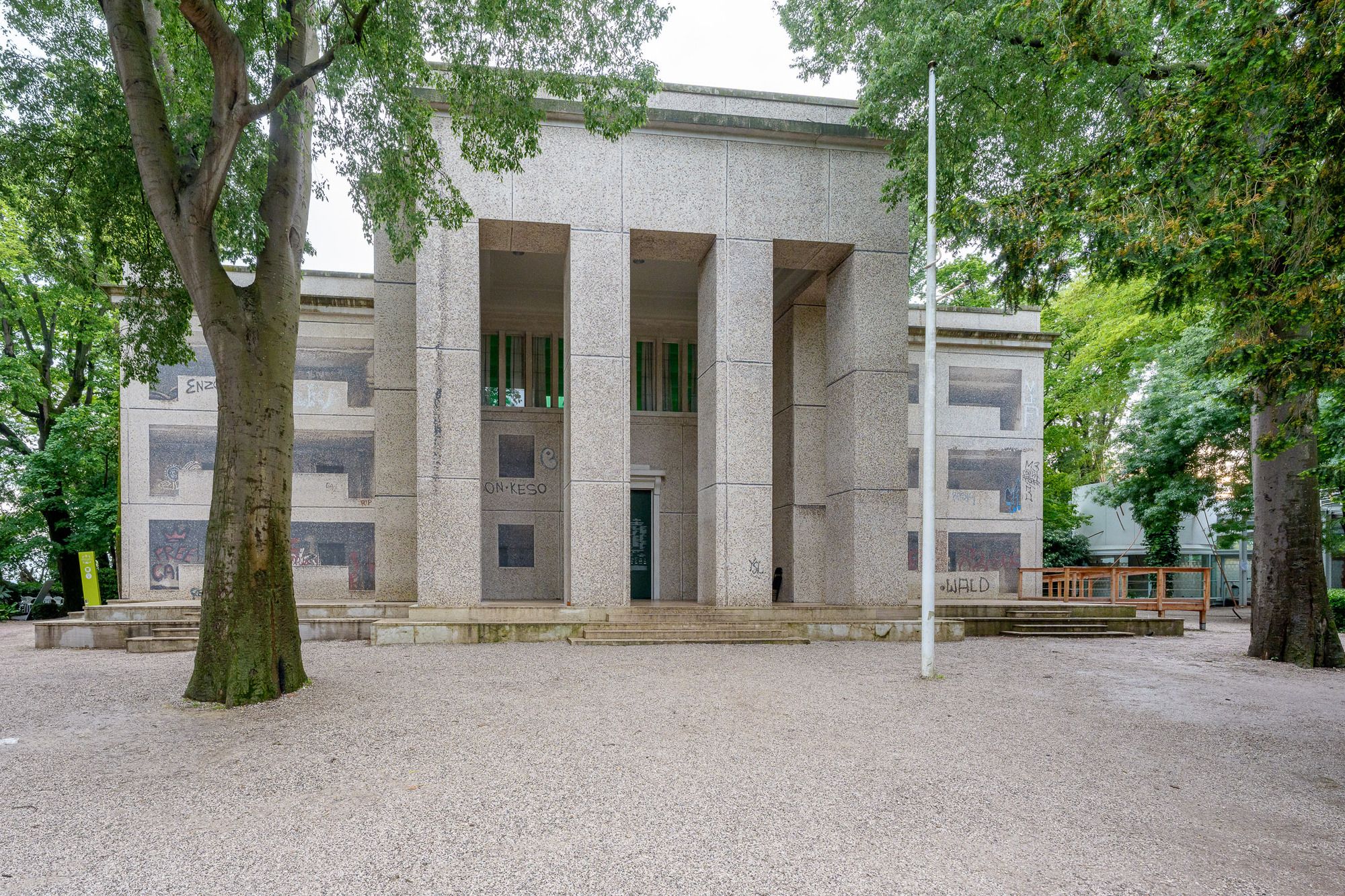
That is the weather. Here is my actual review of the week: the pavilions that stayed with me all did the same thing. They took the geopolitics and shrank it to the size of a room you have lived in. Germany is showing Ruin, and it earns the title. Sung Tieu covered the pavilion's Nazi-era front with a printed mosaic of a graffitied East Berlin housing block, so you approach a monument and arrive at an apartment. Inside, Henrike Naumann's The Home Front is an East German interior painted the mint green of Soviet barracks, chairs sawn in half and mounted on the walls, the German twentieth century told as a timeline of furniture. A century of catastrophe, delivered through seating. Naumann died in February, at 41, and the pavilion opened without her. Hers are not the only rooms in this garden that opened without their maker.
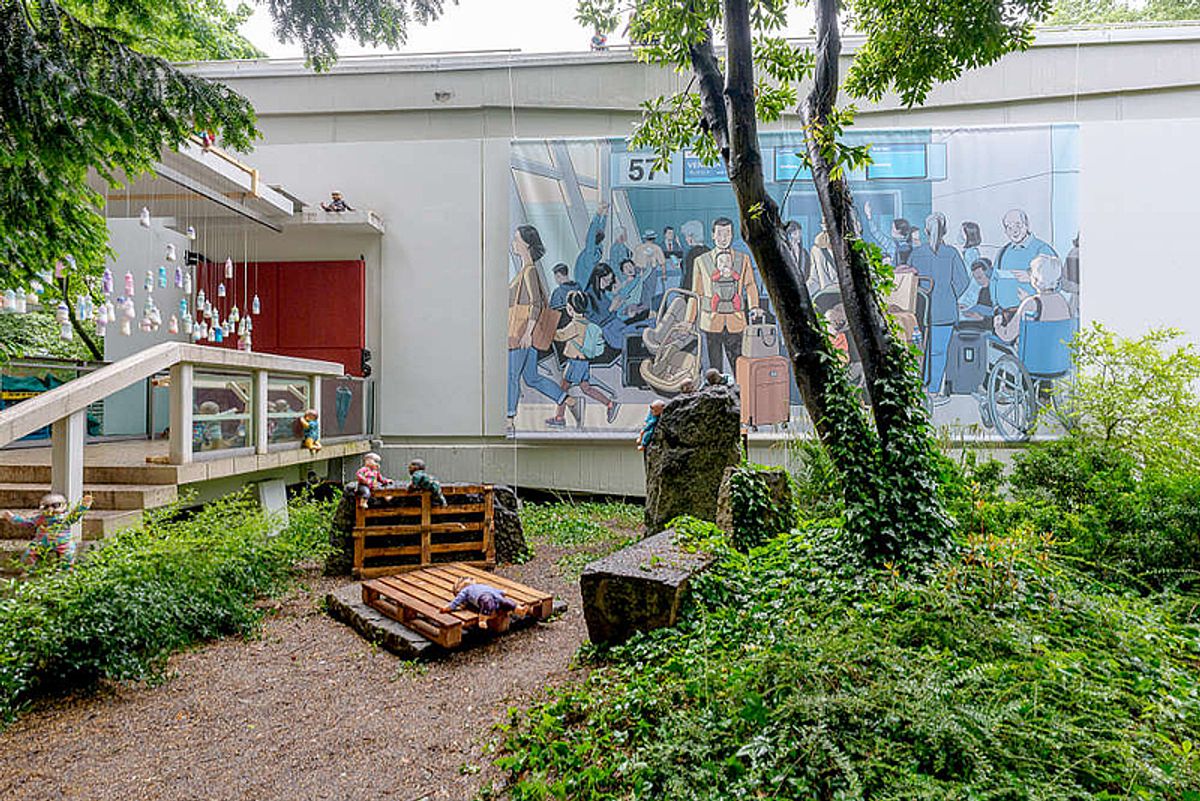
Japan does it with 208 baby dolls. Ei Arakawa-Nash, the first artist without Japanese nationality to represent the country alone, made Grass Babies, Moon Babies after becoming a parent of twins, and visitors are asked to pick up a doll and carry it through the pavilion. There is a diaper-changing station and QR codes that generate what the pavilion calls diaper poems. It sounds unbearable and is the opposite. A fair-week crowd, lanyards and linen, walked a garden holding infants with both hands, and everyone slowed down, me included. No pavilion asked less of the world stage, and no pavilion held me longer.
France plays the same idea at the speed of cloth. Yto Barrada's Comme Saturne drapes the rooms in wool, patterns burned into velvet by the dévoré process, a goatskin kite at the threshold, and the daylight let into the building will bleach the textiles until November, so the show eats itself on schedule, as the title promises. France also closed for the strike on the 8th and pulled out of the Visitors' Lion, which means the pavilion most openly about slow ruin was also the one that declined the race. That coherence is rare here and worth naming.
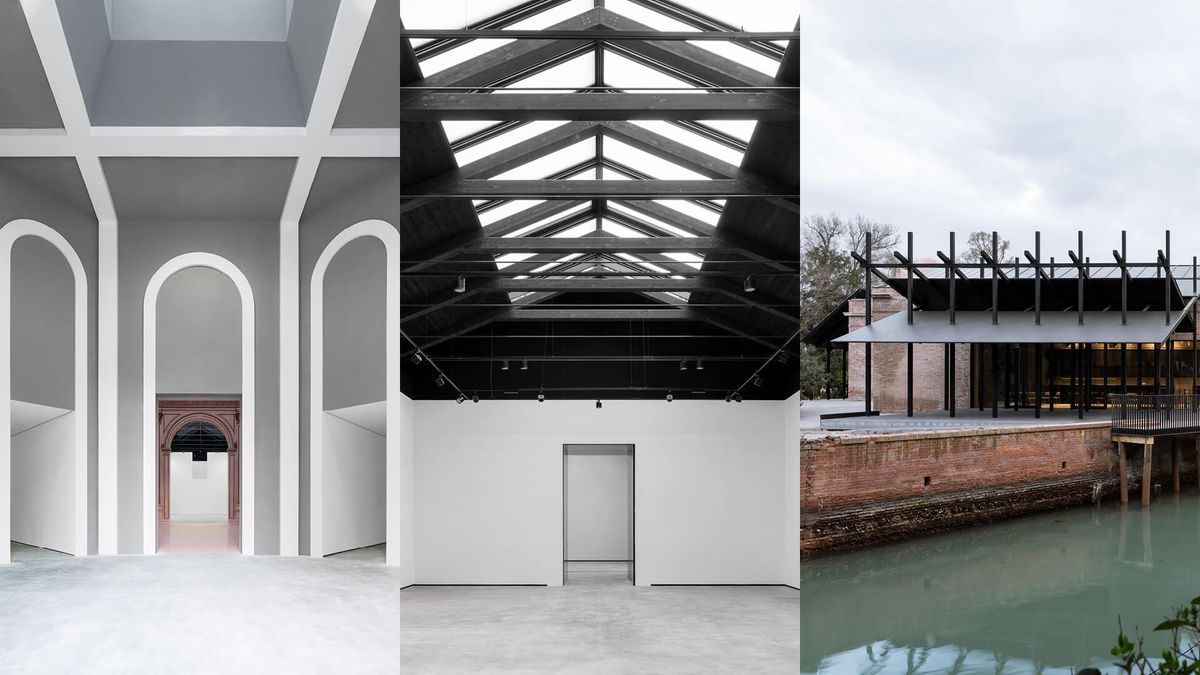
Not everything fits my theory, and the exceptions were instructive. Florentina Holzinger flooded the Austrian pavilion for SEAWORLD VENICE, performers in the water, a jet-ski, a bell cast with the words O tempora o mores struck live, and the queue ran to two hours. It is the one pavilion working at full volume this year, and the crowd rewarded it. The Central Pavilion, reopened after Labics and Fabio Fumagalli spent more than a year stripping its 5,450 square metres back to calm, now leads with Otobong Nkanga's brick-clad columns hung with glass terraria, clay pots and wooden bee hotels, plants rooted in all of it. Inside, María Magdalena Campos-Pons's eight-panel painting, made with the musician Kamaal Malak, seats Koyo Kouoh beside Toni Morrison among magnolias. The building that used to host the prize-giving now hosts a portrait of the curator who did not live to see her show. The garden's oldest room is doing memory this year, not ceremony.
I do not think the Biennale wanted any of this. The verdict vacuum was forced on it twice, by the jurors and then by the withdrawals, and by Sunday the garden wore the absence as if it had been planned. But walking out past Nkanga's columns, which will spend the summer being taken over by plants, I found I did not miss the lions. Competition was always the least interesting thing the Giardini does. Strip it away and what is left is the thing itself: countries telling you, in rooms the size of living rooms, exactly what they are afraid of. In November the plants will have covered the columns and the ticket-holders will hand out the only lions of the year, and the garden will go back to pretending it was a contest all along.