Make. Believe.
Design Miami's 21st edition, curated by Glenn Adamson, treated craft as an intellectually serious discipline. The fair's twentieth anniversary came with an argument.
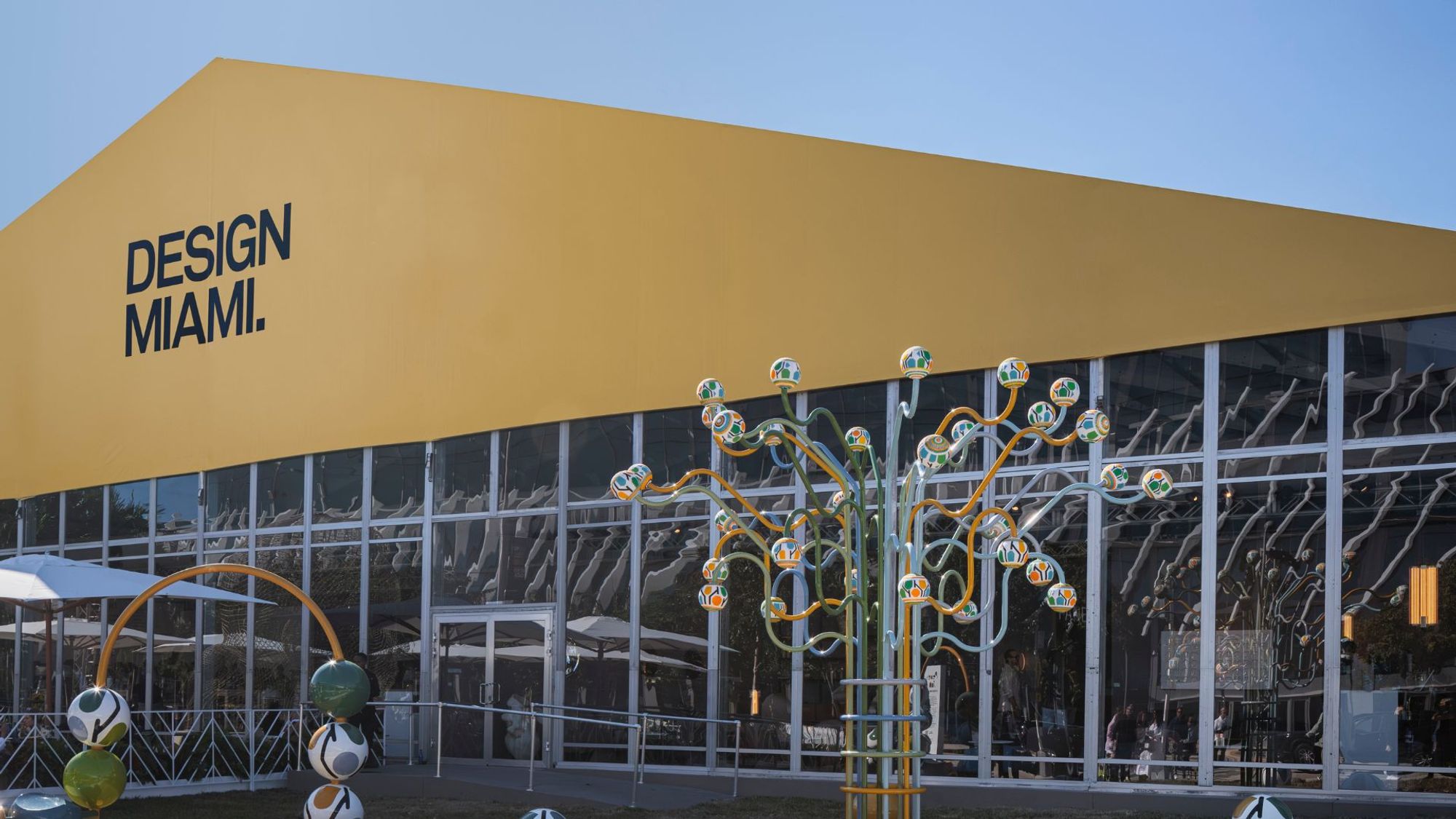
Design Miami's 21st edition ran from the 3rd to the 7th of December 2025, at its usual tent opposite the Miami Beach Convention Center, and marked the fair's twentieth anniversary. Glenn Adamson, the historian and curator of craft, had been given the year's curatorial theme. He called it Make. Believe. The punctuation was the point. Adamson has spent his career making a case for craft as an intellectually serious discipline, and the title framed the work on show as acts of belief in material and in technique. For a fair that has, at various points in its life, leaned on spectacle, the theme was a quiet return to what Design Miami has usually been at its best.
Over 70 exhibitors across Gallery, Curio, and Special Project programmes. More than 25 debuts. Two decades of collectible design is, by now, a legible enough category that the fair can spend its 20th anniversary without over-explaining itself. Make. Believe. was a theme; it was also a generational permission slip. The fair is now old enough to have had a first generation of galleries arrive, mature, and be succeeded by a second.
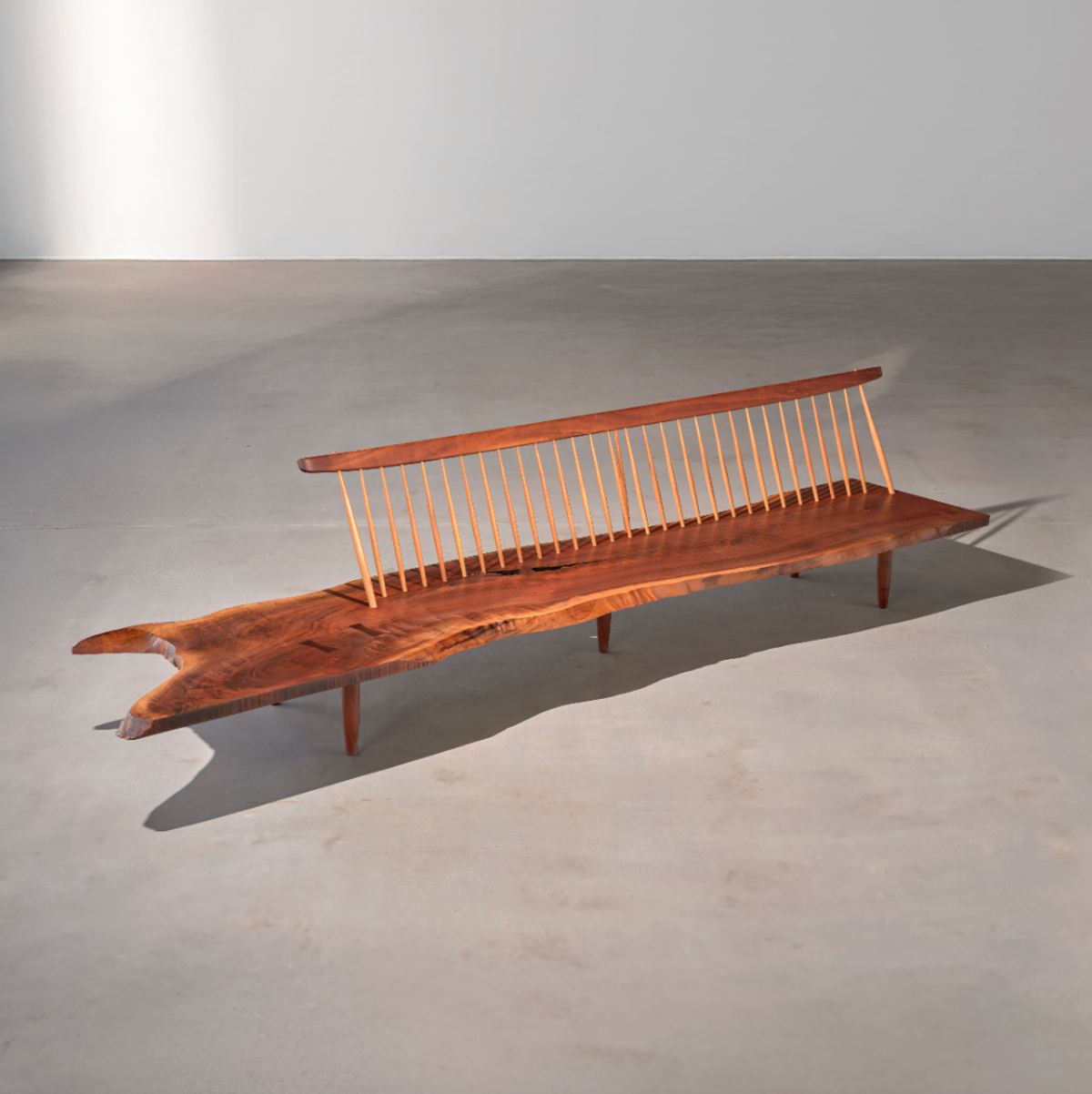
Moderne Gallery, always one of the fair's old hands, showed a pair of George Nakashima Conoid Benches from 1972 crafted from the same walnut tree, alongside a smaller group of Nakashima studio works. Nakashima is the ur-figure of twentieth-century American studio furniture and the presentation had the quality of a small museum room. Superhouse, the New York gallery that specialises in American art furniture of the eighties, had brought a curatorial booth of that moment's work, with pieces by Wendell Castle, Howard Meister, and Forrest Myers. Galerie Signé's booth, dedicated to the French duo Nemo, with a mix of blown glass, ceramic, wrought iron and drawing, was a tight younger-gallery presentation.
Kohler, which has been one of the fair's most consistent corporate-scale exhibitors, launched a new iridescent bathroom-fixture finish called Pearlized in collaboration with the artist David Franklin, staged inside a glowing installation by Harry Nuriev of Crosby Studios. The Kohler presentation is always a test case for what a corporate Design Miami/ booth can be. Some years it slides into advertising. This year it was an installation first, a product launch second. Nuriev's scenography deserves credit for that.
Design Miami 2.0, a new programme Adamson had introduced, presented eight international design studios with newly commissioned capsule collections. The work leaned sculptural. It also leaned, in the best sense, sincere. Several of the studios were from outside the fair's usual geography. A Seoul studio was showing for the first time. A Lagos-based studio had a room of ceramics in the Curio section that was the discovery of the week.
Design Miami has always had to solve a harder problem than Art Basel Miami Beach. The art fair next door sells objects whose value is, for the most part, agreed. The design fair sells objects whose value depends on convincing a collector that a chair can be a sculpture, a lamp can be an argument, a desk can be a cultural document. The curatorial apparatus therefore matters more. Make. Believe. as a theme gave the fair a way to acknowledge that explicitly. The gallery list gave it the evidence.
Miami in December is a strange place to think about craft. The beach is loud. The parties are louder. Inside the tent, though, there was a conversation happening about what twenty years of this fair has made possible, what it hasn't, and what the next twenty might look like. The Adamson curation will not be repeated next year; a single year's frame is the right use of this kind of intervention. But it was useful. The fair came out of this edition a little more seriously than it went in.