Les Lalanne on Turf
Frieze Masters at Regent's Park leaned into the fair's particular strength: giving blue-chip historical material a temporary home in a tent.
Frieze Masters, the historical twin of Frieze London, ran over the same days in October 2025 in its own tent at the other end of the Regent's Park site. The fair is, by design, the slower and more serious of the two. Its visitors are curators and foundation directors as often as collectors. Its booths are museum-style, its lighting is calibrated, its aisles wider. It is a fair that wants to be a cabinet of curiosities crossed with a dealer's trade show, and this year it achieved that register more convincingly than it has in several editions.
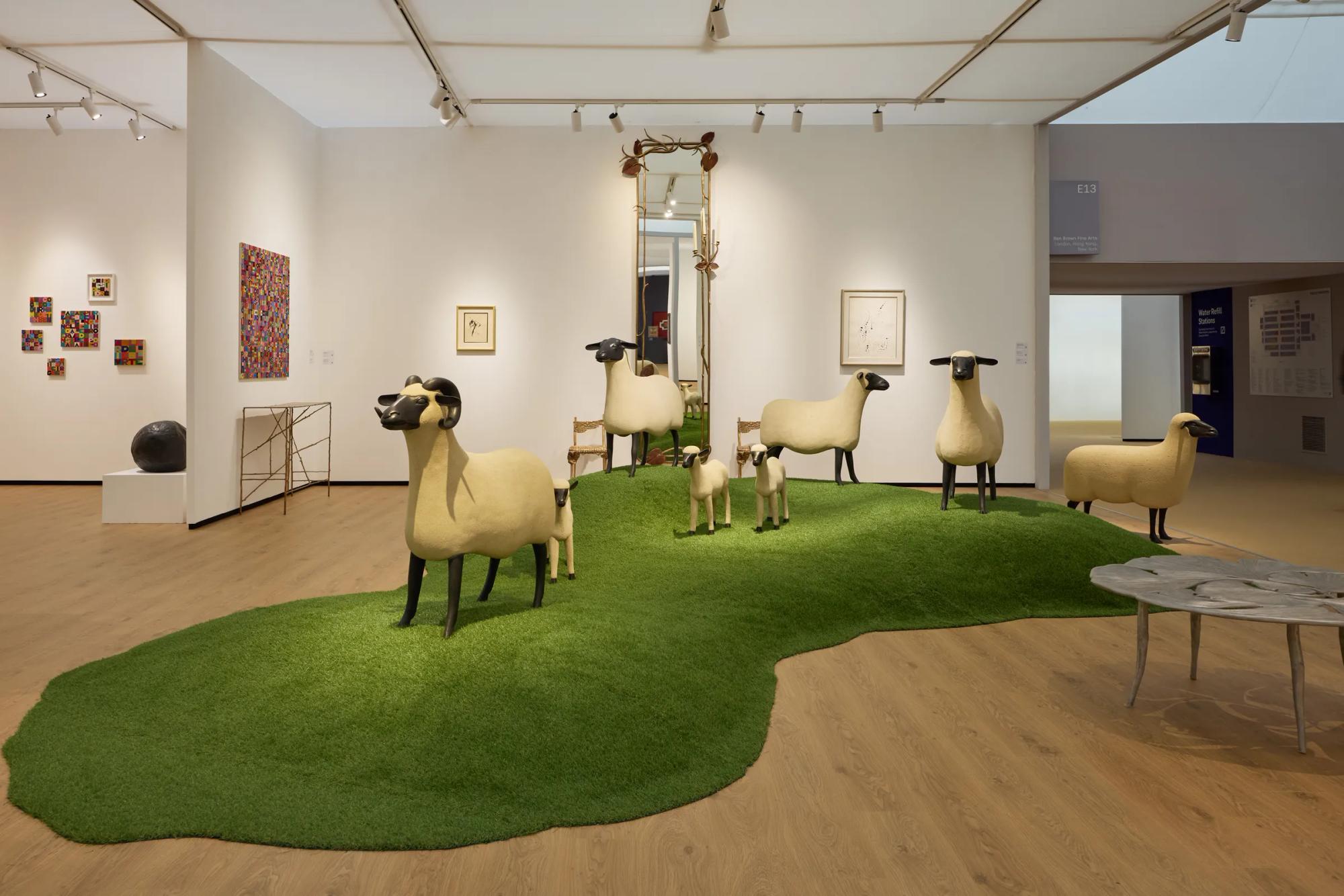
The headline booth was Ben Brown Fine Arts with a room dedicated to Les Lalanne, the husband-and-wife sculptural duo Claude and François-Xavier whose animal-form work has become, in the last decade, the collectible market's most reliable blue chip. The booth had turfed the floor. François-Xavier's life-sized sheep sculptures, the ones that now live in several private museum collections, were grazing on the grass. The booth was mobbed from the preview morning onwards. You stood in the aisle and watched visitors take their photographs in a very particular register of dealer worship.
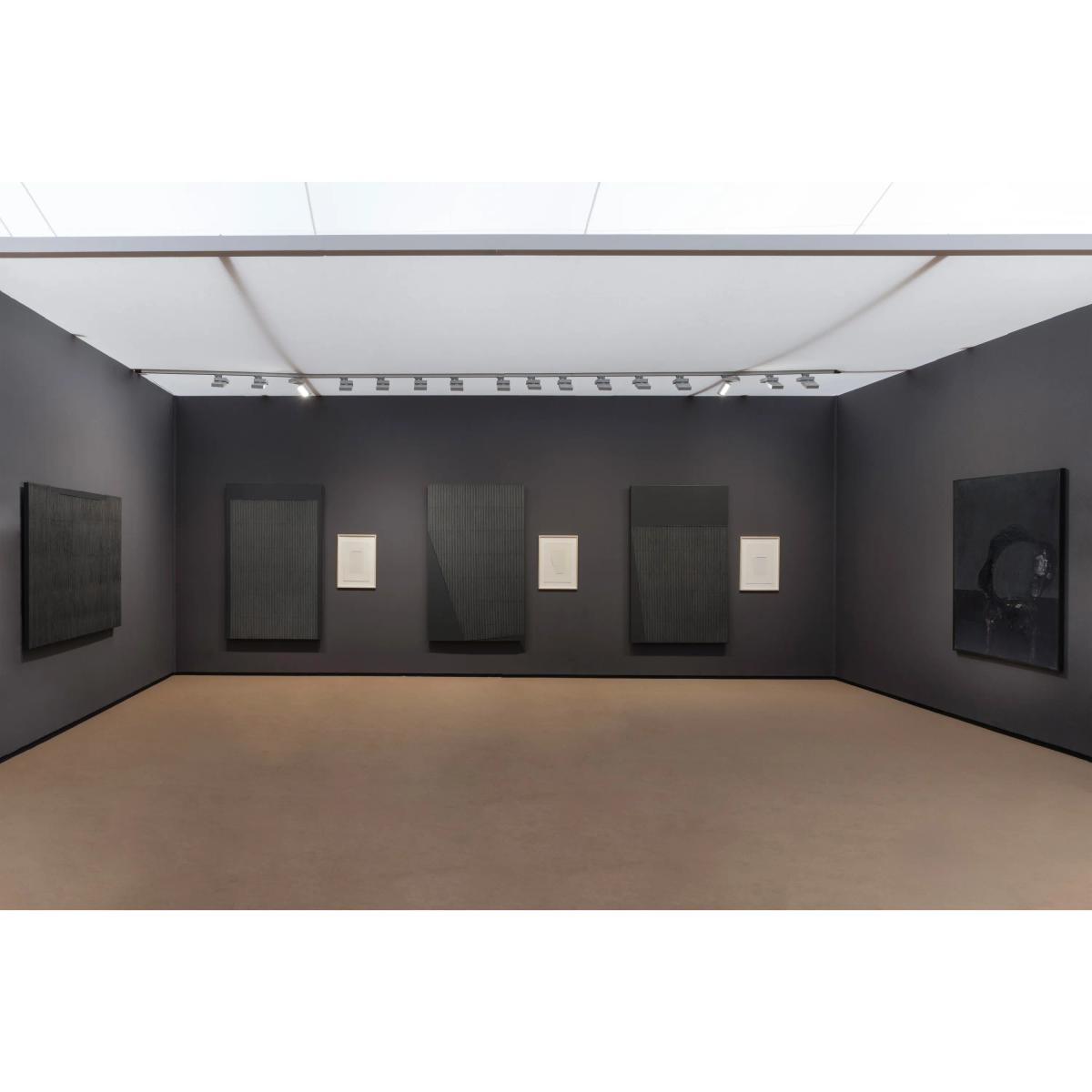
Johyun Gallery had given its stand to the Korean Dansaekhwa painter Park Seo-Bo. The presentation traced his work from 1960s Primordialis paintings to the rhythmic, deeply quiet Ecriture works of later decades. Park died in 2023 and his market has been steadily consolidating since. The Johyun booth was a serious act of art-historical argument as much as it was a dealer's room.
Hauser & Wirth reported the fair's headline numbers. Gabriele Münter's Der blaue Garten (Mein Gartentor) from 1909 at CHF 2.4 million, a René Magritte Le domaine enchanté from 1953 at $1.6 million, a Paul Klee Befestigter Ort from 1929 at €1.45 million, and a Marcel Duchamp Jaquette from 1956 at $1.35 million. The numbers came out steadily through the first two days. A Münter at that price is, incidentally, a moment in the Münter market. She has been quietly appreciating for ten years and is now, unmistakably, a major modernist.
The older side of the fair, the Antiquities and Old Masters booths, had some of the week's best looking. Salomon Lilian had a Peter Paul Rubens Hercules as a Gladiator that held the room. ArtAncient had a Ptolemaic quartzite relief of Andjety that stopped traffic. A Japanese art dealer had brought folding screens from the 18th to 20th centuries and a small group of tea bowls, displayed with the precision of a tea ceremony. Frieze Masters is at its best when the historical objects on show demand to be slowed down in front of. This year, in several booths, they did.
The critique you hear about Frieze Masters in its less strong years is that it turns into a trade show for pieces that a serious curator would have seen in a gallery six months earlier. This year's edition did not entirely escape that. But it had more rooms built around a single argument, a single artist, a single period, than it has had recently. That is what a historical art fair, done well, should be. A two-hour walk through Frieze Masters this year was the best art-historical education two hours could buy in London.