Lagerfeld's House
Design Miami/ Paris's second edition, at the 18th-century Hôtel de Maisons where Karl Lagerfeld once lived, reviewed. A fair that had found its room.
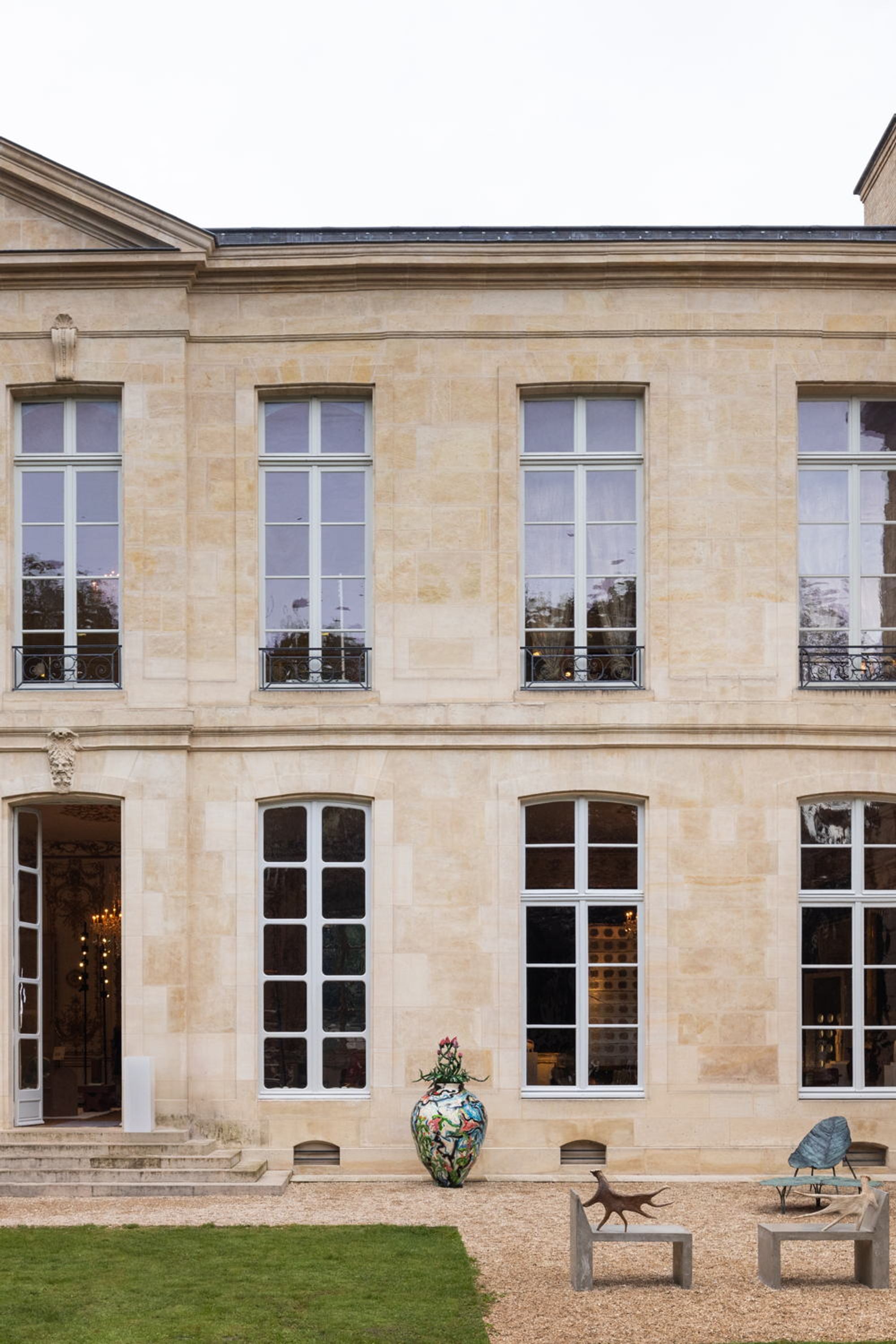
Design Miami/ Paris's second edition ran from the 16th to the 20th of October 2024, at L'hôtel de Maisons, the 18th-century hôtel particulier in Saint-Germain-des-Prés that was, among its other previous inhabitants, Karl Lagerfeld's home for several years. Thirty exhibitors. A courtyard and gardens. The fair's preview day saw attendance increase fourfold from the previous year, a statistic that, like most attendance statistics, tells you a little less than it sounds like it does. What is true is that the fair felt like a thing this year in a way that the first edition had not quite.
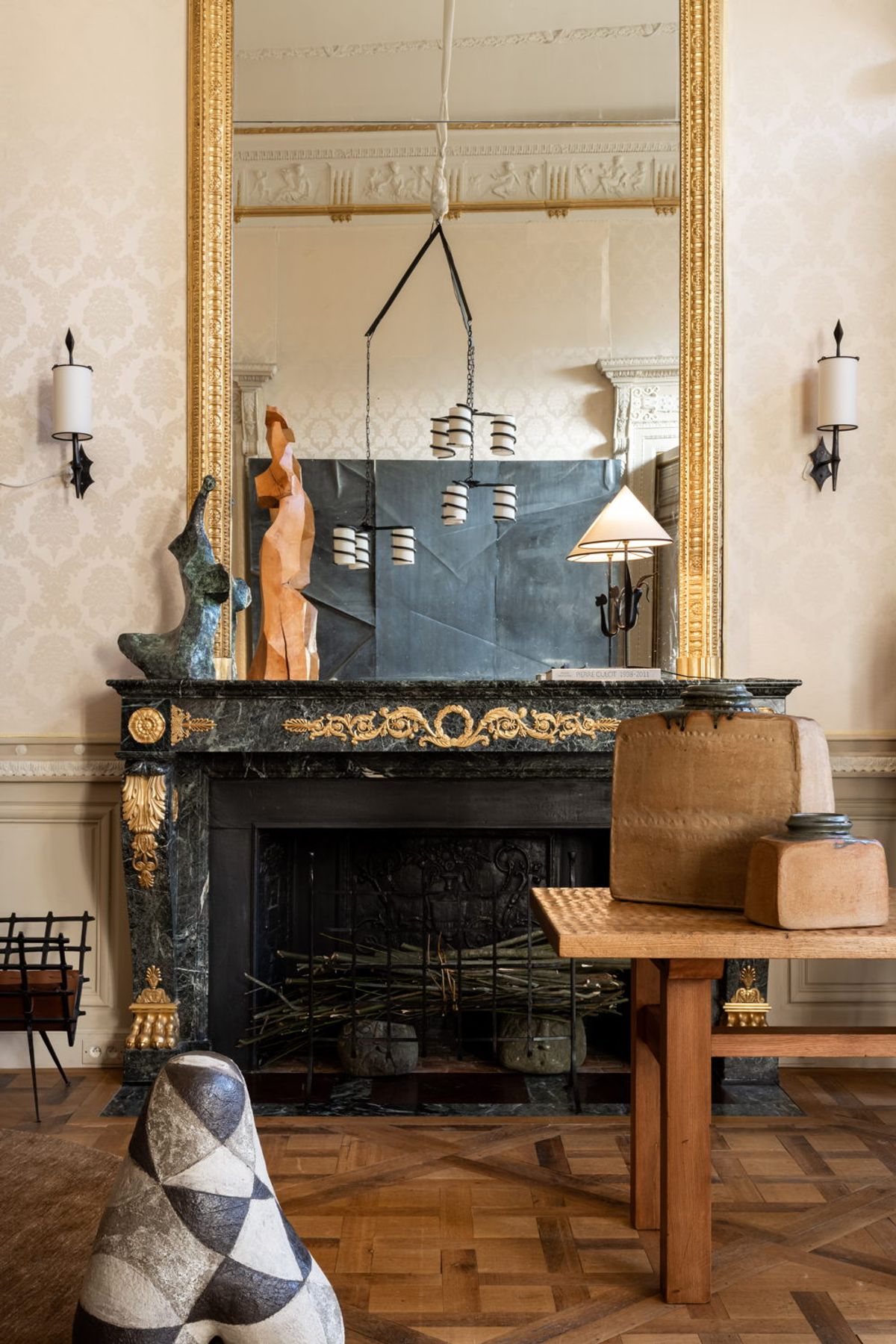
The venue is the reason. L'hôtel de Maisons is an unusually fine hôtel particulier in a city full of them. Its main salon is 18th-century boiserie, its gardens are formal in the way a Pozzo di Borgo villa is formal, and the proportions throughout are of the kind that accept objects well. A design fair inside a building like this risks being either outshone by the architecture or a competition with it. Design Miami/ Paris was neither. It was a careful temporary occupation. You walked in from the rue de l'Université, through the courtyard where the Campana Brothers's Bulbo chair for Louis Vuitton was prominently installed, and you spent two hours moving through rooms that had been, three weeks earlier, a private house.
Louis Vuitton had turned up as an exhibitor for the first time, which was both a logical and a market-destabilising move. Their booth was dedicated to the Campana Brothers, with the Bulbo chair and a Merengue ottoman in polyurethane foam. The Campana work, which is what Louis Vuitton has been commissioning for several years now, sat uneasily in the hôtel particulier context, and that uneasiness was the point. You could tell the brand was taking itself seriously as a patron of collectible design. You could also tell that the booth was a retail exercise. Both were true. The Campana pieces went, mostly, very quickly.
The best booth was the collaborative presentation from Galerie Desprez-Bréhéret and Galerie Gastou, shared between two Paris dealers who had filled a single room with the work of the French sculptor and painter Jean Touret, 1916–2004. Touret made furniture throughout his life, mostly in chestnut, with incised decoration that feels both archaic and modernist. The room won the fair's Best Gallery Presentation award. It deserved it. I stood in that room for fifteen minutes and came out knowing Touret's work in a way I had not before the fair.
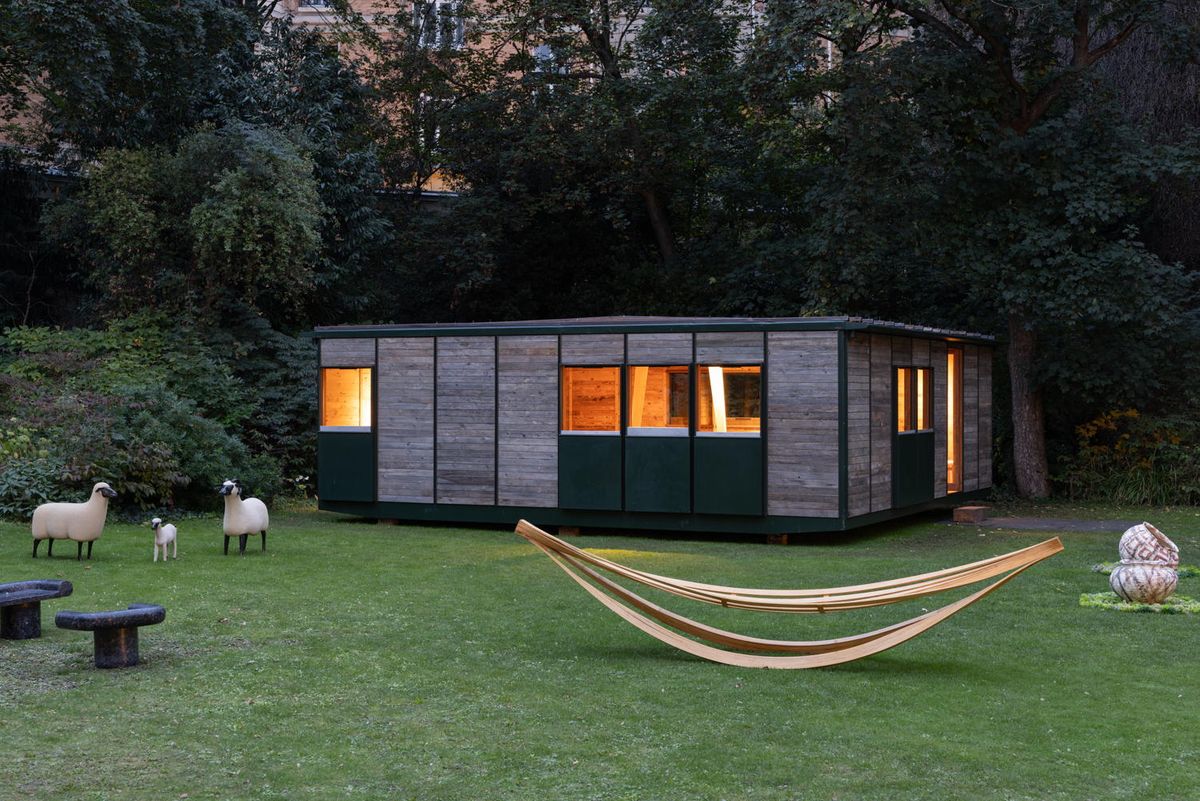
Galerie Downtown-LAFFANOUR had the headline commercial event of the week. They had brought a full-scale Jean Prouvé prefabricated house from 1946, assembled in the garden, which had been expected to draw attention and did. The house sold to a collector for over one million euros during the fair. Prouvé's prefabs have been, for the last decade, collectors' white whales, and Downtown-LAFFANOUR has been the gallery most often associated with placing them. The sale was the week's commercial story, though not the week's critical one.
Critical attention went instead to a handful of smaller rooms that did not try to be events. A Nilufar room with a Gio Ponti ceramic paired with a Carlo Scarpa vase. A South Korean design gallery, Sun-Gleaming, showing new work by Lee Kwang-Ho that looked, in that context, like a statement of intent. A Lisbon gallery with a small hang of Jorge Zalszupin's chairs. These did not sell the way Prouvé sells. They did not need to.
The second edition of Design Miami/ Paris was, in the way second editions sometimes are, the one where the fair found its pitch. It is not Design Miami Miami. It is not Design Miami Basel. It is the fair where collectible design meets the particular French tradition of the high-end domestic interior, inside a house that knows how to hold objects. That is a specific proposition, and it is a useful one. The third edition, in 2025, will have to make the next argument. We will see, in a year, whether it does.