Frieze Under Canvas
Frieze London's 22nd edition returned to Regent's Park with a new entrance and a cautiously optimistic market. The rooms worked harder than the fair around them.
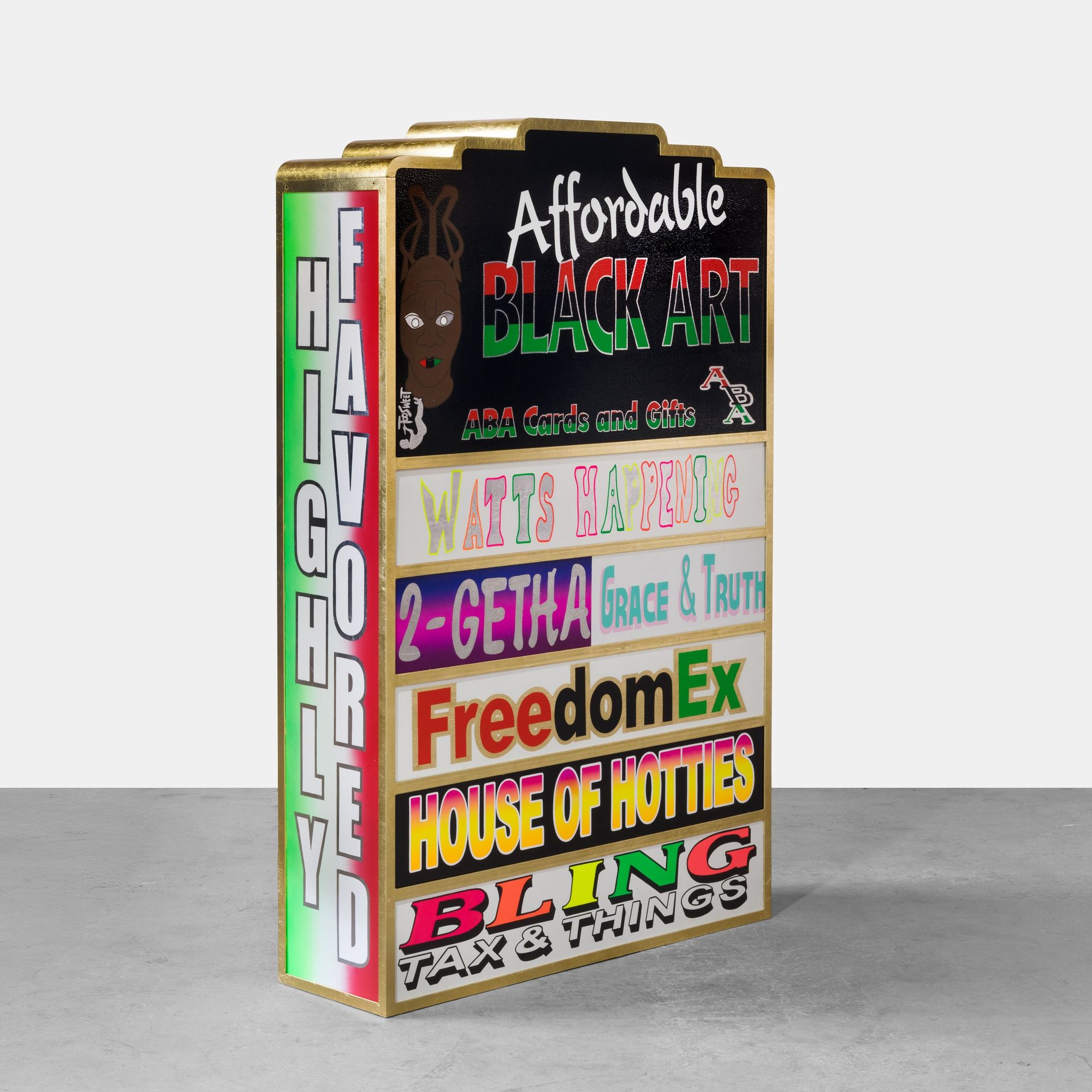
Frieze London's 22nd edition ran from the 15th to the 19th of October 2025 in Regent's Park, in its usual bespoke tent. A new entrance arrangement gave the fair a grander first sightline. The lineup across Frieze London and Frieze Masters this year, taken together, was 280 galleries from 45 countries. The mood on the Wednesday preview was cautious, optimistic in a deliberately British way. By the Saturday, after two days of steady sales, the mood had relaxed. The market has not recovered to 2021 levels and probably will not. What it has done, for this edition at least, is stabilised enough that galleries were able to place work with confidence rather than desperation.
Sadie Coles HQ had given its stand over to a single large-format Sarah Lucas wall work with a couple of smaller pieces around it. This is the kind of one-work booth the fair has seen more of in the last three years, and the logic of it holds. At a fair crowded with small pieces vying for attention, a single confident work clears the air. Pilar Corrias's solo presentation of Hayv Kahraman worked similarly. Modern Art had a room of Phyllida Barlow sculptures that moved, slowly and deliberately, across the four days.
The Focus section, the younger-gallery area, was where I spent most of my second day. Mendes Wood DM from São Paulo had a tight room of Lucas Arruda landscapes. Gypsum Cairo was back, with a new Mahmoud Khaled video installation. A gallery I had not seen before, Kupfer, had a wall of small works by a painter whose name I failed to write down and now cannot recover. The Focus section this year did what it was designed to do, which was introduce a visitor to work they could not have located elsewhere in the fair.
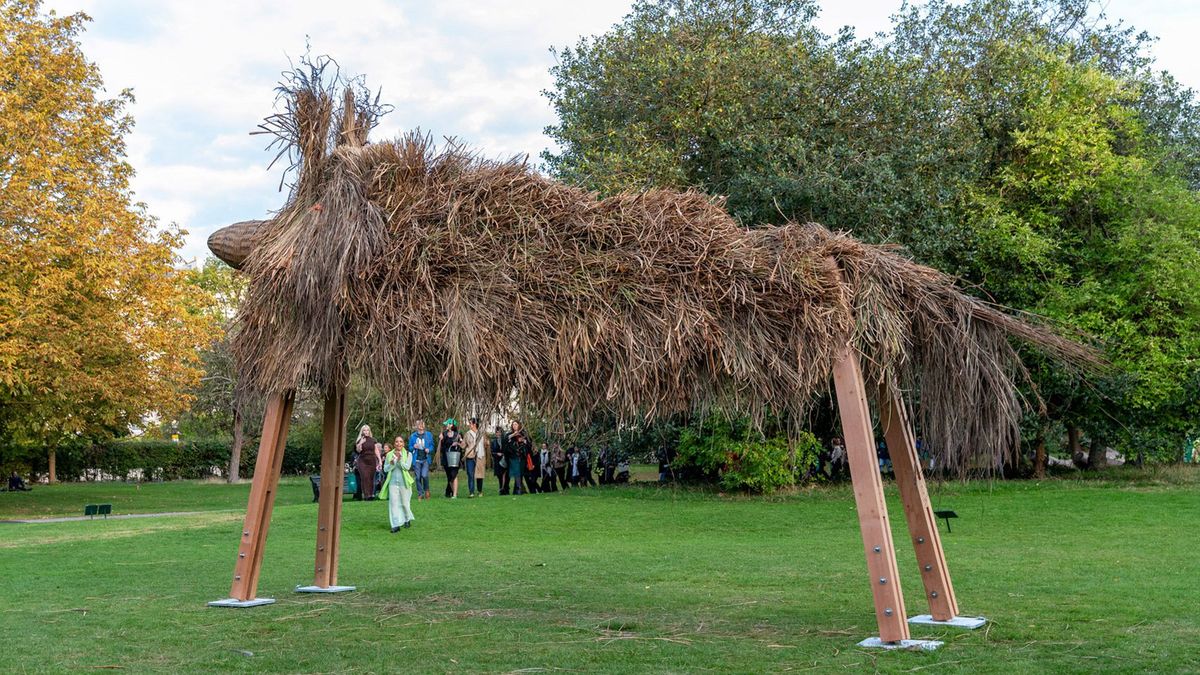
Outside the tent, the Regent's Park sculpture programme had a different feel this year, with Frieze Sculpture curated around 14 internationally positioned artists. The English Gardens, in October, with their particular damp light, are one of the better outdoor settings for large-scale contemporary work in Europe. A Cristina Iglesias piece in the rose garden was the one I returned to twice.
London, during a Frieze week, has a habit of generating concurrent shows at the museums that can be as much of a draw as the fair itself. This year the Royal Academy's Kerry James Marshall: The Histories was the show visitors could not stop discussing. At Serpentine North, Danielle Brathwaite-Shirley's installation. At Serpentine South, Peter Doig's House of Music, which was the exhibition I spent my one free Sunday afternoon on and which was worth it. The National Portrait Gallery's Cecil Beaton show was, predictably, a zoo of fashion editors and worth the detour anyway.
Frieze London is a fair that has, for twenty-two years, been absorbing shocks. The financial crisis, the pandemic, post-Brexit operational complications, a soft top-end of the market, rising costs, the arrival of Paris as a competing October destination. The fact that it continues to feel like the fair it is, and not a lesser version of itself, is a credit to the team. This year was not a reset. It was a competent, reasonably confident edition. The question of what the fair becomes in the next five years is live. This one suggested, quietly, that it will still be Frieze.