Five Voices, One Biennial
Sharjah Biennial 16 reviewed. to carry, five curators working in parallel, and a model that replaces curatorial unity with productive disagreement.
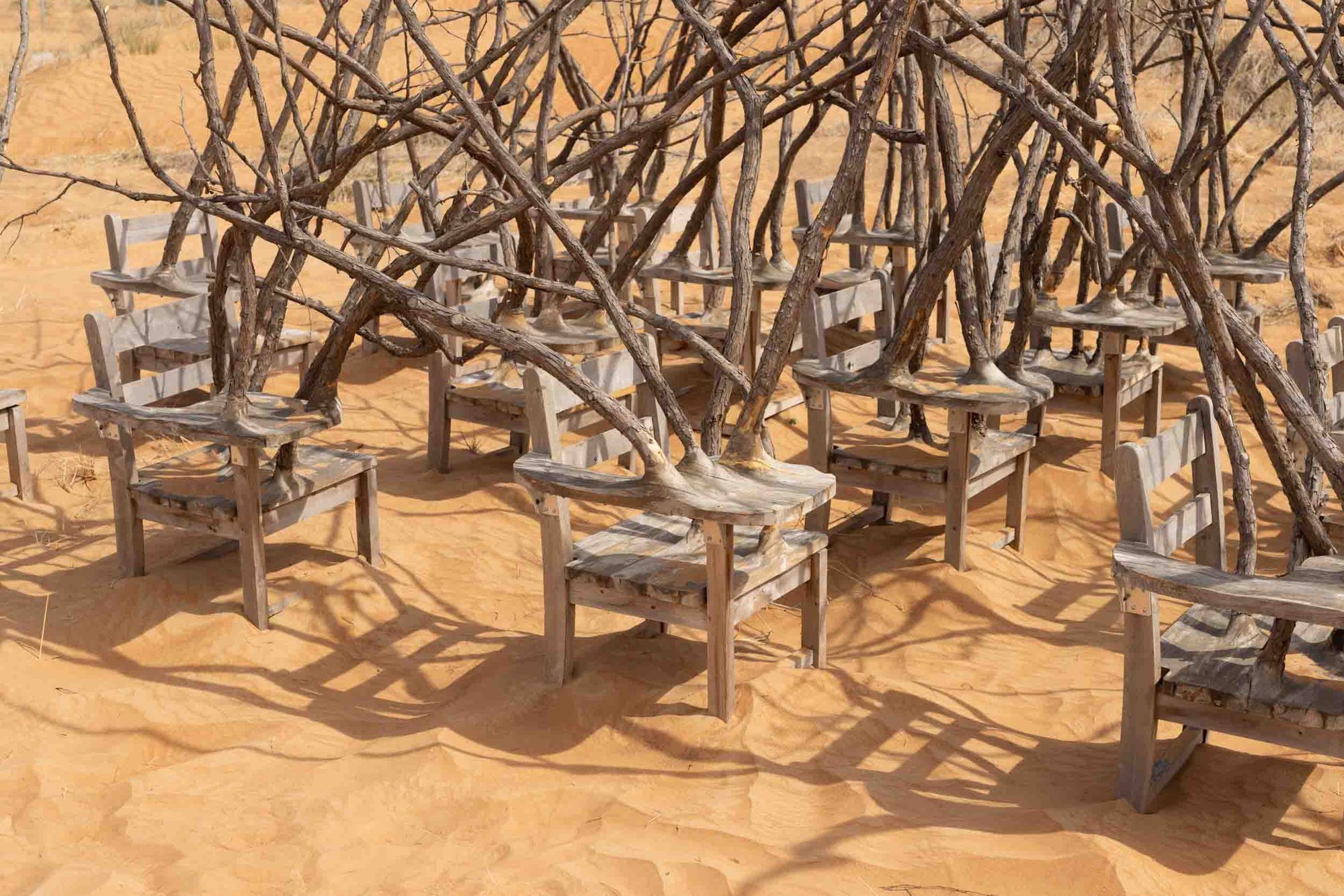
Sharjah Biennial 16 opened on the 6th of February 2025 and closed on the 15th of June. Titled to carry, it was among the largest editions in the biennial’s history. Hoor Al Qasimi, who directs the Sharjah Art Foundation, had commissioned five curators to work in parallel: Natasha Ginwala, Amal Khalaf, Zeynep Öz, Alia Swastika, and Megan Tamati-Quennell. Nearly 200 participants, more than 650 works, more than 200 new commissions, across 17 venues spread through the city and the surrounding emirate. I spent a week there in February and came away with, among other things, a newly acute awareness of my own feet.
The five-curator model was not a cosmetic decision. Each curator developed a thread of the biennial in conversation with the others, and each thread was then restaged across the venues as what Al Qasimi called “hybrid constellations.” In practice, most of the main venues contained work from all five programmes rather than segmenting them into wings. You did not visit the Ginwala biennial or the Öz biennial. You visited Sharjah, and the curatorial voices mixed in each room. The approach worked, mostly, and failed usefully where it did not.
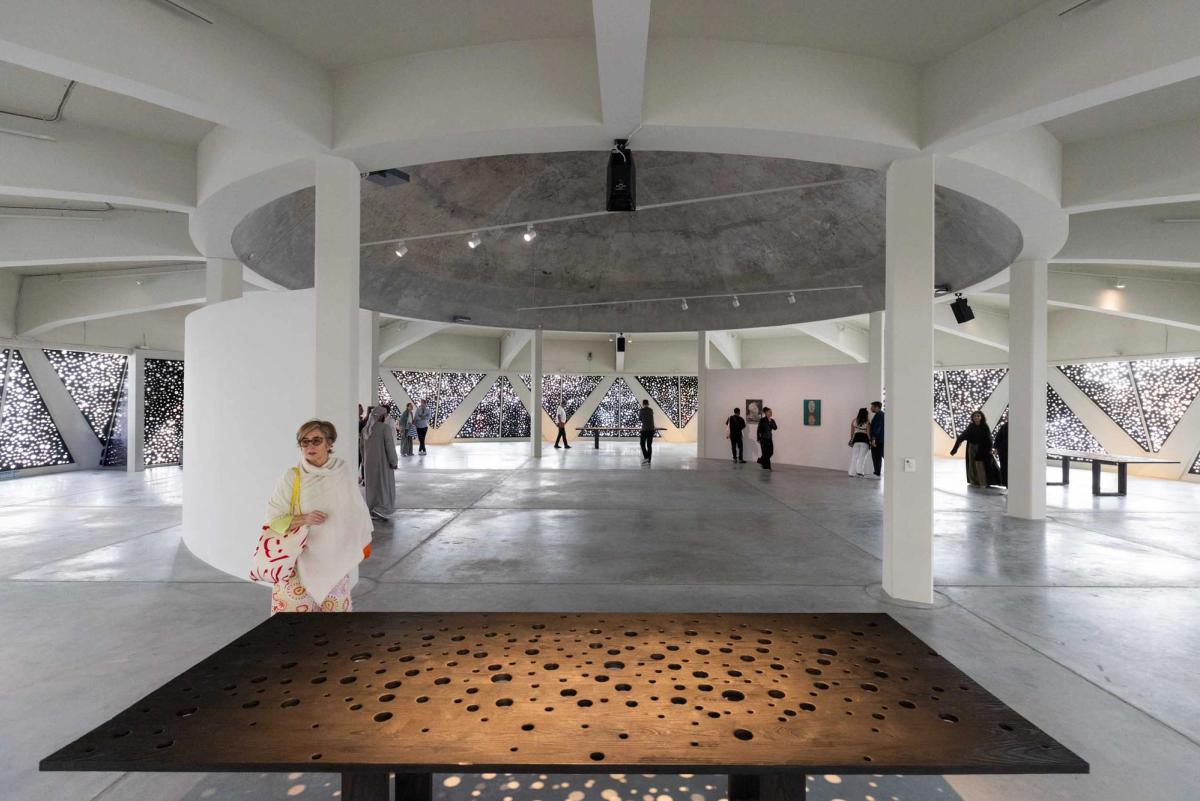
The Flying Saucer Sharjah, the mid-century structure near Al Qasimiyah School that the foundation has been restoring and using for years, was one of the biennial’s most carefully handled venues. Inside, Daniel Boyd created a site-responsive installation that worked directly with the building’s architecture, applying his signature circular cut-outs across windows and doors so that light entered in controlled, shifting fragments. The effect was cumulative rather than dramatic, a slow recalibration of how you saw the room as you moved through it. A set of three tables functioned both as furniture and as subtle spatial thresholds, while a group of paintings explored lunar perception across different cultural frameworks. A sound work by Mara TK, Ngā Mata ō Hina, an aural maramataka or Māori lunar calendar, ran quietly through the space.
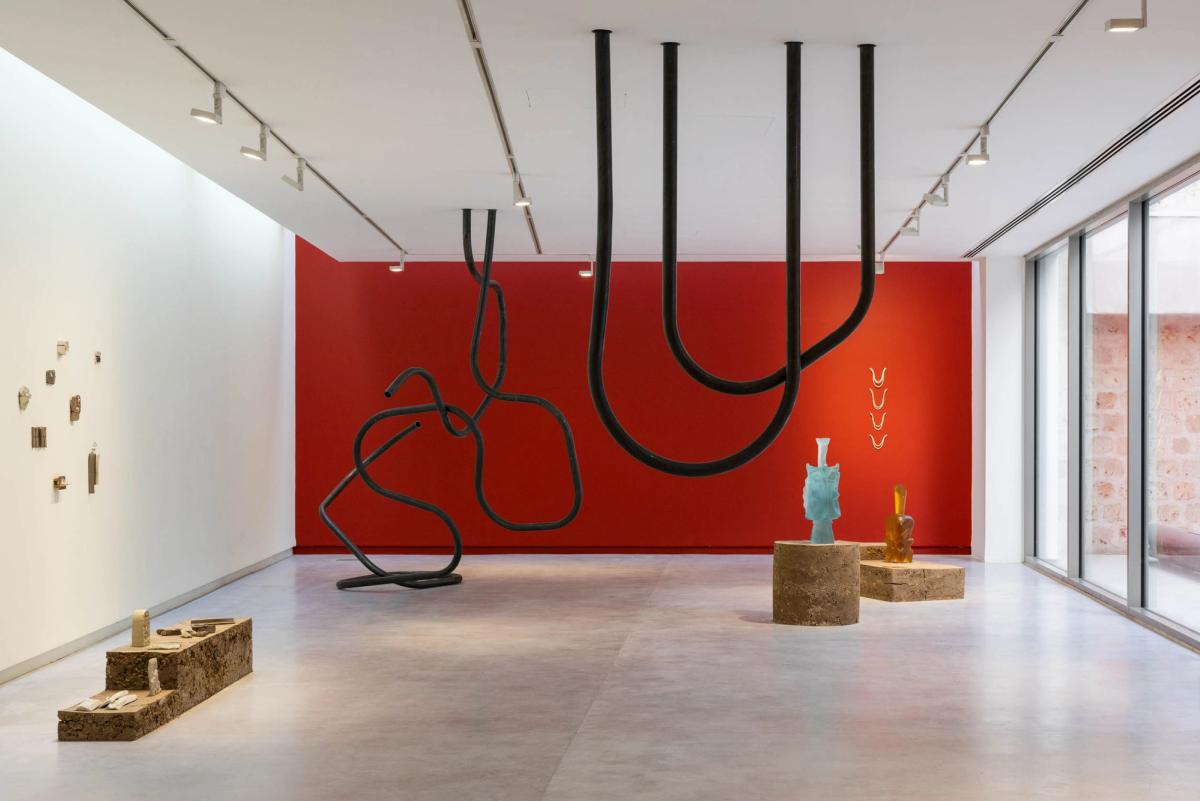
The Al Qasimiyah School Sharjah, one of the foundation’s key venues, was given over to quieter, smaller-scale works. A Bahgat Osman drawings archive. A room devoted to Pacita Abad. A gentle, insistent sound installation by Tarek Atoui. The building is one of the most resolved spaces the biennial uses, and the curation here understood that.
to carry, as a title, gestures at the many things that move across bodies and geographies: goods, languages, griefs, inheritances, contaminations, songs. It is the kind of thematic frame that can easily slip into the generic. It did not quite, here, largely because the curators were disciplined about what they admitted into each thread. There were rooms where the theme loosened; those rooms were often corrected by the next.
The biennial’s relationship to its audience remains its most interesting structural feature. Sharjah is not a tourist destination in the way Venice or Kassel is. Most international visitors arrive for a compressed week in February, then leave, and the biennial continues for several months primarily for local audiences and school groups. The exhibition is therefore staged for two audiences, successively, and the curatorial and educational infrastructure has to work for both. The March Meeting Sharjah, which runs alongside the biennial, is where that split becomes visible: panels that combine visiting curators and artists with an audience that is often largely Sharjah-based.
Some weaknesses. The biennial is too large to absorb in a week, even an intensive one. Several artists receive less attention than they deserve simply because they are in venues you do not quite reach. The desert-site works, in particular, are logistically difficult, and their audience over the four months will inevitably be smaller than that of the city venues. A biennial that spreads itself geographically has to decide what trade-off it accepts. This one had not quite decided.
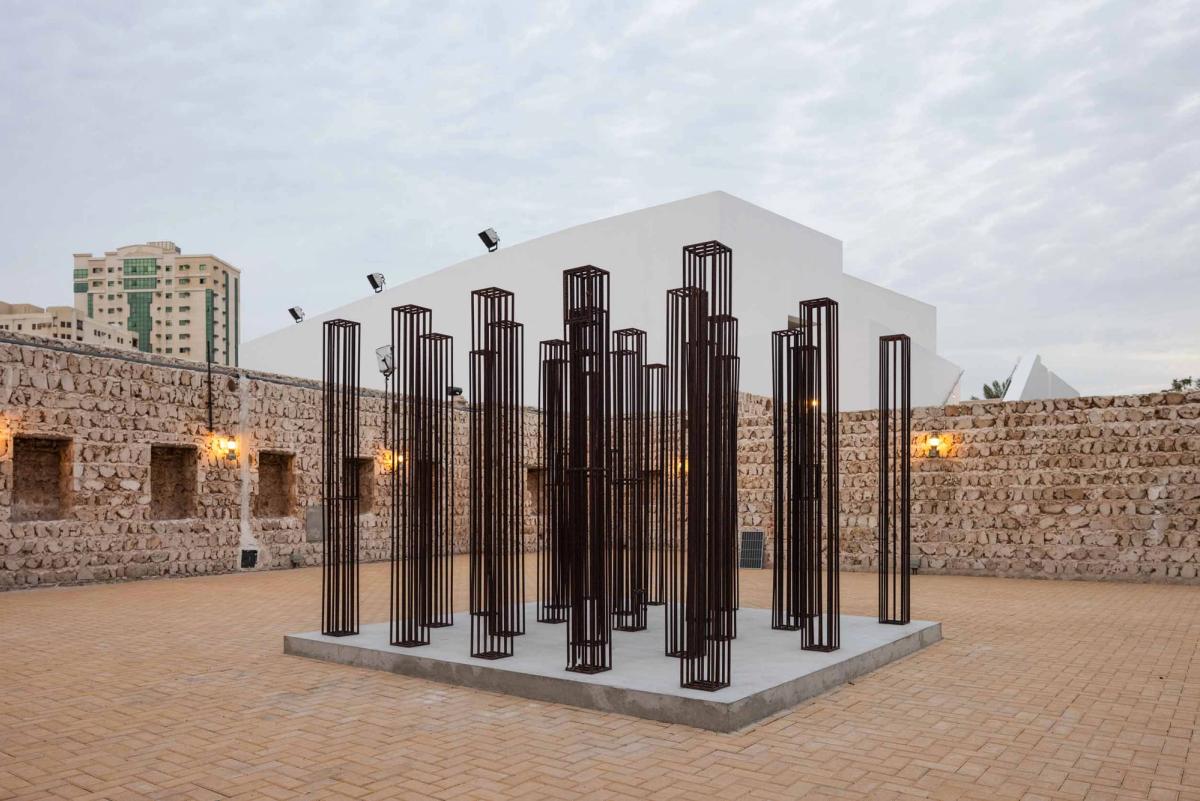
The larger success of Sharjah Biennial 16 is that it treats the five-curator model as a working method rather than a marketing device. The curators disagree, visibly, in wall texts and in public conversations, and those disagreements are some of the biennial’s strongest moments. In a biennial landscape where curatorial singularity has been the default since at least the early 2000s, a project willing to host five argumentative voices is a meaningful experiment. It is one worth repeating.