Christmas Came Early
Art Basel Miami Beach's 23rd edition had the first aggressive sales momentum in two years. The Warhol went for eighteen million on Wednesday.
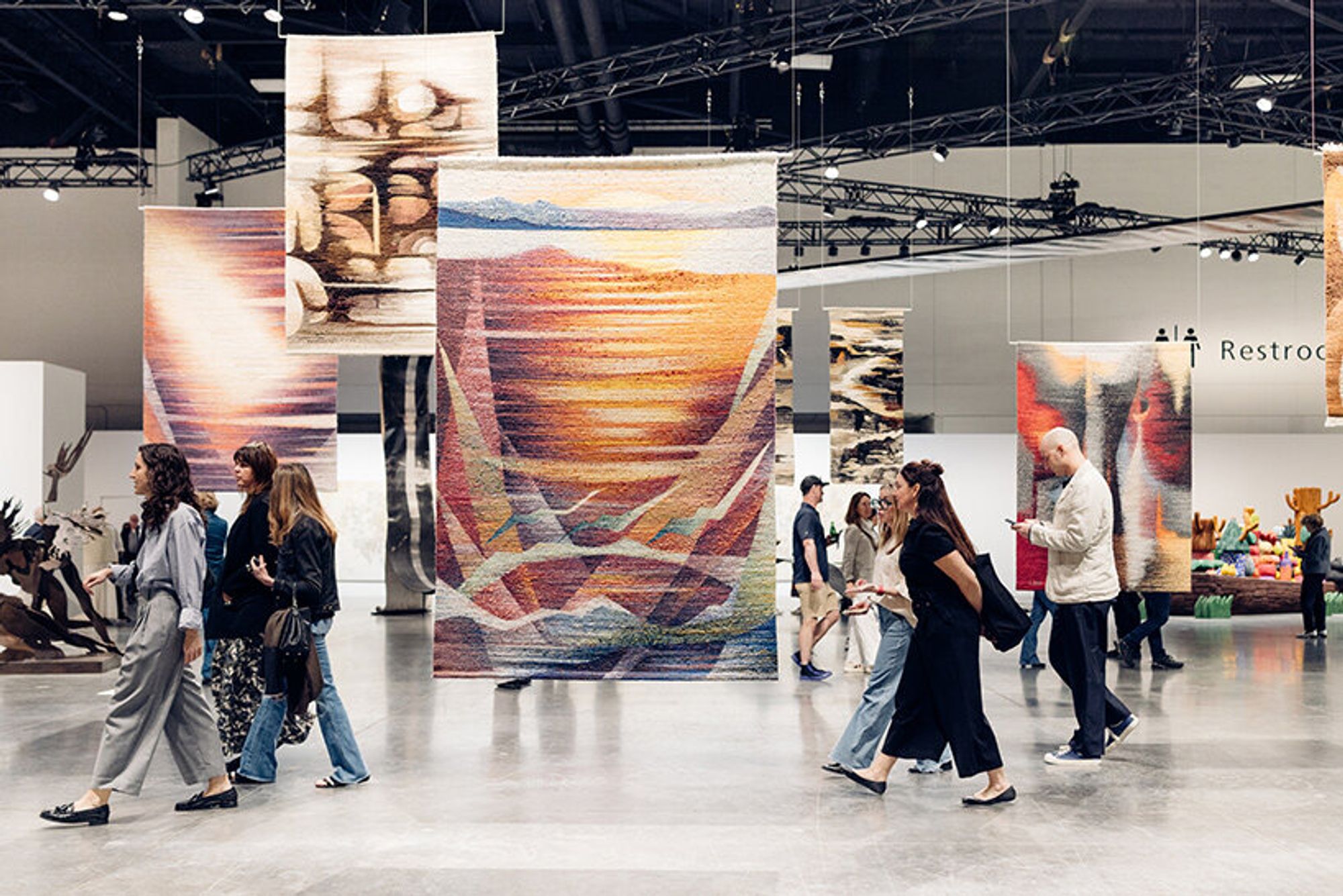
Art Basel Miami Beach closed on the 7th of December 2025 after five days at the Miami Beach Convention Center. 283 galleries, around 80,000 visitors. The mood was the one the market had been waiting for since 2022. Sales happened fast and at scale. Lévy Gorvy Dayan placed Andy Warhol's Muhammad Ali (1977) at an $18 million ask, the fair's top reported number. David Zwirner opened with a $5.5 million Gerhard Richter on Wednesday morning, and by the afternoon had added an Alice Neel for $3.3 million and two Josef Albers Homage to the Square paintings at $2.5 million and $2.2 million. One dealer at dinner said Christmas came early. Several others said the same thing independently. A phrase you hear from three or four booths in one night is what you write down.
This was not a quiet year. Miami Beach in 2022 and 2023 had been characterised by careful pricing, flat aisles, a sense that the top of the market had thinned out. 2024 was slightly better. 2025, as reported by the director Bridget Finn in the closing press statement, broke the pattern. What had shifted was not just collector confidence but the specific kind of work being placed. Blue-chip names sold first and fastest. Gladstone moved Ugo Rondinone sculptures one after another. Rauschenberg's Tarnished Honor (Copperhead) from 1989 went to a private collection at Gladstone for $1.5 million. Almine Rech placed a Picasso in the $2.8–3 million range. A James Turrell Glassworks piece sold in the $1 million register. Mid-market work also moved, though more slowly and more carefully. The category that did not move was the speculative end, the NFT-style art that was still trying to be the next thing at previous Miamis. Those booths had the lightest crowds.
A new initiative worth noting: Zero 10, ABMB's first dedicated section for digital art, launched this year in partnership with OpenSea. Twelve international exhibitors, including Beeple Studios, Art Blocks, Heft, Pace Gallery, and Nguyen Wahed. The section had been carefully separated from the main aisles, which was the right decision. Collectors who wanted to look at digital art did. Others did not have to walk through it on their way somewhere else. The works in Zero 10 were higher quality than most of what has passed as digital art at fairs over the last four years. Pace's Mario Klingemann installation, in particular, held its own.
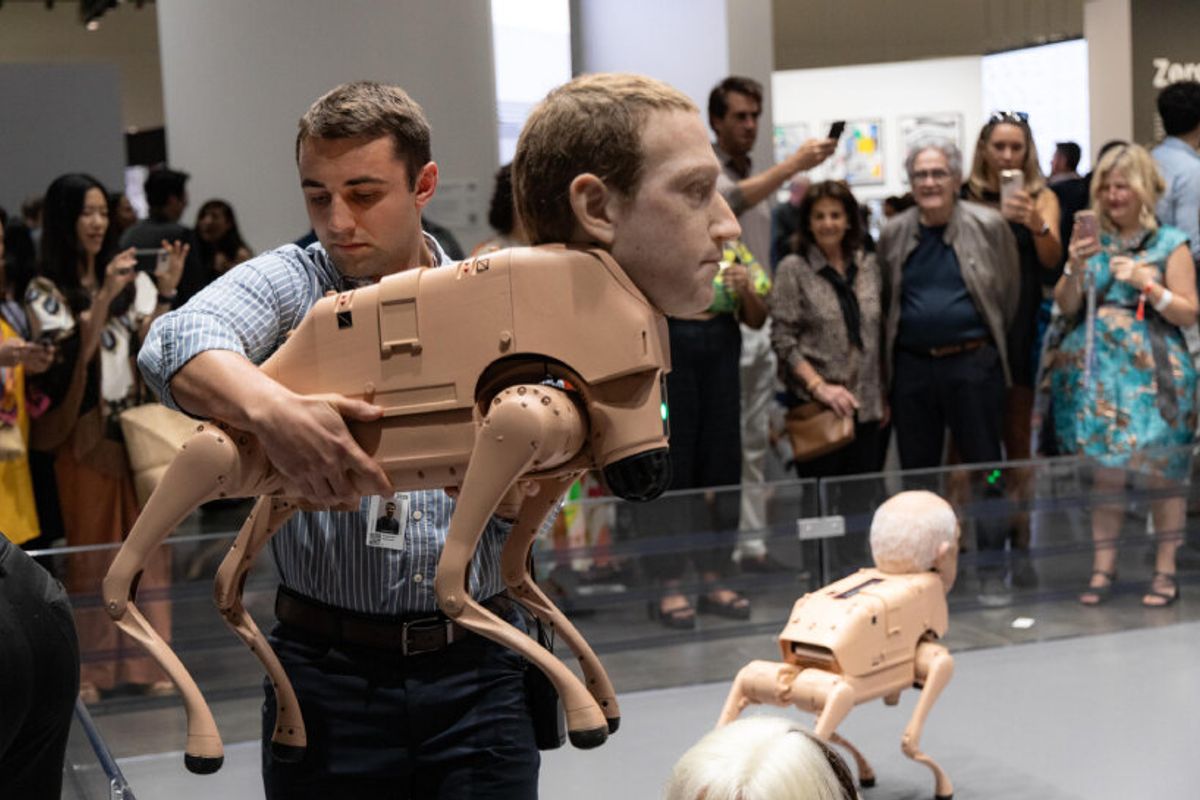
Among the main aisle rooms, a few held attention in ways that had nothing to do with the market report. Hauser & Wirth's room with Philip Guston paintings. Sadie Coles HQ with a new Celia Paul hang. A Peter Saul room at Michael Werner that was the most fun I had at the fair. Lisson showed a focused Anish Kapoor booth. Luhring Augustine had a room of Charles Ray sculptures that deserved more time than the aisle allowed.
Miami is a strange fair. The art is inside the Convention Center; the rest of the week happens on South Beach, at NADA, at Untitled on the beach, at Design Miami/ opposite the Convention Center, in beachfront hotels, in Faena, in the Edition, in rented boats, in rented houses. The ratio of business to performance is uniquely weighted towards performance. I attended, between Tuesday and Sunday, a dinner hosted by Bottega Veneta for a collector who was not their client, a breakfast at the Rubell that ended in a fight about Pichler, a walk on the beach at 2 a.m. with a dealer who may or may not have been looking for his wife. This is what the Miami week is.
NADA and Untitled had their usual mood: NADA a strong showing this year from younger galleries in Mexico City and Bogotá, Untitled quieter but with a handful of rooms from São Paulo and Lagos that held attention. A visit to both is mandatory for anyone serious about where the market is turning next. The fairs that get the coverage are the Convention Center and Design Miami/. The fairs where the next cycle is staged are the other two.
The closing mood, on the Sunday afternoon, was of people who had sold things and were no longer pretending otherwise. Dealers at bookings at La Mar, at Casa Tua, at Joe's Stone Crab. The fair's directors smiled in a way you only see when the sheets are black. The collector class, whose existence tends to be implied rather than visible at a fair, was visible on Sunday night in a way it had not been for three Miamis. Someone I know, who has been coming to this fair for twenty years, summed it up by saying the reasonable Miami is over. The question is whether the next one will be sustainable, or another 2021. I do not know. Nobody does. The numbers at this one, for a week in December, were the ones the market had been quietly asking for.