A Capsule in Time
Marina Tabassum's Serpentine Pavilion opens on the 6th of June 2025 in Kensington Gardens. Timber, translucent skin, one moving wall.
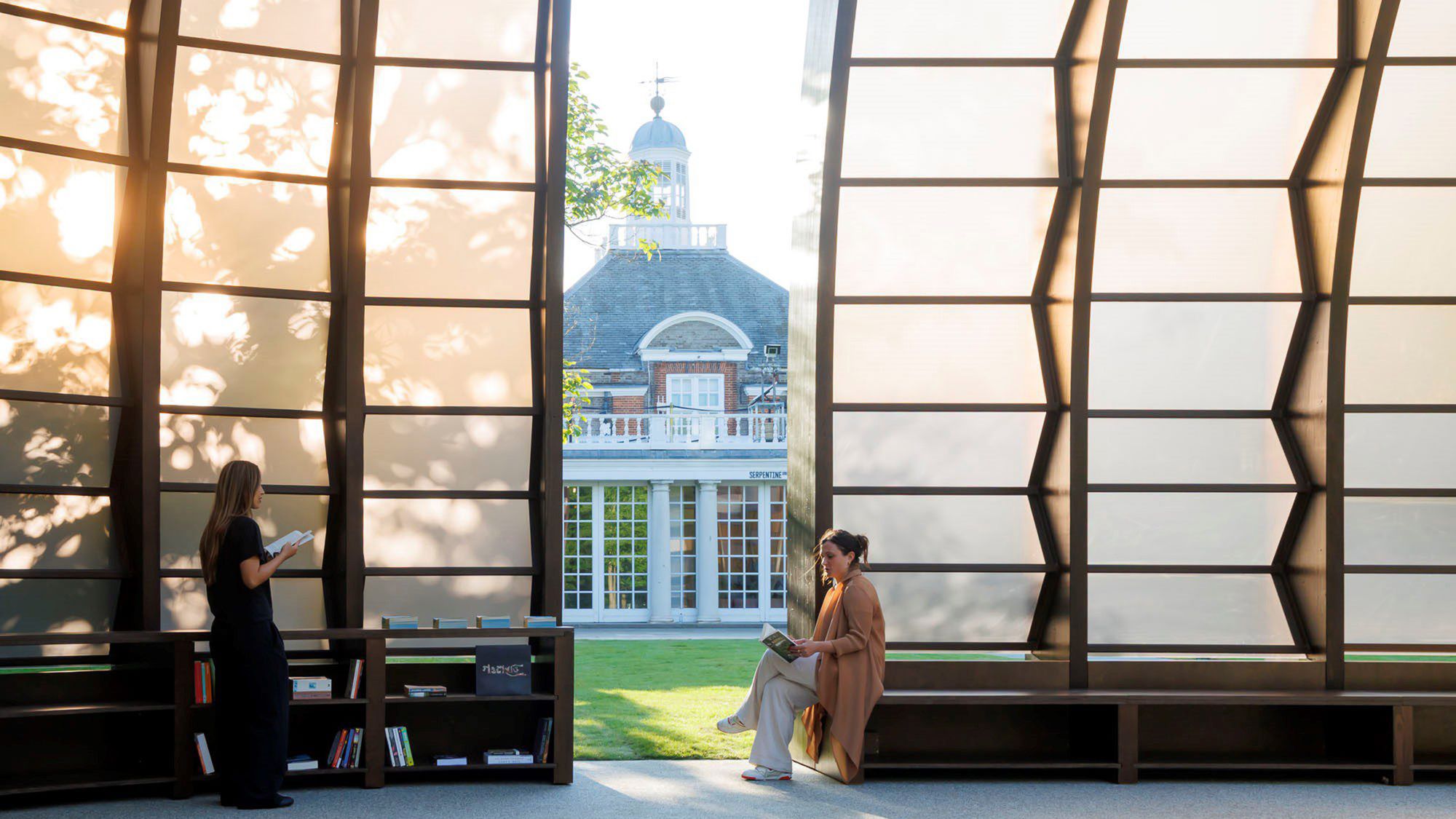
The 2025 Serpentine Pavilion opens on the 6th of June in Kensington Gardens. The architect is Marina Tabassum, of Dhaka, her first project built entirely in wood, and her first project in the United Kingdom. The pavilion is titled A Capsule in Time. It is the first Serpentine Pavilion designed by a Bangladeshi architect and one of the very few designed by a practice based outside the North Atlantic.
The structure is composed of four wooden capsule-like volumes, their surfaces wrapped in a translucent skin that diffuses the London June light into something warmer and more internal. One of the four capsules is kinetic: it moves on a track to reconfigure the interior space, opening or closing depending on the day's programme. Tabassum has said, in interviews, that the capsule takes its form from the Shamiana tents of her childhood, the ceremonial bamboo-and-fabric pavilions used across the Indian subcontinent for weddings, funerals, and public gatherings. A Capsule in Time translates that tradition into plywood and acrylic.
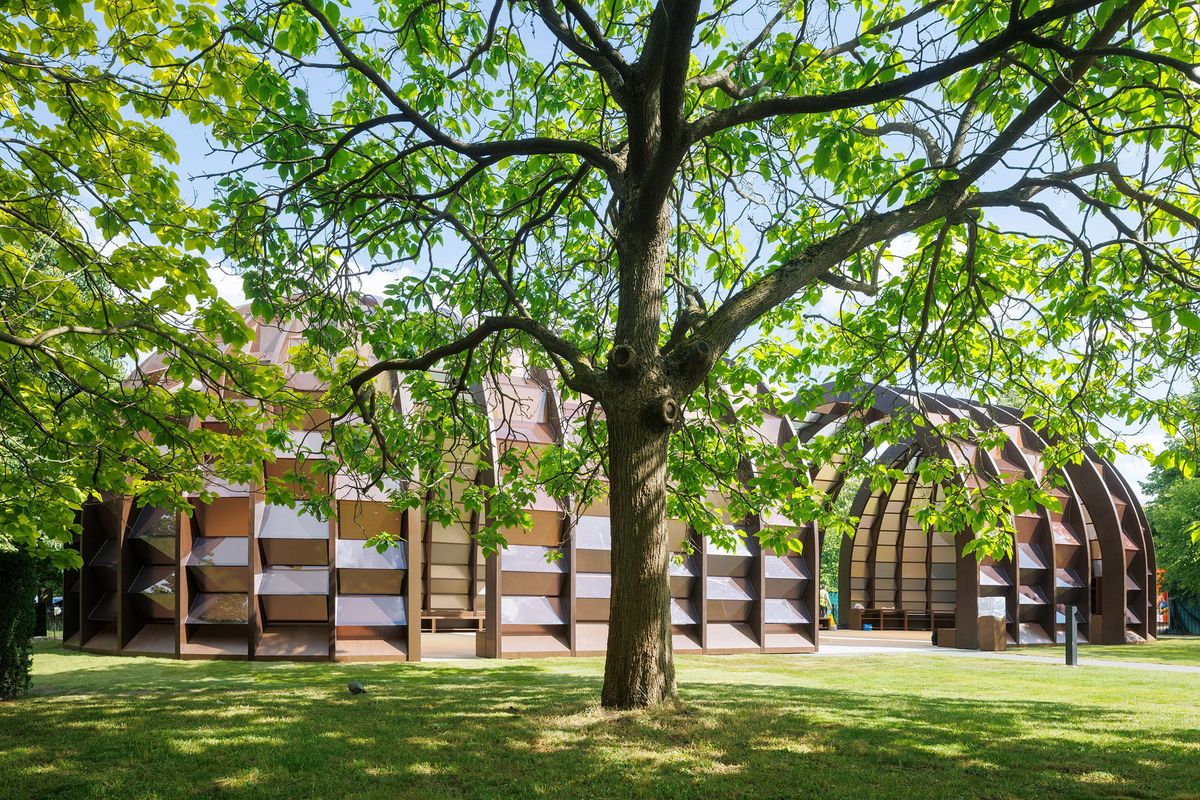
On the opening evening, at 7 p.m., the pavilion is lit from inside. The lawn around it has been kept as grass. Tabassum is here in a cream sari, speaking with a steady small crowd of architects, curators, and the Serpentine's core patronage. Her practice, Marina Tabassum Architects, has for the past twenty years built mosques, houses, and public buildings in Dhaka, including the Bait ur Rouf Mosque, which won the 2016 Aga Khan Award for Architecture. Wood is a new material for her. Acrylic skin, also new. One of the things you hear her say to a younger architect, on the lawn, is that the pavilion is an experiment in lightness for her and that she is still not sure about the skin. I take the candour for honesty. She is not wrong to be unsure; the pavilion is better seen under overcast skies than bright ones, and one of the London summers ahead will test it.
The pavilion will stay up until the 26th of October 2025. In that time it will host the Serpentine's programme of talks, readings, and small musical performances. The kinetic capsule will open and close for those programmes on a schedule. A small library, distributed among the benches lining the interior edges, contains books Tabassum has chosen: works on Bengali poetry, architectural anthologies, a Tagore volume.
The Serpentine Pavilion is an annual commission with a specific logic. Each summer, a major international architect builds a small temporary structure in Kensington Gardens. Most of the pavilions come down at the end of the summer and are bought by private collectors, to be re-erected in gardens from Malibu to Dubai. Tabassum's has already been bought; the new owner will take it to South Asia, which, if true, is the only Serpentine pavilion ever to return to the region its design language came from. The symbolism here is not subtle. The symbolism here is also correct.
I leave at 10 p.m. The light inside the capsule is still soft. A child, on the way out, drags a finger along the translucent skin. The pavilion does not flinch. It is made to be touched.